
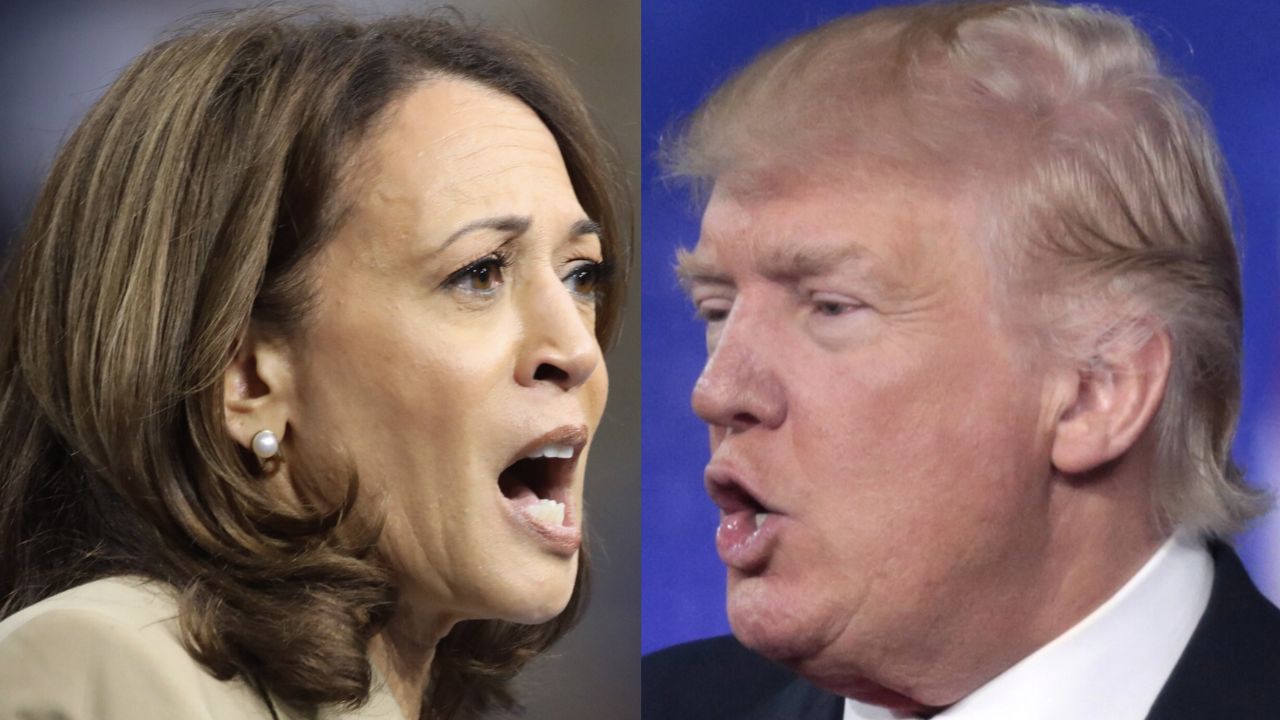
Former Vice President Kamala Harris accused President Donald Trump on Sunday of driving up America’s fuel costs through his war in Iran, and condemned his new agreement to buy Russian diesel as a move that “reeks of weakness.” Her statement, posted on X on October 11, 2026, came two days after Trump announced the deal with Russian President Vladimir Putin and a day after he said Ukraine should get a new president. It also landed weeks before the U.S. midterm elections, with record diesel prices a central political issue.
Harris’s Full Statement
Harris published the following post on X, time-stamped 5:20 p.m. on Sunday, October 11, 2026:
“Donald Trump and his war in Iran are to blame for our nation’s sky-high diesel and gas prices. His latest ploy—buying fuel from his friend Vladimir Putin—reeks of weakness and will help pay for Russia’s war but will do nothing to make life more affordable for American families.
The American people deserve a leader who cares about them, and the Ukrainian people deserve allies who will stand by their side in the fight for a free, democratic, and independent nation.”
The Diesel Deal Behind the Post
Trump announced the agreement Friday, October 9, on social media after a phone call with Putin that was expected to focus on a suspected case of plague in Russia. He said Russia would immediately supply more than 300,000 tons of diesel, followed by 500,000 tons in November and 1 million tons “immediately thereafter.” Another 3 million tons would follow “within a short period of time,” he wrote. The Treasury Department said shortly afterward that it was issuing a temporary license allowing Russian diesel to be supplied to the global market.
The announcement reversed years of U.S. policy toward Moscow. It came a month after Trump signed a sweeping Russia sanctions law aimed at the revenue that funds the war in Ukraine, which authorizes penalties on Russian officials, banks and a shadow fleet of tankers and bars new U.S. investment in Russia. Trump did not address the sanctions or the war in his announcement, writing instead that lower prices for “Great Farmers, Ranchers, and Truckers” were his “Greatest Priority.”
Harris attached the Associated Press report on Trump’s remarks the following day to her post. Speaking Saturday before departing for a rally in Tennessee, Trump said Ukraine should get “a new leader who can make a deal” and accused Ukrainian President Volodymyr Zelenskyy of wanting “to make problems for our farmers, our ranchers, with diesel fuel.” Trump also said the war “started due to incompetence” and would never have begun had he been president in 2022. The deal was announced as envoy Steve Witkoff and Jared Kushner met Ukrainian officials in Miami, and a senior Ukrainian official said Kyiv had no advance knowledge of it.
Strikes in Ukraine and Reaction in Europe
Russian aerial bombs hit residential buildings in Zaporizhzhia on Saturday, killing at least 20 people, including three children, Ukraine’s State Emergency Service said. Zelenskyy wrote on X that Russia had thanked the U.S. for lifting diesel sanctions by dropping five glide bombs on homes. He said each additional billion dollars Russia earns from exports helps pay for weapons components, drones, missiles and mercenaries, and that Ukraine was coordinating countermeasures with allies, including talks with French President Emmanuel Macron on air defense.
European governments also pushed back. Swedish Prime Minister Ulf Kristersson said Stockholm regretted the agreement “as energy revenues are central to the Russian war chest,” and said the European Union would adopt its most comprehensive sanctions package yet on Monday, with 1,600 listings. A German government spokesperson said Berlin “remains committed to the sanctions imposed on Russia.” Polish Foreign Minister Radoslaw Sikorski questioned whether Russia could deliver at all, asking where “the surpluses for export” would come from, given reported fuel shortages and damage to Russian refineries.
Harris’s Record on the Iran War
Harris has opposed the Iran war since it began on February 28, when U.S. and Israeli strikes hit Iran. That day she said Trump was “dragging the United States into a war the American people do not want.” She called it a “regime-change war” and “Trump’s war of choice,” and said troops were being put “in harm’s way” for it. She acknowledged the threat Tehran poses and said it “must never be allowed to have a nuclear weapon,” but argued “this is not the way to dismantle that threat.”
Harris holds no elected office and has not been a participant in congressional votes on the war, so her role has been public advocacy. In her February statement she said the Constitution requires a president to receive “authorization from Congress to enter a war,” urged lawmakers to “use all available power” to stop further escalation, and called for “a War Powers Vote now.” On April 7, after Trump threatened Iran’s civilian infrastructure over the closure of the Strait of Hormuz, she called the threats “abhorrent” and the war “a disastrous war of his own making.” She urged Americans to “oppose funding this illegal war of choice.”
Fuel Prices as a Political Fault Line
Harris tied the war to fuel costs well before Sunday. In an April 15 video recorded outside a Charlotte, North Carolina, gas station, with diesel displayed at $5.79 a gallon, she said “it’s 15 more dollars every time you fill your tank of gas” since the war began. The next day she posted that high prices were “a direct result of Donald Trump’s war of choice in Iran, and the American people are paying the price.” She repeated the $15 figure at a Michigan Democratic luncheon on April 18.
Prices have kept climbing. AAA reported on October 8 that the national gasoline average was $4.36, the first October in history above $4 a gallon. Diesel stood at $6.28, up from $3.68 a year earlier, after a record high of $6.53 on September 22. Iran moved to choke traffic through the Strait of Hormuz, through which nearly 20 percent of the world’s oil and natural gas travels, shortly after the war began. A conditional two-week ceasefire announced April 7 depended on reopening the strait.
A poll conducted last month and published October 1 found that Americans disapprove of Trump’s handling of Iran and blame him for higher prices. Trump has instead pointed to Ukraine’s strikes on Russian energy infrastructure as a cause of record diesel costs. Diesel prices have also been pushed up by the war’s disruption of oil supplies from the Middle East.
Harris’s Record on Russia and Ukraine
As vice president, Harris met Zelenskyy at the Munich Security Conference on February 19, 2022, days before Russia’s full-scale invasion, and pledged that the U.S. would impose “swift and severe economic sanctions” if Russia invaded. A year later, at the same conference, she announced that the United States had “formally determined that Russia has committed crimes against humanity.” She said the U.S. would “continue to strongly support Ukraine” for “as long as it takes,” and pointed to $45 billion in additional Ukraine funding Congress had approved.
During her 2024 presidential campaign, Harris said she would not negotiate with Putin without Ukraine at the table: “Ukraine must have a say in the future of Ukraine.” She also said that if Trump were president, “Putin would be sitting in Kyiv right now.” Meeting Zelenskyy in 2024, she called her support for Ukraine “unwavering.” Her record has drawn criticism as well. In March 2022, asked at a Bucharest press conference about record gas prices, she echoed President Joe Biden’s remark that there is “a price to pay for democracy,” a comment opponents have cited as Democrats now blame Trump for high prices.
What Comes Next
The Treasury license covers Russian diesel for six months, and the EU’s new sanctions package is due Monday, setting up a split between Washington and its European allies over Russia. Meanwhile, Russia and Ukraine remain locked in a long-range aerial war while their armies are largely deadlocked on the front line, more than four and a half years into the invasion. With midterms approaching, Harris’s post places the Iran war, record fuel prices and the Russia deal in a single argument, and the diesel agreement is likely to remain a flashpoint as Americans keep paying record prices at the pump.