
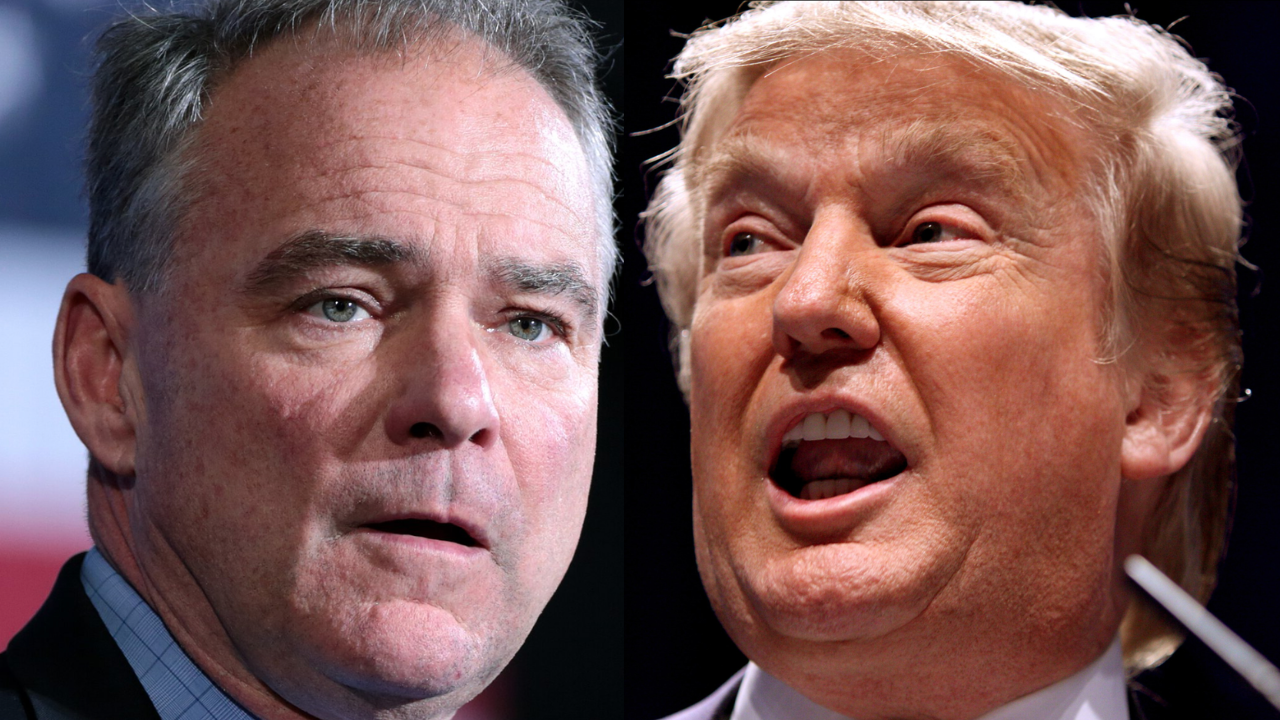
Sen. Tim Kaine (D-Va.) accused President Trump of violating federal law on June 26, 2026, after the U.S. carried out new strikes against Iran in response to an attack on a commercial vessel. “Both houses of Congress, under Republican majorities, voted this week to underscore that the U.S. waging war against Iran is illegal without congressional authorization,” Kaine wrote on X. “Donald Trump, launching new attacks because Iran fired on another nation’s commercial vessel, is breaking the law and exposing U.S. troops to grave physical and legal risk.”
What Triggered the Strikes
Kaine’s post followed U.S. Central Command’s announcement that American forces had struck Iranian missile and drone locations and coastal radar sites. The strikes came in response to a drone attack a day earlier on a cargo ship in the Strait of Hormuz, which Trump described as a “foolish violation” of the ceasefire. Trump told reporters at the White House shortly before the strikes, “I don’t like the fact that they took a shot yesterday, actually four of them.” Asked why strikes were necessary when he had insisted talks with Tehran were going well, Trump said of Iran, “They’re a little bit different,” before abruptly cutting off questions and having reporters ushered out of his office.
Kaine’s Reference to This Week’s Votes
Kaine’s post referenced the war powers resolutions that passed both the House and Senate earlier in the week, the first time since the War Powers Resolution of 1973 that both chambers had approved a measure directing a president to end a specific military conflict. The House passed its version 215-208 in early June, and the Senate followed with a 50-48 vote, with several Republicans breaking from their party to support the measures. Despite the bipartisan votes, the resolutions are concurrent resolutions that do not require the president’s signature and do not carry the binding force of law, a distinction that has shaped the ongoing legal and political dispute over whether Trump’s continued military action constitutes a violation as Kaine describes it.
The Shipping Crisis the Strikes Interrupted
The attack on the cargo ship happened just as international efforts to relieve pressure on stranded shipping in the strait were gaining momentum. The AP reported that the attack occurred while the International Maritime Organization was in the midst of an operation to move stranded ships out of the strait using an alternative route hugging the shores of Oman rather than passing through the central part of the waterway. The IMO halted that evacuation effort after the attack and said it would not resume “until there are guarantees that the other ships won’t be attacked.” IMO Secretary-General Arsenio Dominguez said roughly 115 ships had been able to move out of the strait in the days before the attack, leaving about 500 still in the area.
Market and Shipping Reaction
Shipping analysts said the attack cast a shadow over what had been an improving picture for vessel traffic through the strait. “A week of widening commercial confidence in the Strait of Hormuz has hit its first significant test,” marine data company Windward said in a post on X, noting that while the strait remained operationally open, with 43 transits recorded after the incident, “the pace of normalization has slowed.” The AP reported that 78 vessels had transited the strait on the Wednesday before the attack, the highest single-day figure since the war began, though still well below prewar averages of 130 or more vessels per day. According to Lloyd’s List Intelligence, at least two tankers reversed course while attempting to use the U.N.-backed Oman route after Iran insisted vessels use only routes it had specifically approved, though more than two dozen ships continued transiting the strait’s southern route even after the attack.
Why the Strait Matters to the Broader Negotiations
The AP noted that the opening of the alternative passage through the strait had been expected to relieve pressure on the world economy while also removing what had been Iran’s primary source of leverage in its ongoing negotiations with the United States. The U.S. and Iran remain in the midst of a 60-day negotiating period under their interim agreement, working through unresolved issues including the mechanics of safe passage through the strait and the future of Iran’s stockpile of highly enriched uranium.
A Parallel Development in Lebanon
The same day brought a separate diplomatic development elsewhere in the region. Ambassadors from Israel and Lebanon announced what the AP described as a step toward peace following months of conflict between Israeli forces and the Lebanese militant group Hezbollah. Nada Hamadeh, Lebanon’s ambassador to the U.S., called the framework a move toward “enabling our people to go back to their land and allowing all Lebanese to live in peace, security, and prosperity.” Israeli Prime Minister Benjamin Netanyahu called the plan a “great achievement” for Israel, while adding a significant condition: “The most important thing, first and foremost, is that Israel will remain in the security zone in southern Lebanon” until Hezbollah is disarmed and no longer poses a threat.
The Lebanon framework’s connection to the broader Iran ceasefire has remained a recurring point of tension throughout the negotiating process, with Iran having previously cited continued Israeli operations in Lebanon as grounds for threatening to close the Strait of Hormuz, tying the fate of the two fronts together even though they involve formally separate sets of negotiations and parties.
What Comes Next
As of Kaine’s post, no formal legal action had been initiated to test whether Trump’s continued strikes against Iran violate the resolutions passed by Congress earlier in the week, and the practical question of enforcement remained unresolved given the non-binding nature of the concurrent resolutions. The broader 60-day negotiating window established under the U.S.-Iran agreement continued even as the exchange of strikes raised fresh doubts about its durability.
Kaine has been one of the most consistent advocates throughout the conflict for requiring congressional authorization before any continued use of force against Iran, having led Senate efforts on the issue alongside Sen. Rand Paul (R-Ky.) since before the war began in February. He has repeatedly argued that the Constitution’s framers intended for the power to declare war to rest with Congress rather than the president alone, a position he reiterated ahead of this week’s successful Senate vote.
The Underlying Legal Dispute
Senate Foreign Relations Committee Chairman Jim Risch (R-Idaho) offered a sharply different assessment of the resolutions’ practical weight when the Senate vote passed earlier in the week, telling reporters, “Whatever happens with this, it’s going to have no effect,” and adding that Trump was not “going to pay any attention to it.” That assessment from a senior Republican committee chairman underscores the gap between Kaine’s framing of the strikes as unambiguously illegal and the more limited practical consequences the resolutions are likely to carry absent further congressional or judicial action.
The dispute reflects a long-running, unresolved tension in American constitutional law over the precise boundaries of presidential war-making authority, one that has recurred across multiple administrations since the War Powers Resolution was first enacted in 1973 and has never been definitively settled by the courts.