
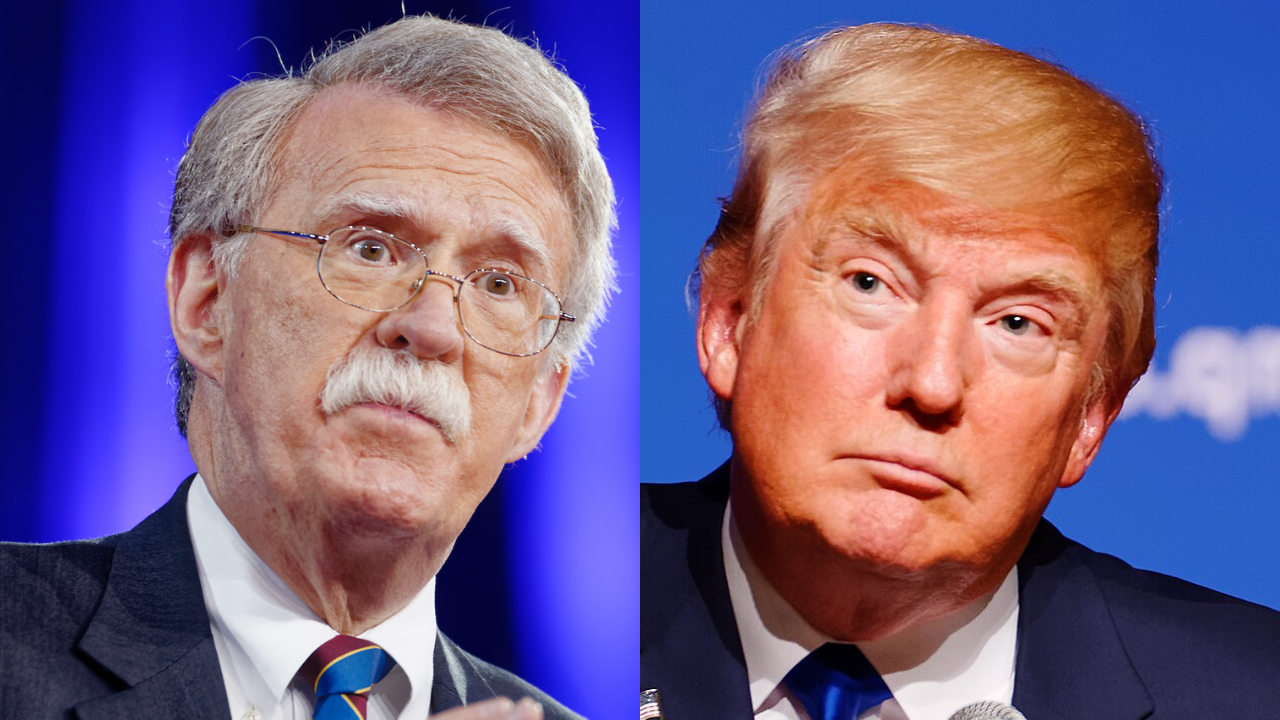
John Bolton, President Trump’s former National Security Advisor and former U.S. Ambassador to the United Nations, called Trump’s decision to withdraw 5,000 troops from Germany “childish” on May 4, 2026, if the move is indeed retribution for German Chancellor Friedrich Merz’s public criticism of the Iran war — while simultaneously arguing that both Trump and the Europeans have made serious strategic mistakes in how they have handled the conflict. “If it’s punishment, it’s childish,” Bolton told CNN’s Kaitlan Collins on The Source. “It’s a bunch of kids at a playground.”
The Pentagon had confirmed on May 1 that Defense Secretary Pete Hegseth had ordered the withdrawal of approximately 5,000 troops from Germany over the next six to twelve months — a move that came days after Trump publicly lashed out at Merz for saying the United States was being “humiliated” by Iran’s leadership during the ongoing conflict. Trump said Saturday that the 5,000-troop reduction was only the beginning, adding he intended to “cut a lot further.” Bolton’s assessment — that punishing an ally for a public statement is playground politics — places him in uncomfortable alignment with Democrats who have made the same argument, while also extending his critique to the Europeans themselves.
What Merz Said — and What Trump Did
The sequence that produced the troop withdrawal began when Merz said on Monday, April 28, that the United States had entered the Iran war “without a clear strategy” and that “an entire nation is being humiliated by the Iranian leadership, especially by these so-called Revolutionary Guards.” He also described U.S. diplomatic efforts as failed, noting that American officials had traveled to Islamabad without result. Trump responded on Tuesday by saying Merz “doesn’t know what he’s talking about,” and by Wednesday had announced the U.S. was “studying and reviewing” a possible troop reduction. By Friday, May 1, Chief Pentagon spokesman Sean Parnell confirmed the withdrawal in a statement, saying it “follows a thorough review of the Department’s force posture in Europe and is in recognition of theater requirements and conditions on the ground.”
The withdrawal will reduce U.S. forces in Germany from approximately 36,000 to just above 30,000 — a roughly 14% reduction — while the broader European theater will remain above the 76,000 statutory floor set by the FY2026 National Defense Authorization Act, which prohibits reducing U.S. force structure in Europe below that threshold without the Defense Secretary first certifying coordination with NATO allies and consistency with U.S. national security interests. NATO said it was “working to understand” the details of the plan, and the Republican chairs of both the House and Senate Armed Services Committees — Rep. Mike Rogers (R-AL) and Sen. Roger Wicker (R-MS) — issued a joint statement saying they were “very concerned” and urged the Pentagon to redeploy troops eastward toward Poland and the Baltic states rather than withdrawing them from Europe entirely, as reported by CNN.
Bolton’s View: Childish, But the Europeans Are Also Wrong
Bolton’s critique of the troop withdrawal is unusually direct for a Republican national security veteran — but it comes with an important caveat. He did not simply defend Merz. He argued that both sides have behaved badly, and that both are failing to think strategically about a shared interest: the elimination of the Iranian regime’s threat to the Western world. “The Europeans have also made a mistake here, and the German chancellor made a mistake in that comment,” Bolton told Collins. “They shouldn’t behave like they’re on a playground any more than Trump should. They should be thinking strategically, and Europe has as much at stake in getting rid of this threatening regime in Iran as we do.”
That framing — criticizing Trump’s impulsiveness while also criticizing Europe’s strategic incoherence — is consistent with Bolton’s longstanding foreign policy posture. Bolton served as Trump’s National Security Advisor from April 2018 to September 2019, departing amid disagreements over Iran and North Korea policy — with Bolton pushing for a harder line and Trump leaning toward negotiation. He has since been an outspoken critic of Trump’s management of foreign policy while simultaneously supporting aggressive action against Iran and other adversaries. Bolton also noted that Trump made a fundamental error at the outset of the Iran war by failing to consult allies at all. “Trump made a big mistake by not consulting, not just the NATO allies, but the Gulf Arab states, our Asian allies that buy a lot of oil from the Gulf region. He didn’t consult anybody beforehand.”
Bolton’s Alternative: Move Troops East, Not Home
Bolton did not simply oppose the withdrawal — he offered an alternative. “There are always good reasons to reevaluate our force deployments in Europe,” he said. “I would personally shift troops out of Germany into Poland and the Baltic republics, closer to where the real danger is.” That position is identical to the one taken by Rogers and Wicker in their joint statement — both Republicans arguing that the strategic logic of troop repositioning in Europe points east toward Russia’s border, not back to the United States. Bolton’s argument is that a withdrawal motivated by anger at a German chancellor’s comments produces the wrong outcome for the wrong reasons, even if a force posture review in Europe is otherwise warranted.
That distinction — between a strategically motivated repositioning and a politically motivated withdrawal — is precisely what Sen. Jack Reed (D-RI), the ranking Democrat on the Senate Armed Services Committee, was invoking when he said the withdrawal “suggests American commitments to our allies are dependent on the president’s mood.” Bolton and Reed are arriving at the same concern — that the decision is being driven by emotion rather than strategy — from opposite ends of the political spectrum.
Who Is John Bolton — and Why His Critique Carries Weight
Bolton’s credentials to assess both the Germany troop decision and the broader Iran war are extensive. He served as Assistant to the President and National Security Advisor from April 2018 to September 2019, as U.S. Permanent Representative to the United Nations from 2005 to 2006, as Under Secretary of State for Arms Control and International Security from 2001 to 2005, and held senior positions in the State Department and Justice Department under Presidents Reagan and George H.W. Bush. He has been one of the most consistent advocates for aggressive U.S. posture toward Iran over the course of his career — making his critique of how Trump has handled the current conflict particularly pointed.
Bolton is also currently under federal indictment. Bolton was indicted in October 2025 on charges that he improperly retained and shared classified information from his time as National Security Advisor — a case that has drawn criticism from Bolton’s defenders as politically motivated. He has pleaded not guilty. That legal backdrop has not visibly moderated his willingness to criticize the administration’s foreign policy choices in public forums.
The Broader Alliance Damage Bolton Is Warning Against
Bolton’s “playground” remark is a shorthand for a deeper strategic concern: that retaliating against an ally for a public statement damages the credibility of U.S. alliance commitments in ways that outlast the immediate dispute. NATO allies have been watching Trump’s posture toward Germany since his first term, when he repeatedly threatened to withdraw from the alliance if members did not meet defense spending targets. Germany has since significantly increased its defense budget — it now meets the NATO 2% GDP threshold — and Merz came to office explicitly committed to stronger European defense. Using troop withdrawal as punishment for a critical public statement sends a message to every NATO member that the U.S. security guarantee is contingent not on treaty commitments but on whether their leaders publicly agree with American foreign policy decisions.
Germany’s Defense Minister Boris Pistorius called the withdrawal announcement “foreseeable” and said it underscored the need for Europe to take greater responsibility for its own security. That framing — treating the withdrawal as an accelerant of European strategic autonomy rather than a crisis — reflects the posture Merz has taken since arriving in office, a posture Bolton implicitly endorses when he argues that Europe “has as much at stake in getting rid of this threatening regime in Iran as we do” and should be thinking strategically rather than trading insults with Washington. For Bolton, the German chancellor’s mistake was not in being critical of the Iran war — it was in making that criticism in public in a way that gave Trump an excuse to be equally impulsive. Both, in his assessment, failed to think like adults. The playground metaphor cuts both ways.