
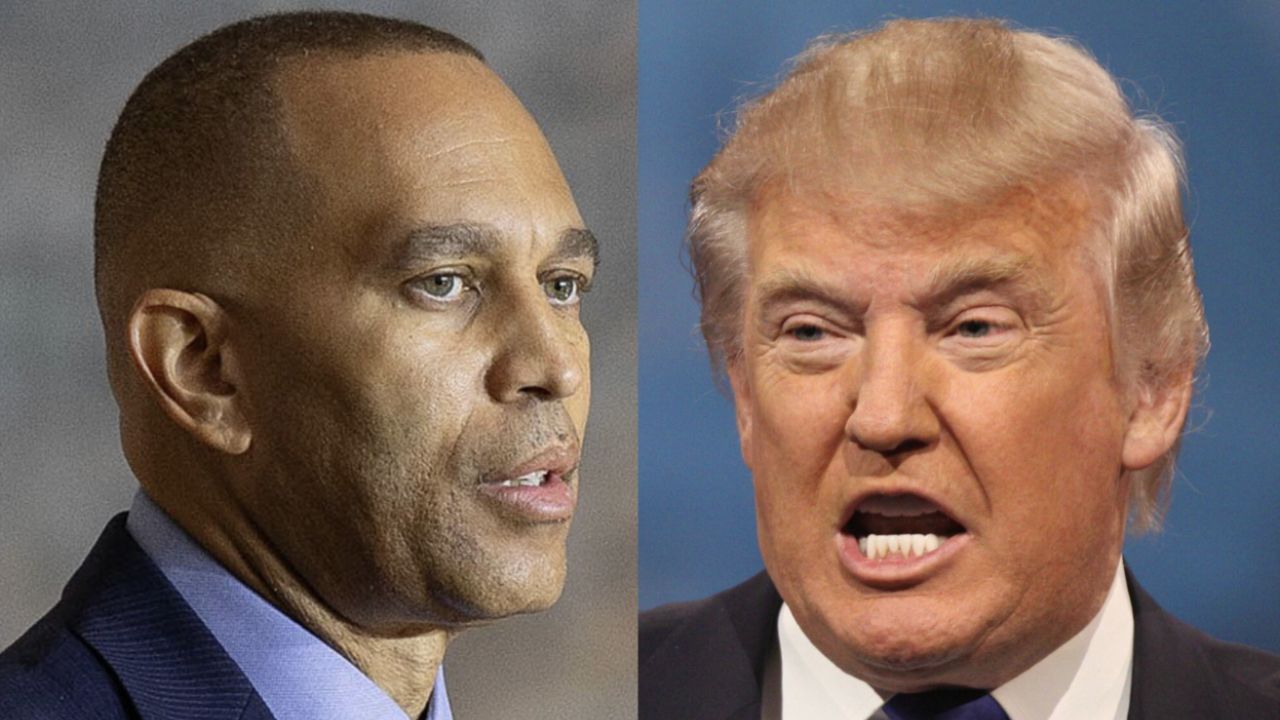
House Democratic Leader Hakeem Jeffries used a new nonpartisan government cost estimate to launch a fresh attack on President Donald Trump’s handling of the war in Iran, declaring on Wednesday, September 16, 2026, that “nearly $40 billion has been squandered” on what he called “the reckless war of choice in Iran” while Republicans refuse to address the rising cost of living at home. The New York Democrat’s statement, posted to X at 8:19 a.m., came one day after the Congressional Budget Office released its first official accounting of what the six-month-old conflict has cost American taxpayers.
Jeffries’s post read, in its entirety:
“A new CBO report finds nearly $40 billion has been squandered on the reckless war of choice in Iran. And the cost keeps growing. Donald Trump and House Republicans can spend billions to wage war. But the extremists won’t spend a dime to lower the high cost of your groceries, healthcare, or housing. Enough.”
A Six-Month War With a Rising Price Tag
The report Jeffries referenced was released Tuesday, September 15, by the Congressional Budget Office, the nonpartisan agency that scores the cost of federal legislation and programs for Congress. CBO Director Phillip L. Swagel wrote in a letter to House Budget Committee Ranking Member Brendan F. Boyle that the war, which the Pentagon designated Operation Epic Fury, had cost the Department of Defense approximately $38.1 billion as of August 1, 2026, a figure that covers replacement of expended munitions and lost equipment, increased flying hours, other operations costs, and higher fuel prices. The letter warned that the tab would keep climbing, estimating that an additional month of low-intensity conflict would cost roughly $2 billion, while a month at the intensity seen in July would cost closer to $3 billion.
Munitions, Missiles, and a Depleted Arsenal
According to the CBO letter, the single largest driver of the war’s cost has been munitions. The agency estimated that replacing weapons expended through August 1 would cost $21.7 billion, broken down into $7.3 billion for land-attack cruise missiles such as Tomahawks and Joint Air-to-Surface Standoff Missiles, $13.1 billion for missile defense interceptors including Patriot, THAAD, SM-3, and SM-6 systems, and $1.2 billion for other munitions. The report cautioned that the United States has likely used between one-half and two-thirds of its missile defense interceptor inventory since the Twelve-Day War in June 2025 and the subsequent Iran conflict, and that rebuilding those stockpiles would probably take at least five years, a shortfall CBO said “would become especially problematic” in any future conflict involving a country such as the People’s Republic of China, whose arsenal includes far larger numbers of ballistic and cruise missiles.
How the Pentagon’s Numbers Compare
CBO’s $38.1 billion estimate lands close to what the Trump administration itself has previously disclosed. Defense Secretary Pete Hegseth told the Senate Armed Services Committee on July 22, 2026, that the cost of combat operations through September would total $37.5 billion. Separately, the White House requested $87.6 billion in supplemental funding this past June, of which $67.1 billion was earmarked for the Pentagon, including $21 billion for munitions, $17.3 billion for what the administration labeled “operational costs,” and $12.1 billion for classified programs. CBO noted that the portion of that request tied directly to the war, roughly $42.3 billion, runs about 10 percent higher than its own estimate, and that the Pentagon did not respond to the agency’s requests for information, forcing CBO to rely on government databases and public reporting instead.
Inflation Fallout Reaches American Wallets
Beyond the direct military costs, the CBO report tied the war to rising consumer prices nationwide, the same affordability concern at the center of Jeffries’s post. The agency found that disruptions to oil shipments through the Strait of Hormuz and Red Sea shipping lanes pushed Brent crude prices from $64 a barrel in the fourth quarter of 2025 to a peak of $103 a barrel in the second quarter of 2026. CBO projected that by the first quarter of 2027, the war will have pushed overall inflation, as measured by the personal consumption expenditures price index, up by 0.5 percentage points and core inflation up by 0.3 percentage points compared with the agency’s pre-war forecast, while also nudging short-term interest rates higher.
The Democrat Who Ordered the Audit
The CBO analysis did not happen by accident. Boyle, the Pennsylvania Democrat who serves as ranking member of the House Budget Committee, formally requested the review in a letter to CBO on March 5, 2026, roughly a week after the war began, writing at the time that “taxpayers deserve a nonpartisan estimate of the financial and economic impact of President Trump’s reckless war in Iran” and that “American families don’t want billions of dollars wasted on an unnecessary war — they want lower costs and affordable health care.”
When the findings arrived six months later, Boyle renewed that critique in a statement reacting to the report, saying, “Donald Trump’s disastrous war in Iran has already taken the lives of brave American servicemembers and left others wounded. Beyond that human toll, this nonpartisan CBO report makes clear that the war has also cost American taxpayers tens of billions of dollars and counting, while continuing to drive up costs.” He added a pointed jab at Republican budget priorities, saying, “Donald Trump and Republicans have spent years telling Americans that we cannot afford to help families here at home, but apparently they can find tens of billions of dollars, and potentially much more, for a reckless war that is leaving Americans to pay the price.”
A Long Democratic Campaign Against the War’s Cost
Jeffries’s Wednesday post is the latest entry in a monthslong Democratic effort to frame the Iran war around its price tag rather than its stated national security objectives. The House passed a War Powers Resolution aimed at ending U.S. involvement in the conflict by a vote of 215-208 in June 2026, and lawmakers in both chambers have continued forcing floor votes on similar measures since. A Senate version of a war powers resolution failed by a vote of 47-49 in late July, falling short of the majority needed to advance. According to congressional trade publication Punchbowl News, the release of the CBO report coincided almost precisely with the conflict’s 200-day mark, a milestone Democratic lawmakers in both chambers marked by forcing renewed floor consideration of Iran war powers resolutions this week.
Jeffries himself struck a similar tone back in June, when the Trump administration first requested the $87.6 billion supplemental funding package. In a statement at the time, he said, “After repeatedly promising to end foreign wars, Donald Trump and Pete Hegseth plunged America into Operation Epic Failure with no objective, strategy or support,” adding that the conflict “has cost taxpayers billions, led to the deaths of 13 servicemembers, engulfed the entire region in conflict and skyrocketed the already high cost of living at home.” He went on to say the Trump administration “cannot be trusted with another dime connected to the war.”
Squeezed at the Register, the Doctor’s Office, and the Rent
The affordability argument at the heart of Jeffries’s post is one Democrats have repeated throughout the war. Gas prices have risen 38 percent since Trump took office, and a recent poll found that 95 percent of Americans say they are facing an affordability crisis, according to reporting compiled alongside coverage of the CBO release. Separately, the nonprofit Groundwork Collaborative found that packing school lunches will cost families $400 more this school year than last, a data point Democrats have cited as further evidence of squeezed household budgets even as war spending climbs.
House Budget Committee Ranking Member Boyle made a similar cost-of-living argument in March, shortly after the war began, when he warned during a floor statement on a War Powers Resolution vote that “the American people don’t want billions of dollars spent on an unnecessary war. They want lower costs and affordable health care.” That same month, Appropriations Committee Ranking Member Rosa DeLauro issued a statement after reports surfaced that the Pentagon was seeking as much as $200 billion for the war, saying, “we are in the midst of a cost-of-living crisis that is hurting Americans who were already living paycheck to paycheck,” and warning that a prolonged conflict would only worsen prices “from gas prices to groceries.”
Where the War Stands Now
Operation Epic Fury began on February 28, 2026, when the United States launched air and cruise missile strikes against Iran alongside coordinated Israeli airstrikes, with the stated goal, according to a White House press release, of moving to “obliterate Iran’s ballistic missile arsenal and production capacity, annihilate its navy, sever its support for terrorist proxies, and ensure the world’s leading state sponsor of terrorism will never acquire a nuclear weapon.” Iran responded with ballistic missile and drone attacks on U.S. bases and allied nations, and moved to restrict shipping through the Strait of Hormuz, prompting a U.S. naval blockade of Iranian commercial vessels. A ceasefire took effect on April 8, 2026, before President Trump declared it over on July 10 following a series of Iranian attacks on tankers transiting the strait, and the conflict has continued at a lower but still active intensity since.
With the war approaching its seventh month and no clear resolution in sight, the CBO’s findings are likely to remain a flashpoint heading into further congressional funding fights and the 2026 midterm campaign. Jeffries’s Wednesday post signaled that Democrats intend to keep tying the war’s growing price tag directly to kitchen-table costs, framing every additional billion spent on munitions and military operations as a billion not spent on lowering grocery, healthcare, and housing costs for American families. Neither the White House nor House Republican leadership had issued a public response to Jeffries’s post as of Wednesday afternoon.