
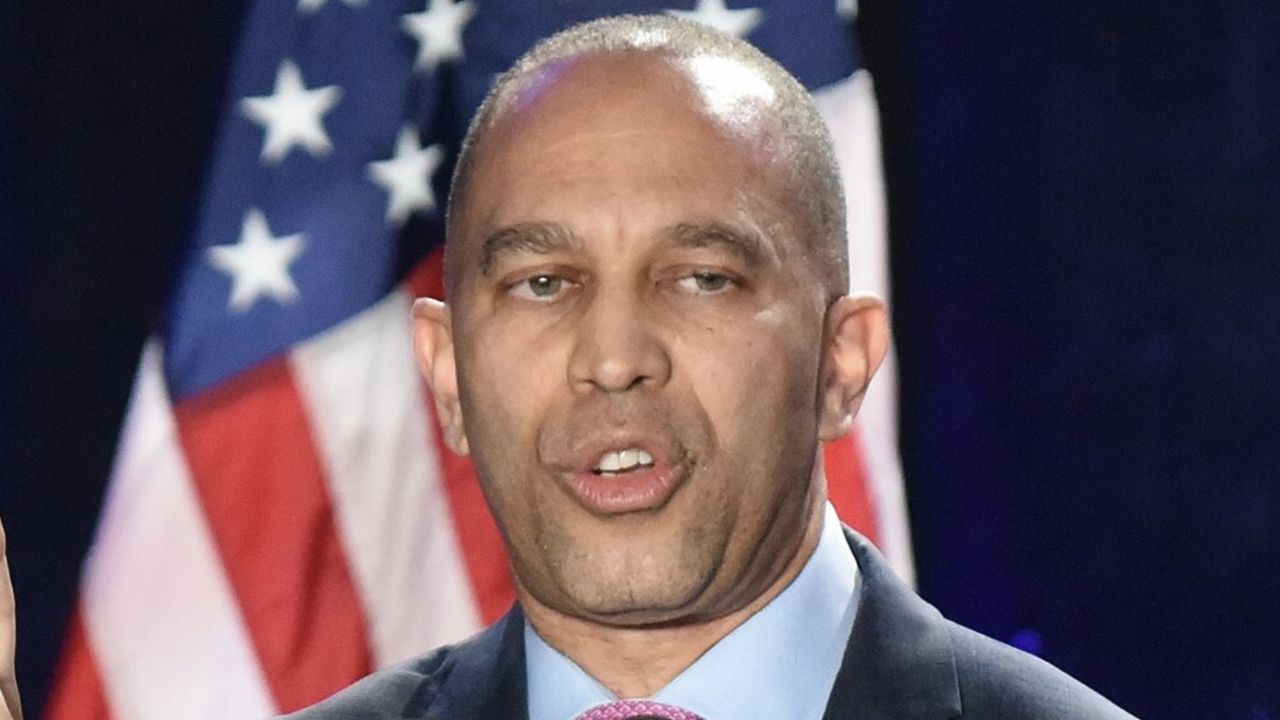
House Minority Leader Hakeem Jeffries, D-N.Y., said Sunday that far-right extremism is “on the run” in the United States and around the world. The one-sentence declaration came nine days before midterm elections that Jeffries has said will begin the process of “decisively breaking MAGA extremism.” The post did not name a country, candidate or event.
Jeffries’ Statement
Jeffries’ post, published at 7:25 p.m. on Oct. 25, 2026, read in full:
“Far-right extremism is on the run here in America.
And throughout the world.”
Jeffries did not specify which developments he was referencing. The post appeared on the day of Brazil’s presidential runoff, in which President Luiz Inácio Lula da Silva won a fourth term over right-wing Sen. Flávio Bolsonaro. Lula took about 51.8 percent of valid votes to Bolsonaro’s 48.2 percent, according to Brazil’s Superior Electoral Court.
A Consistent Message
The post fits a pattern in Jeffries’ public statements. After Hungarian Prime Minister Viktor Orbán lost power on April 12, ending 16 years in office, Reuters reported that Jeffries said “Far-right authoritarian Viktor Orban has lost the election.” He added that Trump’s allies and what he called MAGA extremists in Congress were next in November. Senate Minority Leader Chuck Schumer made a similar warning to Trump.
The Hungarian result drew a record turnout of nearly 80 percent, according to the country’s National Election Office. Orbán’s defeat came in a vote widely watched by far-right movements as a test of nationalist populism.
Jeffries’ use of the phrase “far-right extremism” dates to the start of Trump’s second term. In 2025 he sent House Democrats a Dear Colleague letter announcing a rapid response team and litigation group to “push back against the far-right extremism” he said was being unleashed on the American people. In February 2025, his office reported he used press conferences and television appearances to say House Democrats would keep pushing back against the same.
On March 31, 2026, Jeffries released a statement saying Trump and Republicans knew voters had “had enough of their extremism,” along with what he called disastrous policies and chaos. He accused Republican extremists of making it harder to vote so they could cling to power, and he said voters were ready to take the country back in November.
The Midterm Framing
In an Oct. 14 televised interview, Jeffries said Democrats were working to make sure that on Nov. 3 they could begin “decisively breaking MAGA extremism” and win back the House. He also said he expected what he called a prolonged era of MAGA extremism to come crashing down.
In the same interview, Jeffries listed priorities for a Democratic majority: reversing Medicaid cuts, extending Affordable Care Act tax credits, ending what he called a reckless and costly war of choice in Iran, reclaiming congressional authority over tariffs, and holding officials accountable. He also criticized the Justice Department, accusing it of weaponizing the criminal justice system against Trump adversaries.
Jeffries has spent recent weeks campaigning in battleground districts. On Oct. 11, he told reporters Democrats were “on the verge of taking back control” of the House, and he rejected the idea that new Republican maps in Texas and Florida would deliver the gains GOP strategists anticipated. On Oct. 22, he voiced confidence in an interview while warning of what he called a “diabolical scheme” by Republicans involving voter suppression.
Republicans have projected a different outlook. Jeffries said on Oct. 18, while campaigning for Rep. Marcy Kaptur in Toledo, Ohio, that House Republicans were “divorced from reality” in suggesting, as Speaker Mike Johnson recently did, that the Nov. 3 election would repeat the 2024 sweep. Jeffries, who would be in line to become speaker if Democrats win the majority, has said Democrats must first reach 218 seats.
Abroad, the picture is mixed. Lula’s win denied the region’s right wing a significant victory, but right-wing candidates have won presidential races in recent years in Peru, Colombia, Argentina, Bolivia and Ecuador.