
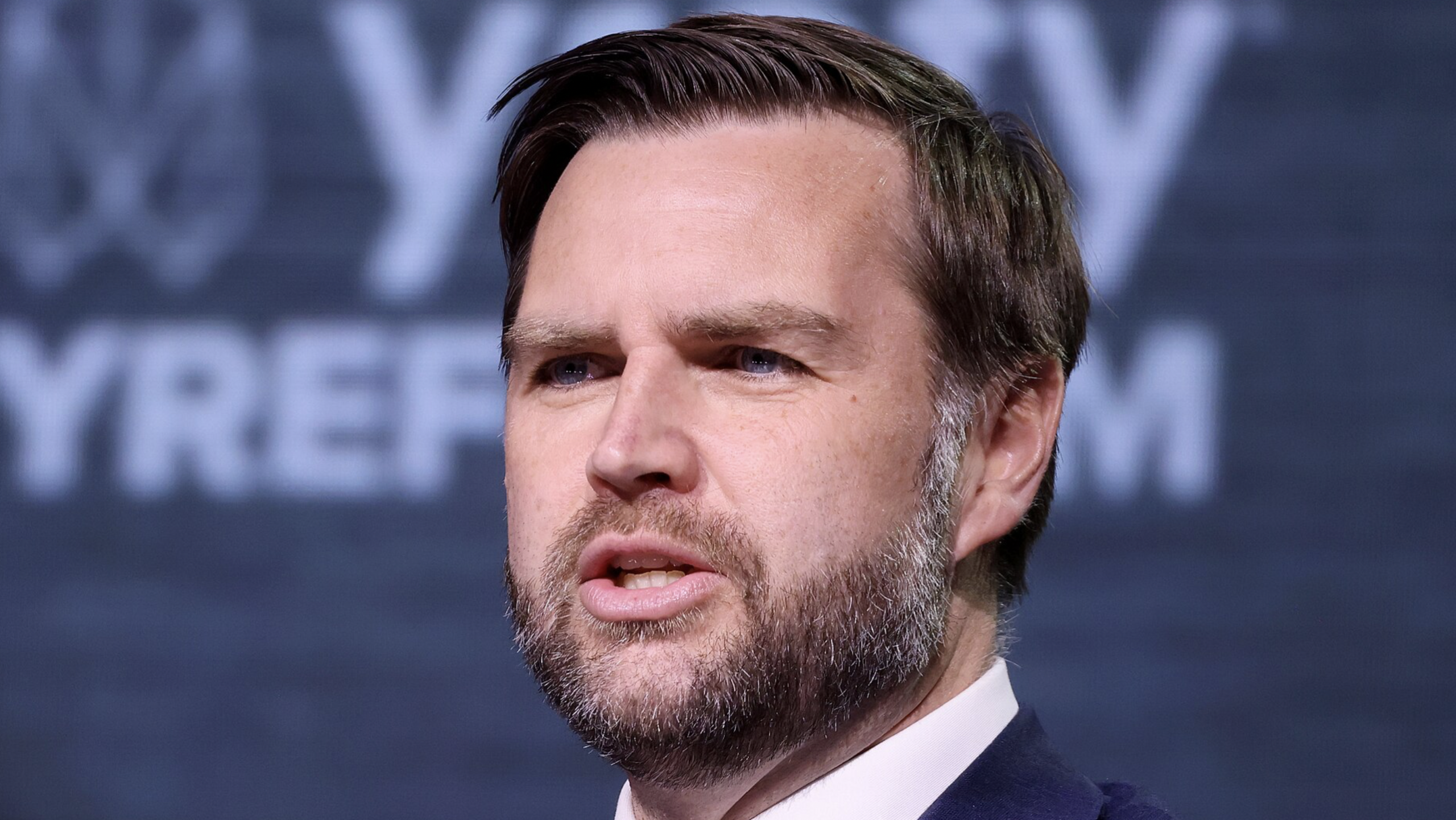
Vice President JD Vance acknowledged Sunday that a nuclear agreement with Iran — a deal the Trump administration has long promised to deliver — could still be months away, a candid admission that underscores the complexity of negotiations now unfolding more than 100 days after the United States first went to war with the Islamic Republic.
Speaking in an interview taped Tuesday morning and airing Sunday on CBS News’ CBS Sunday Morning, Vance projected optimism about the ultimate outcome of talks but offered no firm timeline for when a formal agreement might be reached. His remarks mark a notable shift in tone from a White House that has repeatedly insisted a deal was close at hand.
“Very Close,” but “Still Got Some Wood to Chop”
Vance told CBS that the administration is “very close” on achieving a deal with Iran, but that exactly how close remains to be seen. In his own words, the vice president put the window plainly: “Look, I think that the deal could happen in the next week, but the deal could also happen months from now.”
When pressed by interviewer Robert Costa on whether a deal would arrive before November’s midterm elections, Vance was unequivocal. “Oh, absolutely,” he said. “I think we’re going to know a lot before the midterm elections.”
The vice president framed the broader goal of negotiations in generational terms, describing an agreement that would outlast the current administration. “Right now, I feel that we are in a position to get a deal that is good for the United States economically and that really does deal with the Iranian nuclear program, not just now, not just while Donald Trump is president, but for the long term to where my kids can say when they’re adults, Iran is not going to have a nuclear weapon,” Vance said. “That’s the goal of the policy and I think we’re very close to achieving that goal, but we still got some wood to chop and we’re going to keep doing it.”
A Conflict That Was Supposed to End Quickly
Vance’s comments stand in contrast to the administration’s own earlier projections. From the very beginning of Operation Epic Fury — the U.S. military campaign against Iran — President Trump stated the conflict would be a four-to-six-week operation to dismantle the military threat posed by the Iranian regime. The White House declared the military objectives met in just 38 days, after Iran agreed to a ceasefire and the reopening of the Strait of Hormuz.
But a ceasefire has not meant a deal. Back in February, President Trump had warned Iran to come to terms on a nuclear agreement within 10 to 15 days, telling reporters that “two weeks should be enough time.” That deadline came and went without an agreement, and the conflict escalated before a ceasefire was eventually brokered.
On Monday, President Trump said a deal aimed at ending the war would be reached over the next two weeks. By Tuesday morning, he told reporters it could be “in two or three days,” before announcing that Iran had downed an Apache helicopter and vowing to respond. The whipsaw of presidential statements has defined a negotiation that has proven far more complicated in practice than the administration’s early projections suggested.
The Question of Trust
When asked during the CBS interview whether Iran was stringing President Trump along in negotiations, Vance pushed back. “No, I don’t think so,” he said. “I think their system takes a long time to reach consensus.”
Vance then relayed what he described as the president’s own philosophy on the matter — one rooted not in trust of the other side, but in confidence in American negotiating power. “I always hear people ask me, ‘Do you trust the Iranians?’ And what the president has said is, ‘I don’t trust anybody. I don’t trust anybody. What I do trust is my own ability to negotiate. I trust our administration’s ability to negotiate. And I trust the enforcement provisions that we’re going to get in,'” Vance said.
The Path to This Moment
The road to the current talks has been long and winding. Upon returning to office, President Trump restored maximum pressure on Iran to deny it all paths to a nuclear weapon and counter its malign influence abroad. In June 2025, after Iran refused to reach a deal with the United States, President Trump authorized Operation Midnight Hammer, which obliterated Iran’s nuclear facilities and significantly set back Tehran’s nuclear ambitions.
The administration later launched a second, larger operation — Operation Epic Fury — with Trump declaring his first preference had always been diplomacy, but that the regime had “continued their relentless quest for nuclear weapons and rejected every attempt at an agreement.”
A ceasefire was reached on April 8, 2026, mediated by Pakistan, with the United States and Iran agreeing to a temporary two-week pause in hostilities. On April 21, President Trump extended the ceasefire indefinitely. Since then, both sides have continued indirect negotiations over the terms of a permanent nuclear agreement, with Pakistan playing a central mediating role.
As recently as last week, Vice President Vance said the two sides were still “going back and forth” on a memorandum of understanding that could extend the ceasefire for 60 days and begin deeper talks on Iran’s nuclear program, adding “we’re not there yet, but we’re very close.”
The Stakes of a Deal
Despite the uncertain timeline, Vance made clear on Sunday that the administration views a nuclear agreement as a historic prize worth pursuing carefully. Just days earlier, on Monday, the vice president had told Fox News that a deal preventing Iran from obtaining a nuclear weapon would be a “home-run win for the American people,” adding, “Over the last year and a half, we’ve created the space necessary where the president believes — and I think that he’s right — that we can get the long-term settlement to Iran’s nuclear deal.”
The Iran nuclear question has also taken on an international dimension, with President Trump and Chinese President Xi Jinping agreeing during a recent summit that Iran cannot have a nuclear weapon and calling for the reopening of the Strait of Hormuz. The alignment between Washington and Beijing on that core principle has given American negotiators an additional point of leverage as talks continue.
For now, the administration’s position is one of deliberate patience — confident in the outcome, but unwilling to put a clock on it. As Vance summed it up on Sunday, the deal could come next week. It could also come months from now. And that, the vice president made clear, is a timeline the White House is prepared to live with.