
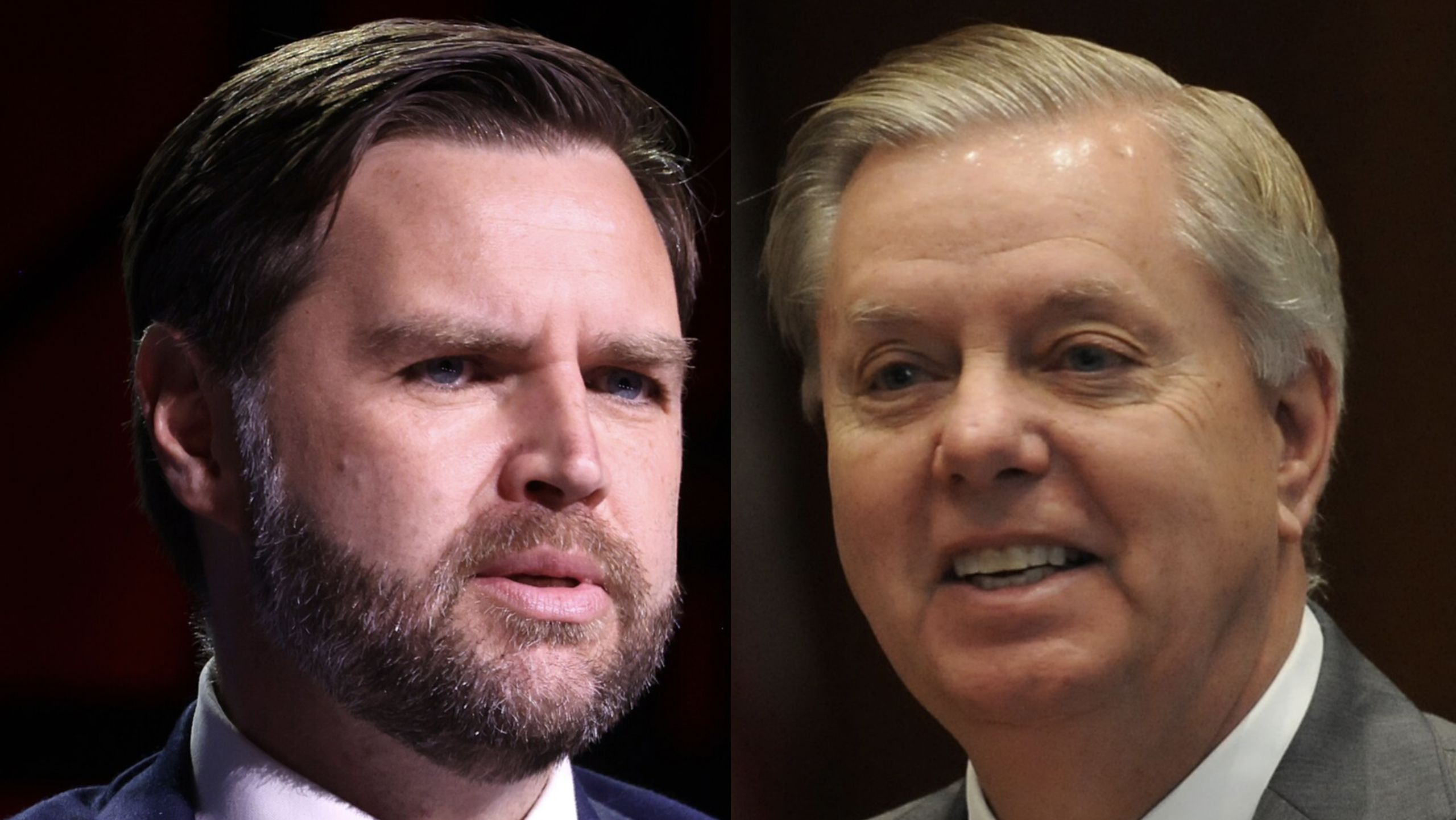
Vice President JD Vance paid tribute to Senator Lindsey Graham on Sunday, July 12, 2026, hours after the South Carolina Republican’s office confirmed he had died from “a brief and sudden illness” at age 71. In a lengthy post on X published at 9:00 a.m., Vance described a lawmaker who rose from humble roots in the South to become one of the most powerful men in Washington — a hawkish, combative, and often unpredictable ally whose death leaves a void atop the Senate’s foreign policy ranks.
Graham’s death was announced early Sunday, just hours before he had been scheduled to appear on NBC’s “Meet the Press” to discuss a newly announced package of sanctions against Russia following his recent trip to Ukraine. He had spent more than two decades in the Senate representing South Carolina, most recently securing his party’s nomination for a fifth term after fending off five primary challengers last month.
Vance’s Full Statement
Vance’s tribute, posted to his official X account, read in full:
“Lindsey Graham came from humble beginnings and became one of the most powerful lawmakers in the most powerful nation on Earth. His story was a fundamentally American one.
Early in my Senate tenure, I remember getting into a shouting match with Lindsey about a Ukraine funding bill at lunch and then learning the very next day that he was pushing rail legislation I really cared about behind the scenes. That was Lindsey Graham. He fought like hell for the things he believed in, and he was just as willing to go to bat for you when it counted.
Lindsey had the best sense of humor in the Senate. He loved the game of politics. He was constantly asking which races were up and down, and how he could help. As he liked to say, ‘I don’t care if you’re an isolationist or a religious fanatic, so long as you have an R next to your name, I want you to win.’
We certainly had our disagreements. But I couldn’t help but like him. A one of a kind figure in our politics. I’ll be praying for him and his family.”
A Relationship Built on Disagreement
Vance’s tribute did not gloss over the friction that had periodically defined his working relationship with Graham. The two men, despite standing on the same side of the aisle, often represented opposing wings of the modern Republican Party on foreign policy — Vance associated with a more restraint-minded, “America First” posture, and Graham a lifelong interventionist who pushed for an assertive U.S. military footprint overseas.
That tension surfaced publicly earlier this year, when Vance appeared on ABC’s “Good Morning America” and was asked about public skepticism Graham had voiced toward a newly signed U.S.-Iran agreement. Vance pushed back directly, cautioning Graham “and anybody else not to believe the hardliner propaganda in Iran.” Graham had spent months questioning the negotiations and had pressed Vance to answer for the deal’s terms before Congress. It was one of several moments in recent years when the two men’s differing instincts on national security became public, even as they remained aligned on the broader Trump agenda.
Sunday’s statement suggested those disagreements never soured the underlying relationship. Vance’s anecdote about clashing with Graham over a Ukraine funding bill — only to learn the senator was quietly working to advance a rail bill Vance supported — was offered as an illustration of Graham’s willingness to separate policy disputes from personal loyalty, a trait Vance singled out as core to how Graham operated in the Senate.
Graham’s Final Trip and Unfinished Business
Graham’s death came just days after he returned from what would be his last overseas trip, a visit to Ukraine during which he toured a drone factory and met with President Volodymyr Zelensky. The visit was tied to the sanctions package against Russia that Graham had planned to detail publicly on Sunday morning before his death intervened; Trump ultimately appeared in Graham’s place on the program.
Zelensky, reacting to the news, wrote that he was “deeply saddened” by Graham’s death, calling him “a true defender of freedom and the values that make our world safer.” Graham had made numerous trips to Kyiv since Russia’s 2022 invasion, often traveling despite active Russian bombardment of the capital, and had become one of the Senate’s most consistent voices pushing for continued U.S. military support for Ukraine throughout the Trump administration.
Tributes From Across the Administration and Beyond
Vance’s statement was one of many issued Sunday by senior officials and world leaders. President Trump, a longtime golfing partner of Graham’s who had once been the target of some of the senator’s sharpest criticism during the 2016 campaign, wrote that Graham was “one of the greatest people and Senators I have ever known” and called him a “true American Patriot.”
Senate Majority Leader John Thune credited Graham with believing in “the might of America to achieve good in the world,” while Israeli Prime Minister Benjamin Netanyahu described losing “one of its greatest friends” in Graham, whose support for Israel had spanned decades and multiple administrations.
From Trump Critic to Trump’s “North Star”
Graham’s decades-long career was defined in part by his dramatic political transformation. During Trump’s first presidential campaign in 2015, Graham was among his fiercest Republican critics, at one point telling voters to tell Trump “to go to hell” in a CNN interview, and he later said he had cast his own 2016 ballot for independent candidate Evan McMullin rather than Trump or Hillary Clinton.
That relationship shifted after a March 2017 meeting with the newly inaugurated president, and by Trump’s second term, Graham had become one of his most trusted allies in the Senate, at one point describing himself as the president’s “North Star.” He chaired the Senate Judiciary Committee from 2019 to 2021, overseeing the confirmation of Amy Coney Barrett to the Supreme Court, and took over the Budget Committee in January 2025, where he played a central role in shepherding Trump’s tax and spending package through Congress via the reconciliation process.
A Life That Began Behind a Bar
Graham was born on July 9, 1955, in Central, South Carolina, the elder of two children raised by parents who ran a bar and restaurant known as the Sanitary Cafe. Both of his parents died within roughly fifteen months of each other when Graham was in his early twenties — his mother of Hodgkin lymphoma, his father of a heart attack — after which Graham became the legal guardian, and later adopted father, of his younger sister so she could receive his military benefits.
He went on to become the first in his family to attend college, earning both his undergraduate and law degrees from the University of South Carolina before serving as an Air Force lawyer from 1982 to 1988. He was later briefly deployed to Iraq and Afghanistan while serving in the Senate, retiring from the Air Force Reserve as a colonel in 2015. He never married and had no children; his sister, Darline Graham Nordone, survives him.
Filling the Seat
Under South Carolina law, Governor Henry McMaster can immediately appoint a temporary replacement to fill Graham’s Senate seat. Graham had been set to face Democrat Annie Andrews, a pediatrician, in November’s general election. His death leaves Senate Republicans without one of their most senior lawmakers at a moment when the party is already contending with the prolonged hospitalization of Kentucky Senator Mitch McConnell, tightening the GOP’s working margin in the chamber.
For Vance, whose own political rise has been shaped by a more restrained foreign policy instinct than Graham’s, Sunday’s statement closed on a note of personal warmth rather than policy alignment. “We certainly had our disagreements,” Vance wrote. “But I couldn’t help but like him. A one of a kind figure in our politics. I’ll be praying for him and his family.”