
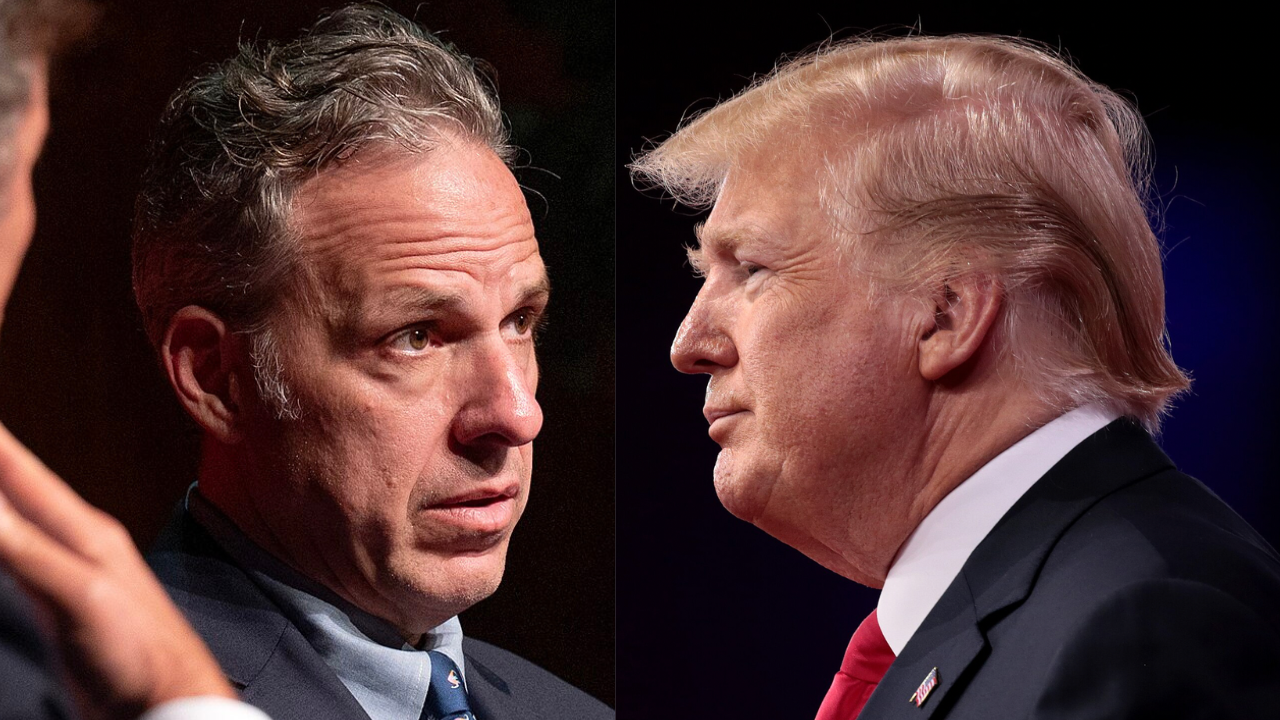
CNN anchor Jake Tapper publicly criticized the Trump administration on Tuesday, August 11, 2026, over revelations that President Donald Trump was secretly extracted from Turkey last month using a catering container and a decoy military flight, arguing that government staffers and journalists should never be used as unwitting decoys during a credible security threat.
In a post on X published at 2:46 p.m. on August 11, Tapper wrote in full:
“The job of government staffers and journalists is not to serve as decoys when there’s a credible threat requiring the primary to surreptitiously be exfiltrated from the vehicle.”
The post came in response to reporting from The New York Times and The Washington Post detailing how Trump was moved out of Turkey following the NATO summit in Ankara on July 8, after officials determined there was a credible threat against him from Iran.
According to the Times, senior administration officials engineered an elaborate deception to move Trump out of Turkey, transporting him in an airport catering container to a military jet rather than allowing him to depart on the aircraft the public had been told he would use.
Trump and administration officials had told the public he would leave Turkey aboard an older version of Air Force One rather than the newer 747-8 aircraft donated by Qatar that he had flown in on, with Trump telling reporters at the time the switch was for “old times’ sake.”
Trump boarded the older aircraft from its left-side door in view of cameras, and journalists traveling with him, including those from the Times, reported that he had flown on that plane to a military base in Britain, where he later switched back to the newer aircraft. Instead, according to the Times, Trump was moved off that plane through a catering container lifted to the opposite side of the aircraft, then taken to a third plane he used to secretly fly to Britain, leaving reporters and some White House staff members as unwitting decoys.
Tapper elaborated on his position in a separate post the same day, writing that while the safety of the president is paramount and previous administrations have used deception to protect a president’s life, he had not spoken to any officials who had “ever before heard of using an AF1 full of WH staff and journalists as a decoy during an imminent threat.”
Tapper also drew a contrast with his own past experience covering a president in a war zone, describing a trip to Afghanistan during which an insurgent missile struck the runway at Bagram Air Base before landing and a planned Marine One trip to Kabul was scrubbed due to weather. He wrote that on that occasion, “We were w/president the whole time. Our safety wasn’t treated any differently from his. We were never decoys.”
Donald Mihalek, a former Secret Service agent who worked protective details for Presidents George W. Bush and Barack Obama, told the Times that the Secret Service has previously used decoy motorcades and flights to move presidents in potentially dangerous environments. “Anytime the president is in a theater where there’s potential combat danger, the Secret Service has employed protective counter measures including the use of a decoy,” Mihalek said, adding that the agency prioritizes presidential security over public transparency: “The agency is not the agency of public affairs. The agency is the agency of the Secret Service. Their number one job is to keep the president safe.”
The Times reported that the threat from Iran was not specific to any single aircraft but followed Trump on whatever plane he used, and that the operation was developed within hours after officials assessed the threat as credible. A small group of senior officials was reportedly involved in planning the deception, including Gen. Dan Caine, chairman of the Joint Chiefs of Staff, and Defense Secretary Pete Hegseth.
White House Communications Director Steven Cheung had previously hinted at the use of deception in Trump’s departure from Turkey, telling reporters at the time, “As the president has said recently, there are many enemies of America who have their sights on him, and we use every tool at our disposal — including distraction and misdirection — to address those threats.” Following the Times report on Monday, the White House reissued a version of Cheung’s statement that omitted the reference to “distraction and misdirection.”
When reporters asked Trump aboard the flight back to Washington why the press had been flown to Britain on the older aircraft, he said he had wanted troops stationed at the British base to see the newer plane. Asked why window shades had been ordered closed during the flight from Turkey, Trump said he was unaware of a specific threat but described himself as being under constant threat from Iran, telling reporters, “I’m number one on their list, before you. But if I go, you go. Right?”
The episode is the latest flashpoint in tensions between Trump and journalists covering threats stemming from the war with Iran, which Trump launched on February 28, 2026. After the Times’ earlier reporting on security shortcomings involving the Qatari-donated jet, the Justice Department issued grand jury subpoenas to reporters involved in the coverage and some of their family members; those subpoenas were later withdrawn after a federal judge criticized the process used by prosecutors.
Other journalists who were aboard the decoy flight also responded publicly to the disclosures on Tuesday. According to reporting from the Washington Post, national security reporter Dan Lamothe said the outlet’s sources believed “there was a hole in the public understanding here that needed to be clarified,” noting that roughly a month had passed since the incident with no public accounting of what occurred.
The White House Correspondents’ Association has previously been informed in advance of similar security measures involving decoy aircraft. During a 2000 trip in which then-President Bill Clinton used an unmarked jet to fly into Pakistan while sending the official Air Force One as a decoy, WHCA president Susan Page said officials had informed her in advance of the “extraordinary security procedures being taken because of the dangers in flying there, including use of the decoy plane.”
Tapper’s criticism adds to a broader pattern of scrutiny CNN and other outlets have directed at the Trump administration’s handling of information related to the Iran conflict, including previous disputes over Pentagon transparency regarding U.S. casualty reporting from the operation. As of Tuesday afternoon, the White House had not issued an additional statement directly responding to Tapper’s remarks.