
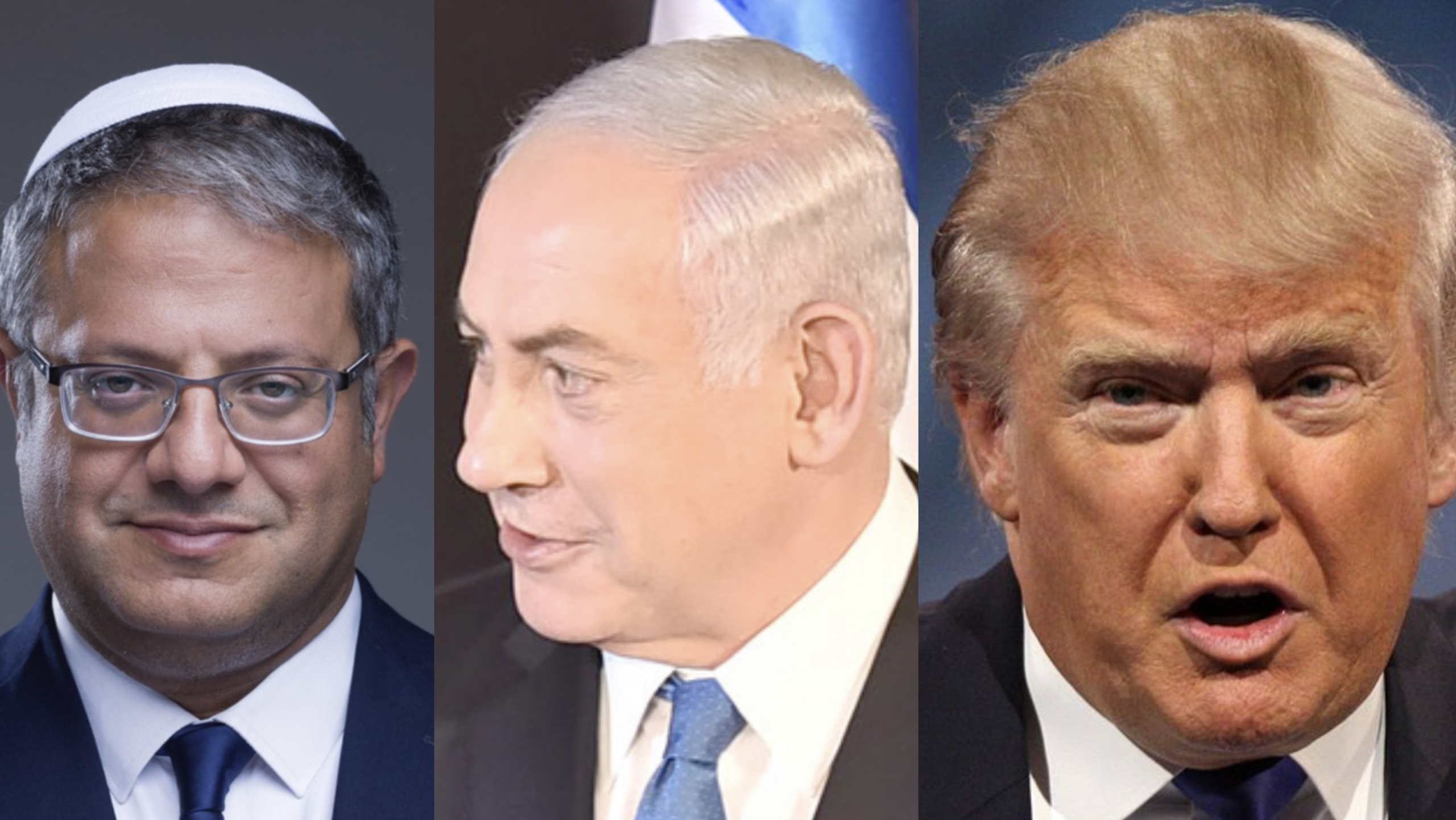
Within hours of President Donald Trump declaring a halt to hostilities between Israel and Hezbollah on June 1, 2026, one of the most powerful far-right voices inside the Israeli government issued a direct and public rebuke — not of Hezbollah, but of the deal itself. Israeli Minister of National Security Itamar Ben Gvir took to X to demand that Prime Minister Benjamin Netanyahu reject the U.S.-brokered arrangement outright and order an immediate resumption of military strikes against the Iran-backed militant group. The message, posted at 1:20 p.m. on June 1, laid bare the deep fissures within Israel’s governing coalition over how far to follow Washington’s lead — and how much of the war’s momentum Netanyahu is willing to surrender at Trump’s request.
The Post in Full
Ben Gvir’s message was addressed directly to Netanyahu and invoked the prime minister’s own past rhetoric as the basis for defiance. The full text of the post read:
“Mr. Prime Minister,
You said that a strong prime minister tells the President of the United States—’yes’ when possible, and ‘no’—when necessary.
This is the time to tell our friend, President Trump—’no’.
Now is the time to do what is required and necessary to strike Hezbollah, to unleash the hands of our fighters, and to restore security to the north.”
The post was a striking public challenge from a sitting cabinet minister to his own prime minister on one of the most sensitive diplomatic questions facing Israel — whether to continue military operations against a U.S.-designated terrorist organization at a moment when Washington was actively working to wind down the conflict.
Who Is Itamar Ben Gvir
Itamar Ben Gvir has served as Israel’s Minister of National Security since 2022, with a brief two-month gap in early 2025, and has led the far-right party Jewish Power (Otzma Yehudit) since 2019. His party had resigned from the government two months prior in opposition to a ceasefire-hostage release agreement, then returned to the coalition — with Ben Gvir restored to his ministerial post, a reappointment ratified by the government over the objections of the Attorney General. That pattern — departing over a ceasefire, returning, then immediately resuming pressure against any further diplomatic accommodation — has defined Ben Gvir’s role in Netanyahu’s coalition throughout the war. As National Security Minister, Ben Gvir oversees the national police and the Border Police in the West Bank, though his political influence has extended well beyond law enforcement into the strategic and military debates dominating Israel’s war cabinet.
The Ceasefire Ben Gvir Was Rejecting
The arrangement Ben Gvir was pushing against had been announced just hours earlier by Trump himself. In a Truth Social post on June 1, Trump claimed he had personally brokered a halt to hostilities by speaking directly with Netanyahu and with representatives of Hezbollah’s leadership. “I had a conversation with Bibi Netanyahu today, asking him not to go into a major raid of Beirut, Lebanon. He turned his Troops around. Thank you Bibi!” Trump wrote. He also said Hezbollah representatives had agreed to stop firing at Israel, and that Israel had agreed to do the same — adding his own caveat: “Let’s see how long that lasts — Hopefully it will be for ETERNITY!” Lebanon’s embassy in Washington confirmed that Hezbollah had accepted a U.S. proposal for a mutual cessation of hostilities to be extended across all Lebanese territory.
Netanyahu’s Own Ambiguity
The ceasefire Trump proclaimed had itself arrived under strained circumstances. Netanyahu’s public statement, issued roughly two hours after Trump’s post, avoided confirming a new ceasefire outright. The Israeli prime minister said he had told Trump that “if Hezbollah doesn’t cease its attacks on our cities and civilians — Israel will strike terror targets in Beirut,” and added that Israeli forces “will continue to operate as planned in southern Lebanon.” Two Israeli officials told Reuters that Israel would wait for Trump’s final approval before any operation in Beirut’s southern suburbs — a detail that reinforced the perception that Washington had effectively constrained Israeli decision-making on the ground. Netanyahu’s careful wording handed Ben Gvir an opening: if the prime minister himself had not fully endorsed the deal, the National Security Minister’s call to reject it was not entirely outside the bounds of the coalition’s internal debate.
Ben Gvir’s Argument: A Leader Knows When to Say No
The rhetorical foundation of Ben Gvir’s post rested on a phrase Netanyahu had himself deployed in past speeches — that a strong prime minister tells the American president “yes” when possible and “no” when necessary. By turning that line back on Netanyahu, Ben Gvir was making the case that the present moment met that threshold. In Ben Gvir’s framing, agreeing to halt strikes on Hezbollah while northern Israel remained under threat was not strength — it was capitulation dressed in diplomatic language. Ben Gvir, a key member of Netanyahu’s coalition, argued it was time to “remove the constraints on our fighters” and intensify the Hezbollah offensive.
A Day of Cascading Threats That Made the Stakes Clear
The day that produced this confrontation had been one of the most volatile in the broader regional conflict. Netanyahu had ordered strikes on Hezbollah-controlled areas in Beirut’s southern suburbs, known as Dahiya, after the group launched more than 20 attacks on Israeli military targets over Sunday and Monday. The United States military intercepted two Iranian ballistic missiles targeting American forces based in Kuwait, with U.S. Central Command confirming the interception and posting: “U.S. Central Command remains vigilant and will continue to protect our forces from Iranian aggression while supporting the ongoing ceasefire.” Iran’s semiofficial Tasnim News Agency, affiliated with the Islamic Revolutionary Guard Corps, also reported that Tehran would seek to close the Strait of Hormuz in response to Israeli military actions, sending oil prices surging and adding to the day’s diplomatic chaos.
Northern Israel and the Security Rationale
Central to Ben Gvir’s argument was the situation in northern Israel, which has endured sustained Hezbollah fire throughout the broader regional conflict that escalated after U.S. and Israeli forces began military operations against Iran in February 2026. Thousands of civilians had already been displaced from Beirut’s southern suburbs by the day’s bombardment before Trump’s announcement was made. The broader Israel-Hezbollah war had escalated sharply in March when Hezbollah began firing on Israel in solidarity with Iran. Ben Gvir’s call to “restore security to the north” reflected a widely held position within Israel’s right-wing political establishment: that any pause in military pressure allows Hezbollah time to regroup, rearm, and reinforce its positions, repeating a cycle that Israeli officials argue has defined every prior ceasefire in Lebanon’s history.
Not the First Time Ben Gvir Has Challenged a Ceasefire Deal
This episode was consistent with a pattern that has defined Ben Gvir’s tenure throughout Israel’s current series of conflicts. He resigned from Netanyahu’s government over the Gaza ceasefire deal earlier in 2025, calling it “a reckless deal” that would “erase the achievements of the war” by releasing Palestinian militants and leaving Hamas intact. As recently as late May 2026, Ben Gvir had argued during a press briefing that the entire Israeli cabinet could not “allow” a peace deal to materialize between the United States and Iran, suggesting that the broader Israeli government was aligned with his position that the regional war must continue to a definitive conclusion. His June 1 post followed that logic directly into the Lebanon theater.
International Alarm and the UN’s Response
Even as Ben Gvir was posting his challenge, the United Nations Security Council called an emergency session to discuss Lebanon, underscoring the international alarm at how rapidly the situation had deteriorated. The UN Secretary-General’s spokesman Stephane Dujarric issued a statement warning that the world body was “deeply alarmed by the escalation in military activities across southern Lebanon and beyond,” and urged “all actors to respect the cessation of hostilities and avoid further escalation.” The call for restraint from international bodies stood in direct contrast to Ben Gvir’s demand for intensification — a divergence that illustrated the extent to which Israeli domestic politics and international diplomatic pressure were now operating in near-total opposition.
Trump Pushes Back, Urges Patience
Trump, for his part, addressed the broader pressure on the diplomatic process directly. In an earlier Monday post on Truth Social, the president wrote: “Just sit back and relax, it will all work out well in the end — It always does!” He claimed Iran “really wants” a deal and suggested that domestic political pressure from both parties had complicated negotiations. Whether that message reached Ben Gvir — or was intended to — was unclear. The National Security Minister’s post made no mention of Iran’s broader diplomatic posture or the status of U.S.-Iran talks, focusing instead on the singular objective of military action against Hezbollah without the constraints Washington was seeking to impose.
What It Means for Netanyahu
Ben Gvir’s public post placed Netanyahu in a familiar and uncomfortable position: squeezed between an American president seeking credit for a diplomatic win and a far-right coalition partner demanding the military be given a free hand. Netanyahu’s government depends on parties like Ben Gvir’s Jewish Power for its parliamentary majority, meaning any move the prime minister makes to fully embrace the Trump-brokered ceasefire carries political risk at home. At the same time, two Israeli officials told Reuters that Israel was waiting for Trump’s final approval before any major operation in Beirut — suggesting that regardless of Ben Gvir’s demands, the prime minister’s room to maneuver may be more constrained than the National Security Minister’s post implied. The tension between those two realities — a far-right coalition partner demanding escalation and a Washington-dependent security establishment awaiting American permission — defined June 1 as much as any missile intercept or ceasefire announcement.
The Fragility on Display
Whether Trump’s arrangement holds remains, by Trump’s own acknowledgment, uncertain. The prior Lebanon ceasefire brokered by the U.S. in April had been extended multiple times while Israel and Hezbollah continued to exchange daily fire — a pattern that Ben Gvir’s post effectively argued should not be permitted to repeat itself. For Ben Gvir, the question was not whether a ceasefire could hold, but whether one should be accepted at all. “Now is the time to do what is required and necessary to strike Hezbollah,” he wrote — a message addressed to Netanyahu, but readable by every government in the region watching to see whether Israel would follow Washington’s lead or chart its own course.