
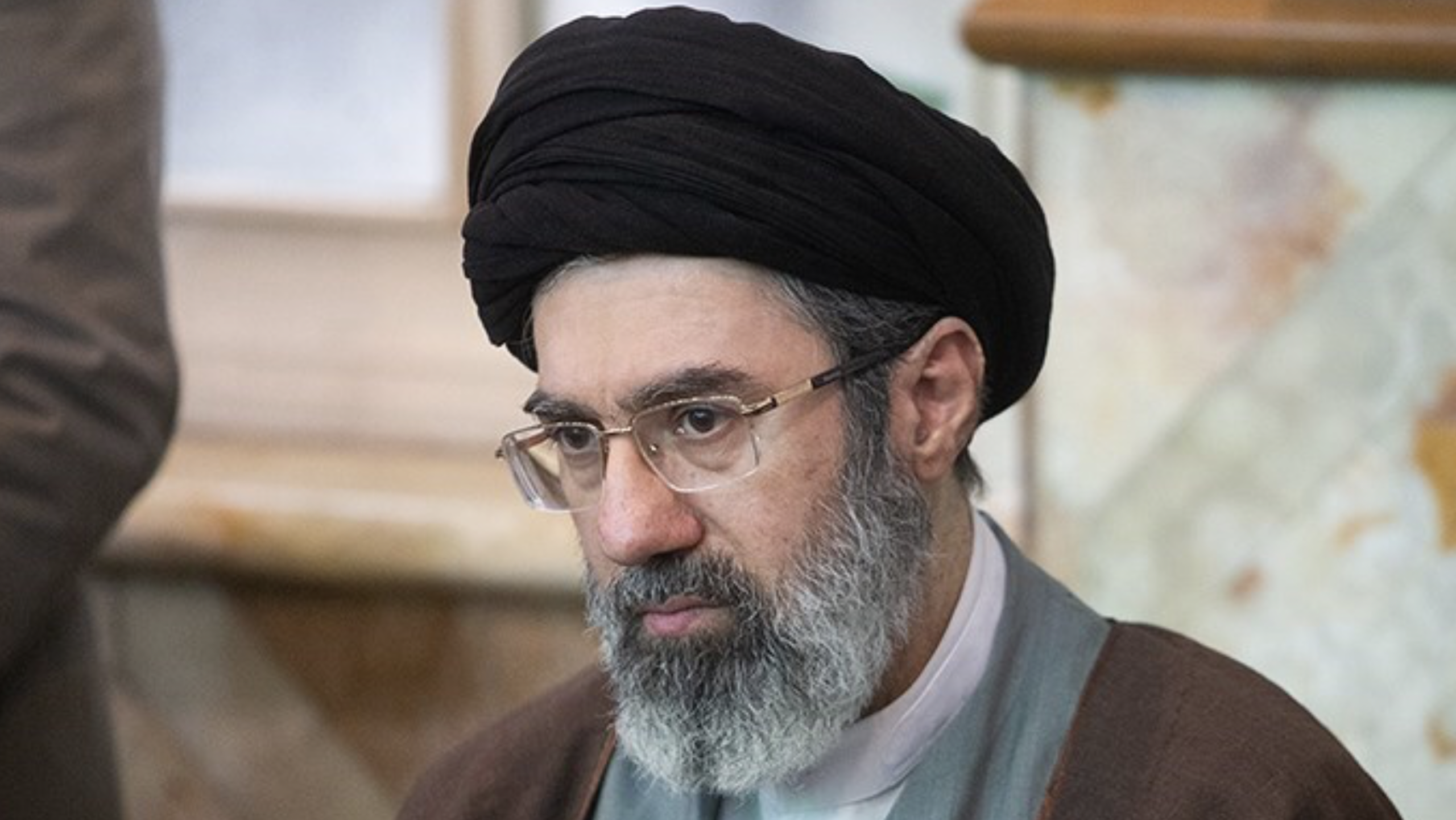
Iran’s Supreme Leader Mojtaba Khamenei issued one of his most sweeping and defiant warnings yet against the United States on Tuesday, declaring through posts on X that American military bases across West Asia are no longer secure and that the region has permanently changed — a direct challenge to Washington delivered even as diplomatic negotiations between the two countries continue through a Qatari mediator. The remarks, timed to the opening of the Hajj pilgrimage season, came just hours after the U.S. military conducted fresh strikes inside southern Iran, raising new questions about whether a fragile ceasefire can hold.
A Message Tied to Hajj, Aimed at Washington
Khamenei’s statement was issued in the context of the Day of Arafah — the second and most sacred day of the annual Hajj pilgrimage to Mecca. In a 14-page written message marking the Eid al-Adha holiday and the Hajj pilgrimage, Khamenei declared that the United States “in addition to no longer having any safe haven in the region for aggression and the establishment of military bases, is moving further and further away from its former position with each passing day.” In posts to his official X account, Khamenei stated directly: “The United States will no longer have a safe haven for its mischief and for establishing military bases in West Asia.” He also posted: “What is certain in this regard is that the hands of time will not turn back, and the nations and lands of the region will no longer serve as shields for US bases.”
The statements were among the most explicit threats Khamenei has made regarding the American military presence across the region since ascending to the supreme leadership. Al Jazeera, citing the Council on Foreign Relations, has noted that the United States operates a broad network of military sites — both permanent and temporary — across at least 19 locations in the Middle East, including countries such as Bahrain, Kuwait, Iraq, the UAE, and Qatar.
Senior Iranian Official Doubles Down
Khamenei’s warning was quickly amplified by senior regime figures. Nasser Arasteh, deputy head of the supreme leader’s military advisory body, echoed the statement’s tone, saying: “In the future, the United States will have no place in the Persian Gulf, and this will be realised either with war or without war.” In his message, Khamenei also asserted that the balance of power in the region has fundamentally and irreversibly shifted, pointing to what he described as increasing reliance on missile power and drone capabilities in land, air, and sea operations.
Strikes in Southern Iran Preceded the Remarks
The statements arrived a day after the latest direct military action between the two sides. U.S. Central Command struck missile targets and mine-laying boats in southern Iran late Monday, with CENTCOM spokesman Capt. Tim Hawkins stating: “U.S. forces conducted self-defense strikes in southern Iran today to protect our troops from threats posed by Iranian forces. Targets included missile launch sites and Iranian boats attempting to emplace mines.” Hawkins added that U.S. Central Command was continuing “to defend our forces while using restraint during the ongoing ceasefire.”
According to U.S. defense officials, the strikes specifically targeted two Islamic Revolutionary Guard Corps naval vessels in the Strait of Hormuz that were reportedly laying naval mines, and a surface-to-air missile site in Bandar Abbas that had been tracking American aircraft operating in the region. Iran’s Foreign Ministry responded by saying the United States had “committed a gross violation” of the temporary truce, stating that “Iran holds the U.S. regime responsible for all the consequences resulting from these aggressive and unjustified actions.”
Tehran Retaliating Since February
The current cycle of hostilities stretches back to the opening of the conflict in late February. Tehran has repeatedly targeted American bases and energy infrastructure throughout the region in the months since. Six U.S. service members were killed during a March drone strike on a makeshift office space in Kuwait. As of Tuesday, official Pentagon statistics put the current U.S. casualty toll at 423, an increase of three wounded from the War Department’s last official tally issued on Friday.
Peace Talks Continue Despite the Tensions
Despite the escalatory rhetoric and fresh military action, diplomatic efforts have not collapsed. Secretary of State Marco Rubio, speaking to reporters in Jaipur, India on Tuesday, said negotiations to end the conflict are continuing with Qatar serving as the mediator. “I think there’s strong alignment and agreement on what a preliminary draft should look like,” Rubio said, while acknowledging the road ahead: “I think like anything with something like this, it’s going to take a couple days to settle on even down to the disagreements over a word, a sentence. So we’ll have to work through that.” He added: “It’s either going to be a good deal or there isn’t going to be one.” President Trump said Saturday that a deal was “largely negotiated,” including a potential reopening of the Strait of Hormuz — a development that briefly eased pressure on global energy markets. The average price of standard gas in the United States stood at approximately $4.50 a gallon on Tuesday, according to AAA.
The Invisible Supreme Leader
The broader significance of Tuesday’s statements extends beyond their content. Khamenei has become one of the most consequential yet least-seen heads of state in the world since taking power. Mojtaba Khamenei has yet to appear in public since his appointment, and regime officials have indicated he was lightly injured during the ongoing war. Russia’s ambassador to Iran, quoted by the RTVI news outlet, said Khamenei is in the country but refraining from public appearances “for understandable reasons,” while the U.S. has said it believes Khamenei himself is wounded and likely disfigured.
Instead of appearing in person, statements attributed to the 56-year-old cleric have been read out on national television or posted on social media. The regime has even used AI-generated videos to show Khamenei delivering messages, fueling speculation that the new supreme leader is incapacitated or abroad. In the two months since his appointment, the new leader has made no public appearance and released no video or audio material, fueling sustained speculation about his physical condition. Iranian President Masoud Pezeshkian has claimed to have met with Khamenei in person for two and a half hours, though he provided no details on when or where the meeting took place.
How Mojtaba Khamenei Came to Power
Mojtaba Khamenei’s path to the supreme leadership was set in motion on February 28, when Israel killed his father and predecessor, Ayatollah Ali Khamenei, in an airstrike at the start of the joint U.S.-Israeli attacks on Iran. Mojtaba Khamenei, born on September 8, 1969, assumed the office of Supreme Leader of Iran on March 8, 2026, succeeding his father in the role. In his first statement attributed to him — read by a news anchor on Press TV — Khamenei called for national unity, vowed to keep the Strait of Hormuz closed as a pressure tool against Iran’s enemies, and said that all U.S. bases in the region should be immediately closed or would be attacked.
Tuesday’s X posts represent his most public and direct communication with the world since those early written statements — and his most explicit declaration yet that the conflict has reshaped the region in Iran’s favor, regardless of how current negotiations conclude.