
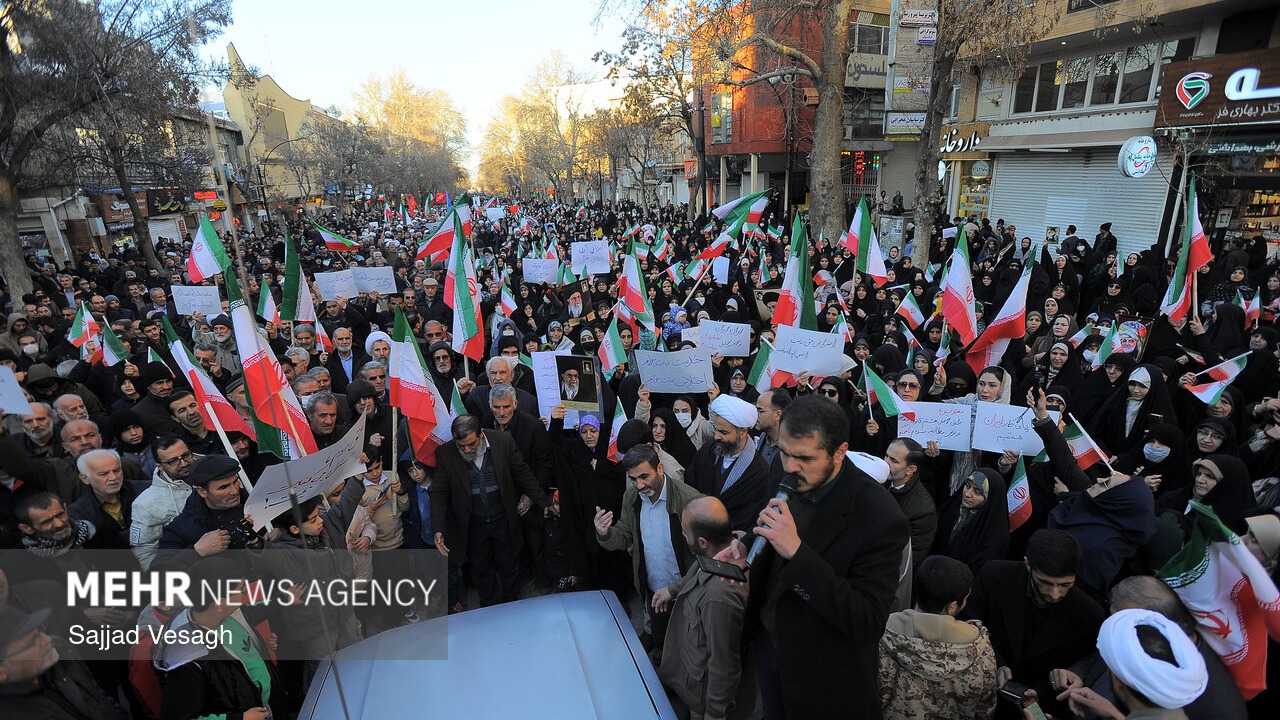
The uprising now gripping Iran is no longer a passing wave of anger. It has become a sustained confrontation that could reorder power at home and reverberate across the Middle East. If the current trajectory continues, I believe the region will have to adapt to an Iran that is either transformed from within or locked in a far more volatile standoff with its own people and its neighbors.
What began as protests over economic pain has widened into a direct challenge to the Islamic Republic’s authority. The stakes are stark: a state willing to kill and shut down the Internet to survive, and a society that, despite the cost, keeps returning to the streets with demands that now reach far beyond prices or wages.
From economic spark to nationwide revolt
The unrest did not appear from nowhere. It grew out of a grinding crisis in which Inflation hit a 40-month high of 48.6% in October and still stood at 42.2% in Decem, according to Iran’s Statistical Center, figures that signal a deep collapse in purchasing power for ordinary families and frame the overall economic challenges facing the country, as reported in recent Inflation coverage. Initially sparked by frustration over record high inflation, food prices, and currency depreciation, the protests quickly evolved into a broader movement that now calls for an end to the current regime, a shift captured in accounts of the Initially unfolding unrest. Protests broke out on 28 December 2025 because of soaring prices and the plummeting value of Iran’s currency, the rial, with reports noting that these Protests have become increasingly violent as security forces respond, a pattern detailed in recent analysis of Protests in Iran.
Since 28 December 2025, Iran has witnessed nationwide, violent protests driven by this economic collapse and by anger at corruption and repression, with reports describing how thousands have taken to the streets in cities and smaller towns alike and how both demonstrators and law enforcement personnel have been injured in the clashes, as detailed in assessments that describe how, Since that date, the country has moved closer to open confrontation between state and society, including in one study of Since Iran’s slide toward revolution and war. On the twelfth day of the uprising, Iran News in Brief described how Iranians Are Fed Up with Dictatorship and highlighted The Exiled Female Activists Daring to speak out, while also reporting that security forces had been ordered to use combat weapons against crowds, a chilling escalation captured in the Iran News briefing.
A regime facing its gravest internal test
The cost of this confrontation is already staggering. At least 500 people have been killed, and live tallies now put the figure at 544 people, as protests have lasted over 84 hours in some cities and spread into new regions, according to detailed What coverage of the crackdown. Iran’s rulers now confront their most serious challenge since their own 1979 revolution, and They are countering with a mix of lethal force, mass arrests, and propaganda, while one Iranian journalist has reflected on how the old tools of fear no longer work on a younger generation that has grown up online, a mood captured in recent reporting on Iran and its rulers. Some Iranian regime officials have framed the unrest as a foreign plot, yet internal monitoring by independent analysts notes that the lower rate of Protests recorded on some days reflects tactical shifts rather than exhaustion, with the Iran Update describing how Iranian Regime Rhetoric about the Protests has hardened even as demonstrations continue in waves, a pattern examined in the latest Iran Update.
Iranians are also experiencing a near total Internet blackout, with network connectivity data showing usage has dropped to 1% of normal levels after authorities cut access to mobile data and many fixed lines, a drastic step that underscores how threatened the leadership feels by images and organizing shared online, as documented in live coverage of how Iranians have been pushed offline. Domestic activists describe a population that is no longer willing to accept incremental reform, with slogans calling for the end of the Islamic system itself, and external observers now argue that The Islamic Republic probably will not survive in its current form by the end of 2026, a judgment offered by Dina Esfandiary in a detailed examination of how The Islamic Republic faces a legitimacy crisis that could reshape its politics and economy, as laid out in recent analysis by Dina Esfandiary.
Regional shockwaves and the risk of wider conflict
As the confrontation deepens, the regional stakes are rising. Iran has warned that US troops and Israel will be targets if America strikes over the protests as the death toll rises, a threat that highlights how quickly domestic unrest could spill into confrontation with Israel and America, as described in recent Related Stories on new threats on social media. Analysts of regional security note that as protests against Iran’s Islamic regime have expanded over the course of the past two weeks, U.S. and other intelligence services are reassessing the stability of a state that has long projected power through militias and partners, and they are weighing how a sudden collapse or a brutal consolidation could affect conflicts from Syria to Yemen, a concern laid out in a recent Iran focused intel brief.
Inside Iran, the sense of a historic turning point is palpable. Iran’s rulers face not only street protests but also a crisis of confidence among parts of the elite, with some insiders reportedly questioning whether the current path is sustainable, even as hardliners insist that any concession would invite collapse, a tension that helps explain the severity of the response described in multiple Iran focused security assessments. I see a regime that is prepared for war but also signaling, in some statements, that it remains open to talks with the United States, a dual track that reflects both fear of isolation and confidence in its capacity to survive, a posture that regional analysts link to the same leadership that has overseen the crackdown since late Iran 2025.
Washington’s dilemma and the future of the Islamic Republic
The turmoil in Iran is also testing Washington. Jan. 12, 2026, 3:39 AM PST appears in one detailed account of how the crisis has unfolded in US time zones, a reminder of how closely events in Tehran are being tracked in Washington and how quickly developments on the ground can force decisions in the White House, as noted in a report filed By Babak Dehghanpisheh, Garrett Haake and Alexander that traces the timeline of US reactions, which can be found in a detailed Jan dispatch. President Donald Trump has said Iran wants to negotiate but warned he may still carry out strikes against the Islamic regime, a statement that underscores the tension between supporting protesters and avoiding a war that could rally nationalist sentiment around the very authorities the crowds want to topple, as reported in coverage that quotes how President Donald Trump framed his options.
As I weigh these signals, I see a narrowing window in which outside powers can influence events without owning them. Iranians Are Fed Up with Dictatorship, as one exile network put it, and The Exiled Female Activists Daring to speak for those inside the country insist that any foreign role must respect the primacy of domestic agency, a point that emerges clearly in the Dictatorship focused briefings. The Islamic Republic probably will not survive in its current form if the current momentum holds, and if that prediction proves correct, the Middle East will have to absorb the shock of either a negotiated transition or a chaotic collapse, outcomes that would reshape alliances, energy markets, and security calculations far beyond Iran’s borders, as suggested in forward looking analysis of how The Islamic Republic may change.