
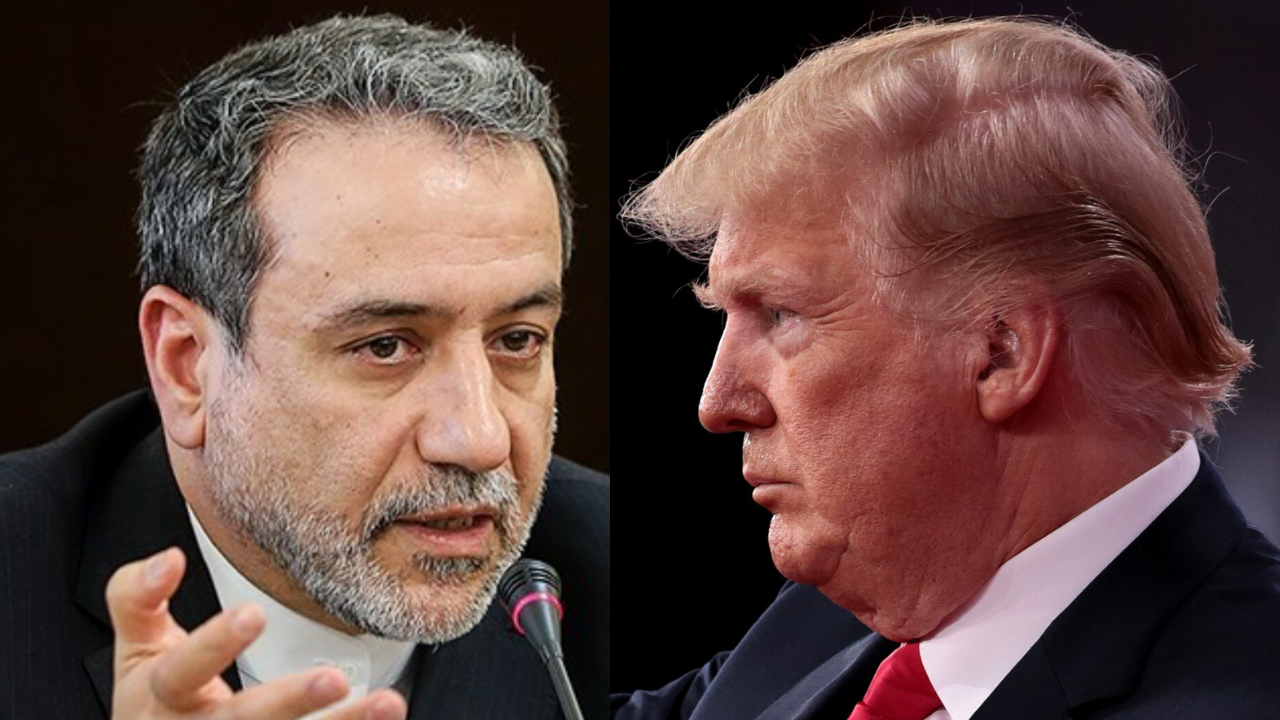
Iranian Foreign Minister Seyed Abbas Araghchi issued a stark public warning on Wednesday, declaring that Tehran would answer any attack on its territory or infrastructure with a “powerful and decisive response” and that any nation providing support for such an attack would itself become a “legitimate target.” The statement, posted to X at 1:30 p.m. on July 22, 2026, came hours after President Donald Trump vowed on Truth Social that the United States would destroy an Iranian bridge or power plant, including sites in or near Tehran, every time Iranian forces fire on a commercial vessel in the Strait of Hormuz.
Araghchi’s post read in full: “Our defense doctrine is clear: eye for an eye. Any aggression against Iran, including our infrastructure, will compel a powerful and decisive response. Those who contribute to such aggression, whatever the kind of support, will also be considered as legitimate targets.”
The warning was a direct response to Trump, who posted to Truth Social earlier that morning at 7:56 a.m.: “From this point forward, any time the Islamic Republic of Iran shoots at a ship in the Strait of Hormuz, whether it be by Missile, Rocket, Drone, or any other device or weapon, the United States will bomb and destroy ONE BRIDGE OR POWER PLANT, including those located next to, or in, the Capital City of Tehran. Thank you for your attention to this matter! President DONALD J. TRUMP.”
The exchange marks one of the most direct threats exchanged between the two governments since hostilities reignited earlier this month, following the collapse of a ceasefire and memorandum of understanding that had briefly paused the broader 2026 Iran war. U.S. Central Command carried out its 11th consecutive night of strikes on Iranian military targets on Tuesday, hitting operations centers, maritime capabilities, aircraft hangars, drone storage facilities, and logistics infrastructure in a campaign lasting roughly 75 minutes, according to a CENTCOM statement.
Araghchi’s wording was notably specific in its threat against third parties. By stating that “those who contribute to such aggression, whatever the kind of support, will also be considered as legitimate targets,” Tehran signaled that nations, companies, or entities facilitating American military operations against Iranian territory could themselves face retaliation, not just U.S. forces directly involved in strikes. The language extends Iran’s stated deterrence posture beyond the battlefield and into the logistics and diplomatic networks that support the American campaign.
Iran’s Parliament Speaker, Mohammad Bagher Ghalibaf, echoed Araghchi’s warning in his own post on X the same day, writing that “the equation of this war is clear: either all or none,” and adding that “in a region where we do not sell oil, no one will sell oil.” Ghalibaf also stated that the Strait of Hormuz “will not return to its pre-war status” and that “the security of the strait is in the absence of American forces.” Iran’s Khatam al-Anbiya Central Headquarters likewise issued statements warning of forthcoming “decisive action.”
The rhetorical escalation follows a week in which four American service members were killed in Iranian attacks. Three soldiers, Private First Class Isabella Gonzales, 1st Lieutenant Tyler James Feehan, and Sergeant Angel Sarah Rampersad, were killed in a strike on a U.S. military base in Jordan, and a fourth service member died in a separate incident in northern Iraq. President Trump attended a dignified transfer of the remains at Dover Air Force Base in Delaware on Wednesday, telling reporters before departing that “we cannot let Iran have a nuclear weapon. They won’t have a nuclear weapon.”
Secretary of State Marco Rubio, speaking Wednesday at the ASEAN Foreign Ministers’ Meeting in Manila, warned that Iranian control over the Strait of Hormuz would “create a very dangerous precedent” with implications reaching far beyond the Middle East. “If we create a precedent in the Middle East where a nation-state can decide to control an international waterway, charge a toll, and blow up your ships if you don’t pay, we have created a very dangerous precedent that will repeat itself in other parts of the world, including this region,” Rubio told envoys. He also said Iran had violated commitments made under last month’s memorandum of understanding “within two weeks” of signing it, and that Tehran did not “right now” appear “serious” about reaching a new agreement.
Defense Secretary Pete Hegseth, testifying before the Senate Appropriations Committee on Tuesday, disclosed that the cost of the renewed conflict with Iran has reached $37.5 billion, up from an estimate of roughly $29 billion in mid-May, as he pressed lawmakers for a supplemental funding request of approximately $67 billion for the Pentagon. Hegseth told the committee that “if they’re going to shoot a commercial shipping, then we’re going to hit them, as the president said, ten times harder,” and that “the president has all the options necessary. If they want to talk, they can talk. Otherwise they can deal with the War Department. And we’re prepared.”
Wednesday’s exchange of threats also comes amid heightened concern over Iranian intentions toward Trump personally. Earlier this month, multiple U.S. outlets, including CNN and The Wall Street Journal, reported that Israeli intelligence services had shared information with American officials describing a fresh Iranian plot to assassinate the president. Two U.S. officials told Israel’s Channel 12 that the intelligence reflected internal Iranian discussions about targeting Trump rather than a fully developed operational plot, while the Journal’s sourcing described the plan as “specific.” Trump has publicly acknowledged the threat, telling reporters aboard Air Force One that he had left instructions for how the United States should respond in the event of his assassination, reportedly stating that officials should “bomb them at levels that they’ve never seen before.”
The current standoff over the Strait of Hormuz has its roots in the broader 2026 Strait of Hormuz crisis, which began on February 28, 2026, when the United States and Israel launched an aerial campaign against Iranian targets. The strait, through which roughly a quarter of the world’s seaborne oil trade and a fifth of global liquefied natural gas shipments once passed, has since become the central flashpoint of the conflict. The Iranian Revolutionary Guard Corps has laid sea mines, boarded and attacked merchant vessels, and issued blanket warnings against passage, prompting many shipping firms to suspend Hormuz operations entirely. Daily shipping traffic in the strait, which averaged about 130 vessels a day before the war, has at times fallen into the single digits, according to Marine Traffic data cited by CNN.
Wednesday’s threats are not the first time Trump has warned of strikes on Iranian civilian infrastructure. In early April, the president threatened to hit Iranian power plants and bridges in a single day he termed “Power Plant Day, and Bridge Day,” warning Iran it would be “living in Hell” if it did not reopen the strait by a stated deadline. Iranian officials condemned those remarks at the time and vowed retaliation for any strikes on infrastructure, a pattern consistent with Wednesday’s exchange between Araghchi and Trump.
The financial and strategic toll of the conflict has continued to mount on both sides. West Texas Intermediate crude was trading near $93 a barrel as of Wednesday, up sharply from roughly $67 a barrel the day before the war began in February. CMA CGM, the French shipping conglomerate, announced it would impose an emergency fuel surcharge effective August 1 in response to the renewed escalation in the strait, according to a company notice.
As of Wednesday evening, neither the White House nor Iran’s Foreign Ministry had issued a follow-up statement addressing the other side’s specific threat directly, though Iranian state broadcasters quoted the country’s military describing the American warning as something that “will have no result other than the expansion of the war.” With both governments now on record threatening infrastructure and third-party targets, the exchange between Araghchi and Trump stands as one of the clearest public articulations yet of the terms each side considers legitimate for further escalation.