
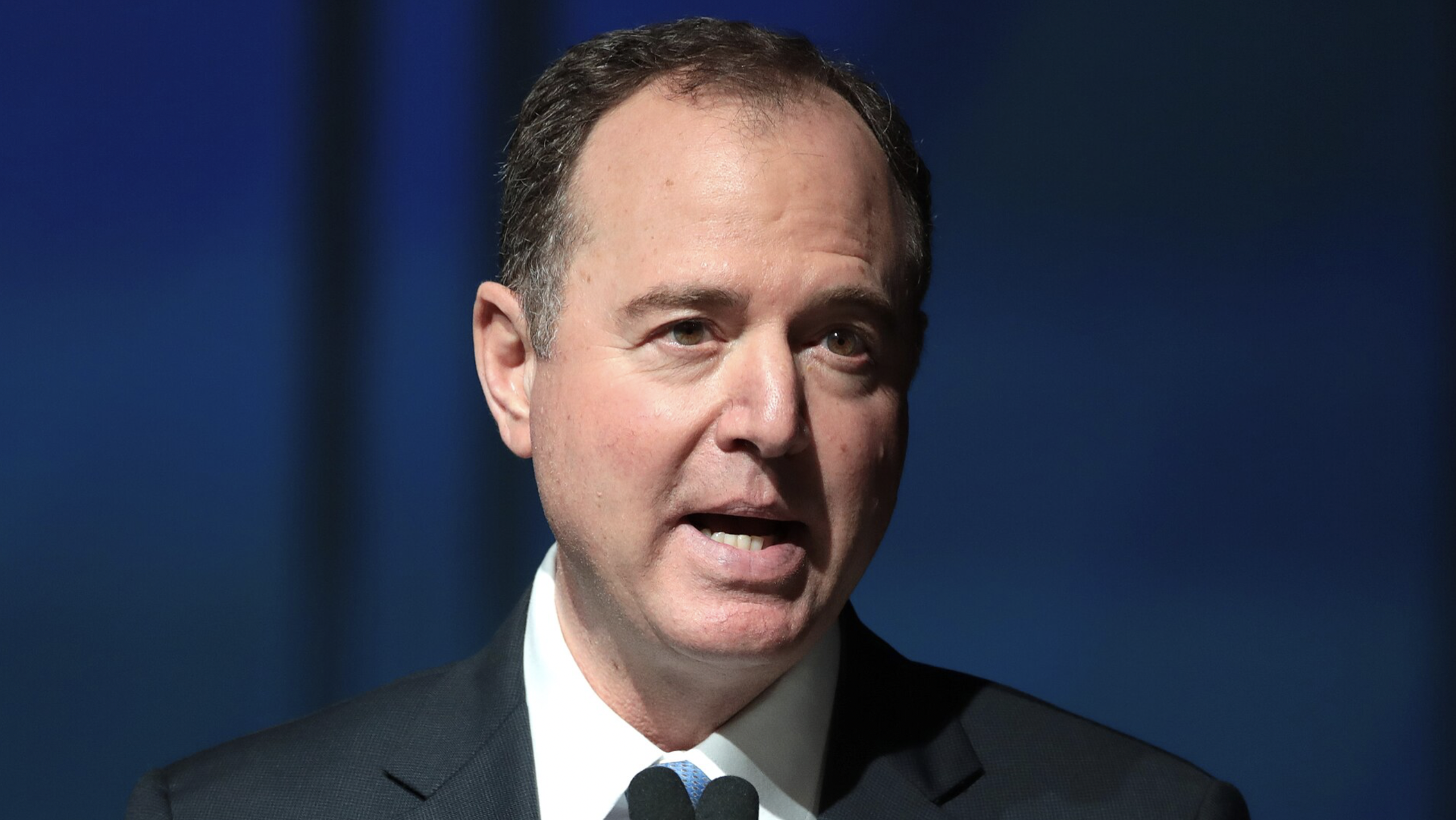
U.S. Senator Adam Schiff (D-Calif.) announced Monday that he is introducing new legislation alongside Representative Mark Takano (D-Calif.) to require political disclaimers on paid influencer content, arguing that social media posts have become as powerful as traditional advertising without carrying the same transparency requirements.
The Post
Schiff made the announcement in a post on X on Monday, July 27, 2026, at 6:27 PM. The full post reads:
“A post by a paid influencer in 2026 can reach more voters than any billboard, even many broadcast ads. But there is no requirement for a political disclaimer telling people who paid for it. That must change. I’m introducing legislation alongside @RepMarkTakano to require transparency.”
What the Legislation Would Do
The bill Schiff referenced is the Senate companion to Takano’s Promoting Authenticity with Influencer Disclaimer (PAID) Act, which would amend the Federal Election Campaign Act of 1971 to require any person paid by a political committee or candidate to disclose that they were compensated to post the content. Under the House version, the disclosure would need to appear clearly in audiovisual, text, and graphic content, and be spoken audibly in audio-only formats such as podcasts. Political committees would also be required to notify creators of the disclaimer requirement at the time of payment, and the Federal Election Commission would be tasked with issuing implementing regulations by January 1, 2027, when the law would take effect.
Why Schiff Says It’s Needed
Schiff’s office has described the current regulatory gap as a loophole that campaigns and political action committees are increasingly exploiting. Reporting cited in Takano’s original announcement showed campaigns and PACs paying hundreds of thousands of dollars for influencer-originated content in recent election cycles, content that reaches audiences without any indication it was politically funded. The Federal Election Commission has attempted to bring transparency to the creator economy since 2013 but has been unable to enforce disclosure requirements without a clear statutory mandate from Congress.
Takano’s Own Statement on the Push
When he introduced the House version of the bill on June 2, 2026, Takano framed the issue as one of basic voter awareness. “Users deserve to know if a creator has been compensated by a campaign to post for them,” Takano said. “Current campaign disclosure laws have not kept up with this new Creator Economy, and voters deserve to know who is financing their feeds before heading to the polling booths.”
A Second Bill on AI-Generated Political Ads
Schiff’s Senate push is not limited to paid influencer disclosures. According to Semafor, he also plans to introduce the AI Ads Act, which would prohibit what his office describes as “fraudulent misrepresentation of political candidates or committees through content generated by artificial intelligence.” The measure would update existing federal prohibitions on impersonating candidates to explicitly cover AI-generated content, and would remove a requirement that the misrepresentation be proven “damaging” in order to be actionable.
Schiff first introduced a version of this AI-focused measure while serving in the House, alongside Representative Ro Khanna (D-Calif.), and the two have continued to push it in the Senate. “AI-generated fraudulent advertising … poses a serious threat to our democracy,” Schiff said in reintroducing the bill. He added that “fraudulent AI advertising has already proliferated in races across the country, and if Congress does not act, this runaway challenge will only get worse as AI becomes increasingly capable of blurring the lines between fact and fiction.”
Khanna echoed that warning, saying, “AI will transform our lives and our society in many ways, but it can’t be used to mislead voters or undermine our democracy.”
The California Backdrop
Semafor’s reporting indicates the bills are, in part, a reaction to spending patterns Schiff observed in two recent primary contests in his home state of California. The first was the state’s Democratic gubernatorial primary, which featured millions of dollars in paid spending for influencer posts, much of it tied to billionaire Tom Steyer’s campaign. California’s own digital disclosure rules, which Schiff’s federal legislation would effectively mirror, revealed the scale of Steyer’s payments, with some influencers reportedly earning hundreds of thousands of dollars for supporting his candidacy online.
Because those influencers did not disclose the payments, California’s Fair Political Practices Commission, the state agency responsible for enforcing campaign finance law, opened an investigation. California had already moved to address the issue in 2023, when Governor Gavin Newsom signed a state law requiring individuals paid by political committees to include disclaimers in their posts.
A Broader, Bipartisan-Adjacent Trend
The Schiff-Takano effort is part of a wider legislative push on Capitol Hill. It complements a separate transparency bill from Senator Sheldon Whitehouse (D-R.I.) that would also require influencers to disclose paid political speech.
While the momentum has been driven largely by Democrats, the push is not confined to one party. In Texas, moderate Republicans supported a change to the state’s election regulatory process requiring influencers paid more than $100 to post on behalf of a candidate to append disclosures to that content.
There is also evidence the issue is being raised across party lines in individual races. With Alabama’s primaries approaching, Republican Senate candidate Barry Moore filed an FEC complaint against fellow Republican Jared Hudson, alleging that Hudson had coordinated with eight social media accounts for what Moore described as a “paid or otherwise compensated influencer-style communications effort.”
How the FEC Has Handled the Issue So Far
The regulatory vacuum Schiff and Takano are attempting to fill dates back to a 2023 decision by the Federal Election Commission, which imposed disclosure rules on digital platform advertisements but declined to regulate influencers directly. The commission’s reasoning likened social media posts to a personal soapbox rather than a form of paid advertising, a rationale two of the commission’s members disagreed with at the time. The FEC currently operates with only two of its six standard commissioner seats filled, which advocates say has further limited its ability to act.
Reaction From the Creator Community
Some influencers have publicly welcomed the push for disclosure rules. Barrett Adair, a progressive content creator with more than 300,000 followers across TikTok and Instagram, voiced support for Takano’s original bill, telling NOTUS, “Influencer marketing has been a part of advertising for a long time now; though it’s newer to political campaigns, it’s a no brainer to me to treat it the same way you do a TV ad, billboard, or web banner for a campaign. Transparency is great for everyone.”
Takano has said Democrats on Capitol Hill have expressed support for the measure and that he remains “optimistic” Republicans will eventually back it as well, pointing to the scale of the creator economy’s role in recent campaigns, including the 2024 Democratic National Convention, which credentialed more than 200 content creators as part of an effort to compete with a more established Republican alternative-media ecosystem.
Where the Legislation Stands
As of Monday’s post, Schiff’s Senate companion bill and the AI Ads Act had not yet been formally voted on by any committee. Both measures now join a growing field of federal and state-level proposals aimed at regulating how political money moves through social media, as campaigns increasingly shift spending away from traditional television and billboard advertising toward influencer-driven content that reaches voters directly through their feeds.