
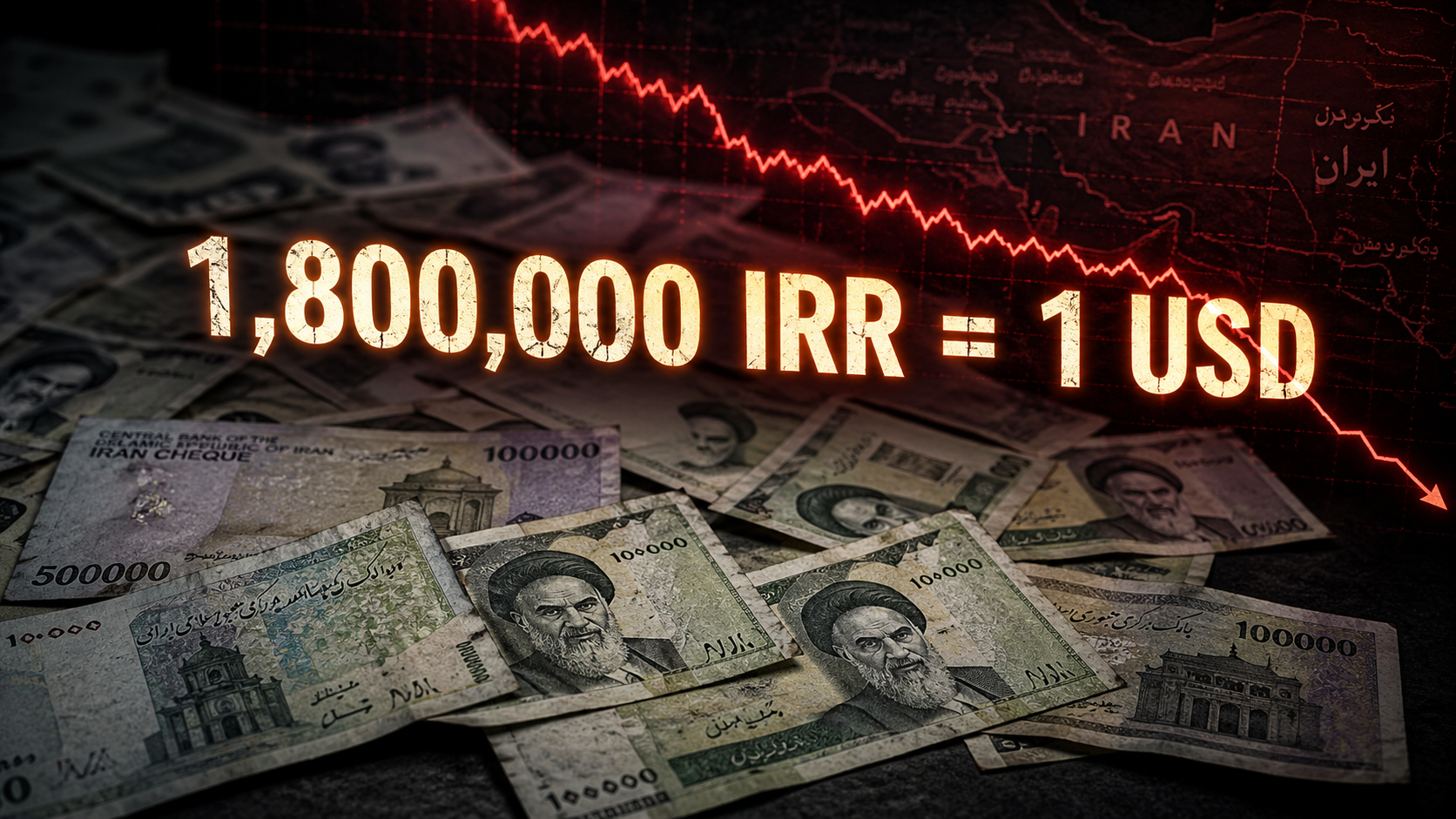
Iran’s national currency has fallen to an unprecedented low, reaching 1.8 million rials to the U.S. dollar on the open market, underscoring deepening economic strain as a fragile ceasefire involving Iran, the United States, and Israel remains in place.
The decline marks a sharp shift from the early phase of the conflict that began on February 28, when the rial had largely held steady. Limited trade activity and reduced imports during that period contributed to the temporary stability. However, the currency began to weaken again in recent days, signaling renewed pressure on the country’s financial system.
Economic analysts have warned that the falling value of the rial is likely to accelerate inflation. Iran’s reliance on imported goods means that fluctuations in the dollar exchange rate directly affect the cost of essential items, including food, medicine, electronics, and industrial materials. As the currency loses value, the cost of these imports rises, placing additional strain on both consumers and businesses.
Compounding the situation is a U.S. naval blockade imposed during the ceasefire, which has further constrained Iran’s economy. The blockade has disrupted oil exports, a critical source of government revenue and foreign currency. By limiting Iran’s ability to sell oil or access hard currency reserves, the measure has intensified existing economic challenges.
Amid the ongoing tensions, Shehbaz Sharif confirmed that Pakistan continues diplomatic efforts aimed at reducing friction between Washington and Tehran. These efforts follow an initial round of direct talks held on April 11, though broader stability has yet to be achieved.
The latest currency drop follows earlier volatility that contributed to widespread unrest. In January, the rial weakened rapidly from approximately 1.4 million to 1.6 million per dollar within days, fueling nationwide protests driven by rising living costs and economic uncertainty. The renewed depreciation risks reigniting similar concerns among the population.
Iran’s economy has long faced structural challenges, including decades of international sanctions, persistent inflation, and a significant gap between official exchange rates and those on the open market. The latest developments have added to those pressures, with prices for everyday goods already rising before the most recent currency decline.
In recent weeks, consumers have encountered noticeable increases in the cost of staples such as milk, yogurt, cooking oil, bread, rice, cheese, and household detergents. These price hikes reflect broader inflationary forces, including supply chain disruptions, higher transportation and production costs, and ongoing uncertainty tied to the conflict and blockade.
The economic strain is also affecting employment. Reports indicate that layoffs have occurred in multiple sectors, including 500 workers dismissed at a facility in Rasht and another 700 at a textile factory in Borujerd. These job losses, occurring since the start of the new Iranian calendar year in late March, point to mounting challenges for businesses coping with rising costs and reduced demand.
Taken together, the currency’s record decline, sustained external pressure, and internal economic instability highlight the growing impact of the conflict and associated measures on Iran’s financial system and broader labor market.