

Operation Absolute Resolve was designed to be both a lightning strike and a message, using overwhelming airpower to shatter Venezuela’s defenses and topple the security bubble around Nicolás Maduro in a single night. Behind the spectacle of explosions over Caracas sat a carefully assembled air armada, a legal gamble by Washington, and a regional order suddenly forced to absorb the collapse of a long‑entrenched regime.
From President Trump’s decision to greenlight the strikes to the moment U.S. commandos pulled Maduro from his safe house, the operation fused precision targeting, political theater and a massive logistics machine. The result was a dramatic transfer of power in Venezuela, even as the institutions once loyal to Maduro struggled to define what, if anything, remained of the old government.
The decision to strike and the birth of Operation Absolute Resolve
The choice to launch a coordinated attack on Venezuela grew out of years of confrontation between Washington and Caracas, but the final order came quickly once U.S. planners believed they could decapitate the regime in a single blow. According to official accounts, the United States began a series of airstrikes on Venezuela on 3 January 2026, with President Trump later addressing the nation to explain why he had authorized the use of force against Nicolás Maduro’s government and to frame the action as a response to criminal charges and security threats tied to the Venezuelan leadership. Public summaries of the campaign describe it as a concentrated effort to neutralize air defenses, command nodes and elite security units that had kept Maduro insulated from previous pressure, even as the government formerly led by Maduro technically remained in place on paper after the first wave of strikes.
Inside the Pentagon, the operation was given a name that signaled both its ambition and its tempo. Senior officers and planners referred to the campaign as Absolute Resolve, a label later echoed in public briefings that described how the mission had been rehearsed for months and then executed in a matter of minutes once the first aircraft crossed into Venezuelan airspace. Reporting on the early phases of the strikes notes that the United States treated the opening salvo as part of a broader set of 2026 United States strikes in Venezuela, a framework that bundled the air campaign, special operations raids and the eventual capture of Maduro into a single, tightly choreographed sequence of events linked to an existing U.S. indictment based on similar charges against the Venezuelan leader.
How Absolute Resolve was planned and rehearsed
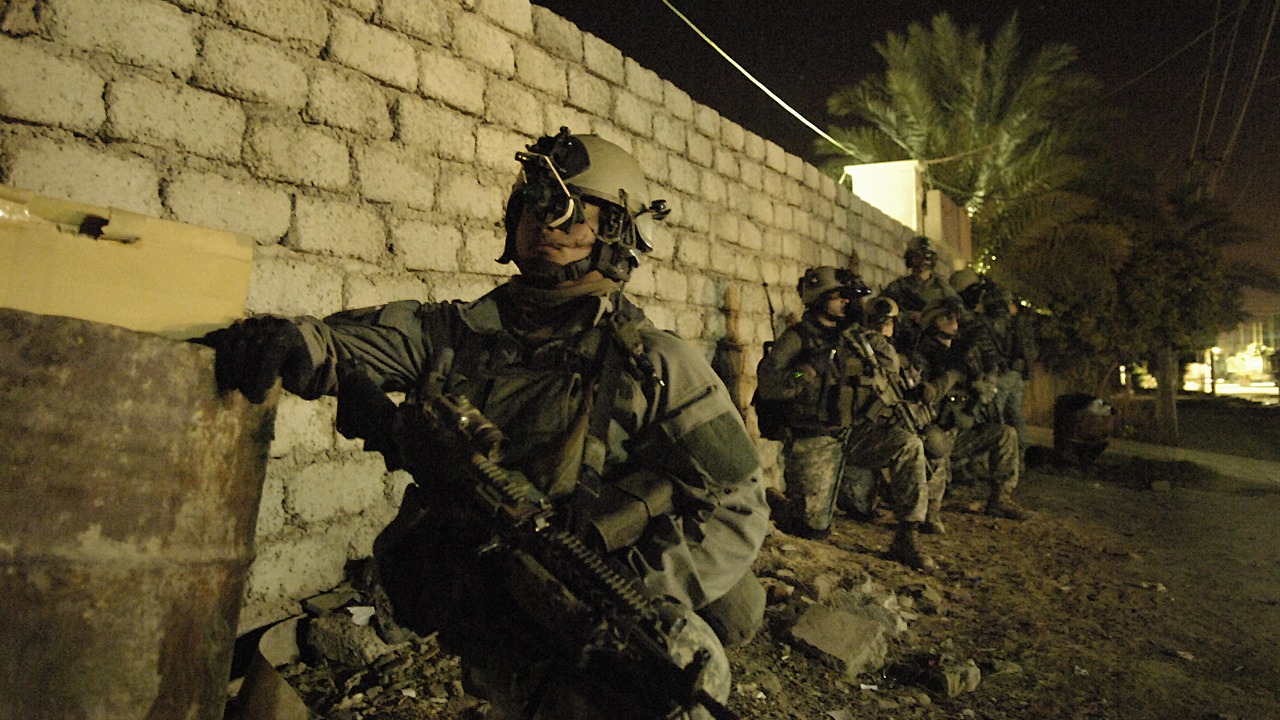
Behind the scenes, Absolute Resolve was less a spontaneous show of force than the culmination of a long planning cycle that treated Caracas as a complex, layered target. General Dan Caine, serving as chairman of the Joint Chiefs, has been cited describing how the operation, named Absolute Resolve, was carefully rehearsed for months, with U.S. forces running through repeated simulations of Venezuelan radar coverage, air defense reactions and the likely movement of Maduro’s security detail once the first bombs fell. Those rehearsals allowed planners to compress the decisive phase of the mission into a window that reportedly lasted less than 30 minutes, a span in which air defenses were blinded, key compounds were isolated and the route for special operations helicopters was cleared.
Operationally, the plan hinged on synchronizing dozens of aircraft, naval platforms and ground teams so that no single failure could give Venezuelan forces time to regroup. Accounts of the mission emphasize that Absolute Resolve unfolded under the cover of darkness, with U.S. forces already holding fast in the wider region before the first missiles were launched, a posture that let commanders surge assets into Venezuelan airspace at the moment of decision rather than telegraphing their intentions. Public briefings later described how this posture, combined with the rehearsed timeline laid out by General Dan Caine, created the conditions for a rapid insertion of special operators once the air armada had opened a corridor, a sequence that has been reconstructed in depth in narratives of how the attack on Venezuela and abduction of Maduro unfolded.
The air armada: more than 150 aircraft and a layered strike package
The most striking feature of Absolute Resolve was the sheer scale of the air armada assembled to support it. Joint Chiefs Gen. Dan Caine has described a military timeline in which more than 150 aircraft were involved in the operation to capture Venezuela’s Maduro, a figure that underscores how the United States treated the mission less like a narrow raid and more like a small war compressed into a single night. Those aircraft included strike fighters, bombers, electronic warfare platforms, tankers and intelligence, surveillance and reconnaissance assets, all tasked with specific roles in suppressing air defenses, isolating key military bases and providing overwatch for the special operations teams moving on the ground.
Social media posts and later briefings have filled in some of the texture of that armada, noting that Operation Absolute Resolve involved one of the largest concentrations of U.S. airpower in the region in years. One widely shared account described the mission as a massive scale effort involving over 150 aircraft from the U.S. Air Force, with multiple types of jets and support planes cycling through refueling tracks and strike lanes as the night unfolded. That same account highlighted how the air component was designed not only to hit fixed targets but also to maintain continuous pressure on any Venezuelan units that tried to maneuver, a concept that aligns with the detailed description of a military timeline involving more than 150 aircraft that were committed to the mission from the opening minutes.
US airpower as the spearhead for special operations
Airpower was not just a supporting element in Absolute Resolve, it was the spearhead that made the special operations raid possible. Analysts have noted that U.S. air assets were tasked with paving the way for Delta Force and other elite units to move on Maduro’s location, using precision strikes to dismantle radar sites, surface to air missile batteries and command centers that might have coordinated a response. One detailed reconstruction explains how U.S. airpower paved the way for Delta Force to capture Venezuela’s Maduro, describing a sequence in which aircraft first suppressed defenses, then provided close air support as helicopters carrying operators from the 75th Ranger Regiment and other units descended on Maduro’s compound.
This integration of air and ground forces was particularly visible in the final assault on the safe house where Maduro was believed to be hiding. Reports describe how COMMANDOS from U.S. special forces obliterated air defense systems to raid Nicolas Maduro’s fortified safe house in a stunning night attack, with strikes hitting military bases and Navy ships that could have threatened the extraction. The combination of standoff munitions, electronic warfare and low flying helicopters allowed the raiding force to reach the target before Venezuelan loyalists could organize a defense, a pattern that matches the account of how U.S. airpower paved the way for Delta Force and the description of COMMANDOS striking at Nicolas Maduro’s safe house from multiple directions.
Inside the raid: COMMANDOS, safe houses and a 30‑minute window
Once the air armada had done its work, the most sensitive phase of Absolute Resolve fell to the small teams tasked with physically seizing Maduro. Accounts of the ground operation describe COMMANDOS from U.S. special forces moving quickly after air defense systems were destroyed, using the narrow window created by the bombardment to reach Nicolas Maduro’s fortified safe house before his inner circle could scatter. The safe house itself has been portrayed as heavily protected, with layers of guards and hardened structures that required both breaching charges and precise intelligence on Maduro’s movements inside the compound.
General Dan Caine’s description of the mission timeline suggests that the decisive phase of the raid lasted less than 30 minutes, a span in which operators had to confirm Maduro’s identity, subdue his security detail and secure his wife Cilia while also preparing for extraction. Reports indicate that U.S. forces had rehearsed multiple contingencies, including the possibility that Maduro might attempt to flee to nearby military bases or be moved by loyalists, but the speed of the assault appears to have prevented any such escape. The image that emerges from these accounts is of a tightly choreographed operation in which COMMANDOS, supported by continuous air cover, moved through a kill chain that had been refined over months, a narrative consistent with detailed reconstructions of how COMMANDOS from U.S. special forces raided Nicolas Maduro’s safe house while General Dan Caine’s Absolute Resolve timeline ticked down.
Maduro’s capture, flight to the U.S. and Trump’s message
The capture of Maduro was only the beginning of the political drama that followed. Shortly after the raid, a plane carrying captured Venezuelan President Nicolás Maduro and his wife, Cilia, was flown out of Venezuela and brought to New York, placing the former leader on U.S. soil for the first time as a detainee. Live coverage of the aftermath has noted that Maduro is expected to appear in Manhattan federal court, where he faces charges tied to narcotics trafficking and corruption, while Cilia is being held under U.S. custody as part of the same operation. The transfer from a secret safe house in Caracas to a secure facility in New York underscored how Absolute Resolve was designed not just to remove a regime figure but to bring him directly into the U.S. justice system.
President Trump used the moment to outline a broader vision for Venezuela’s future and to justify the risks of the operation. In public remarks, he has been quoted describing his plan for Venezuela, including the idea that the United States would play a direct role in stabilizing the country and using U.S. troops for security as a transitional authority takes shape. At the same time, Trump acknowledged an uncertain future, telling reporters that he understood the mix of relief in parts of Florida’s Venezuelan diaspora and apprehension in Caracas as news of Maduro’s capture spread. These themes have been captured in rolling updates that track what is known about Maduro’s status, his transfer to New York and what we know about Maduro on U.S. soil and President Trump’s stated plan for Venezuela.
Force protection, troops on the ground and the risk of insurgency
Even as the air campaign and raid succeeded on their own terms, U.S. commanders quickly confronted a second challenge: how to protect American forces in a country where Maduro’s loyalists and other armed groups might pivot to insurgency. Analysts have warned that deploying U.S. troops in Venezuela could become a force protection nightmare, with the risk that remnants of the security services, colectivos and criminal networks might target American patrols or bases. Images from the ground have shown military personnel moving through areas like the Military Complex of Fuerte Tiuna in Caracas, while residents were seen leaving their homes as armored vehicles and troops took up positions, a sign of both the immediate security clampdown and the fear of potential clashes.
To mitigate those risks, U.S. planners have leaned heavily on the same airpower that enabled Absolute Resolve, using drones, surveillance aircraft and rapid reaction forces to monitor potential flashpoints and respond quickly to any attacks. At the same time, officials have acknowledged that no amount of technology can fully insulate troops from the political backlash that may follow a foreign intervention, particularly in a country with a long history of anti U.S. rhetoric. Commentators have pointed out that the longer U.S. forces remain in Venezuela, the greater the chance that force protection missions will collide with local grievances, a concern that has been highlighted in assessments of how deploying U.S. troops in Venezuela could become a force protection and insurgency threat if Maduro’s supporters regroup.
Absolute Resolve from the sky: what the armada looked like in real time
For Venezuelans on the ground, the first sign that something extraordinary was happening was the sound and sight of aircraft overhead, a sensory shock that social media quickly amplified. One widely circulated video described Operation Absolute Resolve as an action that resulted in the capture of Nicholas Maduro and was of massive scale, involving over 150 aircraft from the U.S. Air Force. The clip, shared as a short reel, emphasized the variety of platforms in the sky, from fast jets streaking over Caracas to lumbering support aircraft orbiting further out, and framed the mission as one of the largest single night deployments of U.S. airpower in the region in recent memory.
Those real time glimpses matched later official descriptions of the armada’s composition, which highlighted how strike aircraft, tankers and intelligence platforms were stacked in multiple layers to maintain constant coverage over key Venezuelan targets. Observers noted that the choreography resembled a complex air show, but with live munitions and real political stakes, as each wave of aircraft handed off responsibilities to the next to keep pressure on air defenses and ground units. The viral reel about Operation Absolute Resolve captured that sense of scale, presenting the armada not just as a military fact but as a spectacle that reshaped how Venezuelans and international audiences perceived U.S. power in the hemisphere.
Legal shockwaves: can the U.S. run Venezuela after Maduro?
As the dust settled over Caracas, lawyers and diplomats began grappling with a question that may prove as consequential as the raid itself: what authority does the United States have to govern or direct Venezuela after removing its president by force. Legal experts have pointed out that the capture of Maduro and the U.S. claim that it will run Venezuela raise new legal questions under both international law and U.S. statutes, particularly if Washington seeks to administer the country’s institutions or resources directly. Some analysts argue that existing indictments and sanctions provide a narrow legal basis for targeting individuals like Maduro, but do not automatically authorize a foreign power to assume control over an entire state apparatus.
Those concerns have been sharpened by President Trump’s own statements about using U.S. troops for security and shaping Venezuela’s political transition, which critics say could be interpreted as a claim to exercise de facto authority over a sovereign nation. Commentaries on the issue note that any long term U.S. role in running Venezuela would likely face challenges in international courts and at the United Nations, as well as domestic scrutiny over the scope of the president’s war powers. The debate has been encapsulated in analyses of the capture of Maduro and the U.S. claim that it will run Venezuela, which highlight how the legal shockwaves from Absolute Resolve may reverberate long after the last aircraft has left Venezuelan airspace.
What remains of Maduro’s regime and Venezuela’s path ahead
Despite the dramatic images of explosions and the removal of Nicolás Maduro from power, the institutions that once formed the backbone of his rule have not vanished overnight. Official summaries of the 2026 United States strikes in Venezuela note that the government formerly led by Maduro remained in place, at least formally, even after the air campaign and raid, with remnants of the ruling party, the military hierarchy and the bureaucracy still operating in Caracas and across the country. That lingering structure has created a complex reality in which some officials signal a willingness to work with U.S. backed transitional authorities, while others quietly resist or look for ways to preserve elements of the old order.
For ordinary Venezuelans, the collapse of the presidential inner circle has brought a mix of hope, uncertainty and fear of renewed instability. On one hand, the removal of a leader widely accused of corruption and repression has opened space for opposition figures and civil society groups to imagine a different political future. On the other, the presence of foreign troops, the risk of insurgent violence and the unresolved legal status of the interim arrangements have left many wary of what comes next. Analysts tracking the situation point out that the same 2026 United States strikes in Venezuela that enabled Absolute Resolve have also tied Venezuela’s fate more closely to decisions made in Washington, a dynamic captured in detailed entries on how the United States launched a series of airstrikes on Venezuela and how the government formerly led by Maduro technically remained in place even as its leader was flown to New York.