
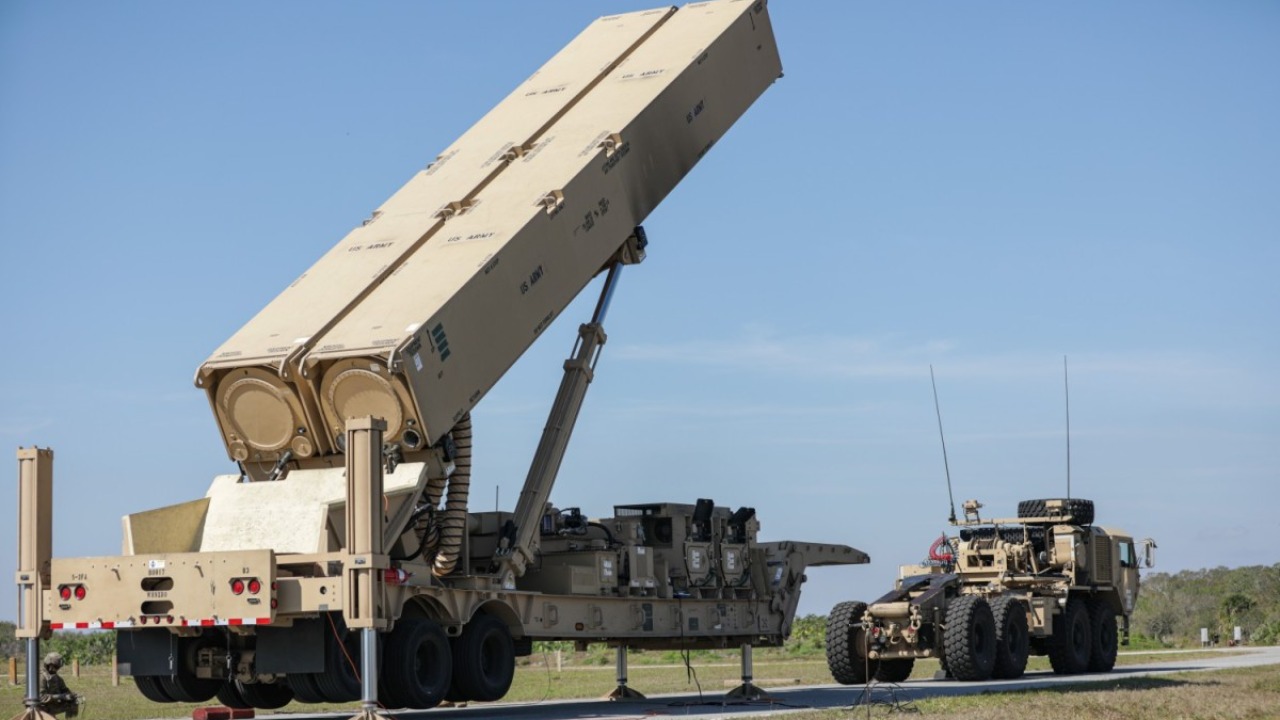
The United States is racing to field a new class of hypersonic weapons that can cross continents in minutes and maneuver around traditional defenses. At the center of that effort sits Dark Eagle, a long-range system that promises to give ground forces a precision strike option once reserved for bombers and submarines. Its arrival is already reshaping how commanders think about distance, sanctuary, and escalation in a conflict with major powers.
Dark Eagle is more than a faster missile. It is a combined Army and Navy architecture built around a shared glide body, common boosters, and mobile launchers that can disperse across theaters. As the system moves from test ranges into operational units, it is forcing adversaries to rethink the safety of air bases, ports, and command centers that once sat far beyond artillery range.
From concept to cornerstone of U.S. hypersonic plans
The Army has cast Dark Eagle as the centerpiece of its first operational hypersonic formation, a role that reflects how quickly the program has moved from concept to fielding. Service leaders describe it as part of a broader push to deliver a Dark Eagle capability that can deploy with ground forces rather than remain confined to strategic forces. The program sits inside a larger hypersonic portfolio that the Army values at $10.4 billion, a figure that underscores how central these weapons have become to U.S. modernization plans. The Army is preparing to deploy its first hypersonic missile system, called the Long Range Hypersonic, as part of this effort to compete with China and Russia in next-generation warfare.
Technically, Dark Eagle is the Army’s implementation of the current U.S. hypersonic push, built around a common glide body that rides atop a large booster before separating in the upper atmosphere. The Long-Range Hypersonic Weapon System LRHW is designed to achieve a range exceeding 1,725 miles, using a booster that is compatible with the Navy’s 34.5-inch design. That range, paired with the ability to maneuver at hypersonic speed, is what turns Dark Eagle from a niche science project into a theater shaping instrument.
How Dark Eagle works and why it is different
At the heart of Dark Eagle is a boost glide vehicle that behaves less like a traditional ballistic missile and more like a piloted craft without a cockpit. The Dark Eagle represents a class of weapon known as a hypersonic boost glide vehicle, a technology that fundamentally alters the way a projectile flies through the upper reaches of the atmosphere, as described in the Dark Eagle overview. Instead of following a predictable arc, Dark Eagle’s architecture is centred on a boost glide hypersonic vehicle capable of sustained manoeuvre in the upper atmosphere, a profile that complicates interception and demands new tracking methods, according to Dark Eagle program analysis.
The U.S. Army and Navy have already demonstrated that the shared glide body and booster can function as a joint system. The US Army and Navy recently completed a joint test of the Dark Eagle Long Range Hypersonic Weapon System, which is reported to reach speeds up to Mach 17, according to a test description. That performance, combined with a range that various assessments place at 1,700 and even 1,725 miles, gives commanders a tool that can hold targets at risk across an entire region, as highlighted in America 1,700 mile coverage and the 1,725 miles specification.
Range, cost, and the new geography of risk
Dark Eagle’s reach is not an abstraction. The U.S. Army’s Dark Eagle hypersonic boost glide weapon can reportedly hit Beijing from Guam, Moscow from London, and Tehran from other regional launch points, a set of notional strike pairs that illustrate how it compresses geography, according to a detailed Army Dark Eagle briefing. Another analysis frames it as a new 1,700-plus-mile precision strike system built for speed, control, and stealth that will shape deterrence in the years ahead, as described in a Dark Eagle overview. For adversaries, that means air defense hubs, logistics depots, and even political centers that once sat outside conventional missile range now fall within a single battery’s reach.
That reach comes at a steep price. The Army has estimated that each Dark Eagle munition will cost approximately $41 m, or $41 million in 2023 dollars, a figure that highlights both the sophistication and scarcity of the weapon, according to The Army. Dark Eagle is part of a $10.4 billion hypersonic weapons program designed to give the Army a long-range conventional strike capability, as noted in a separate program summary. Those economics suggest Dark Eagle will be reserved for the most critical targets, even as its presence forces adversaries to spread out assets and invest in new defenses.
Fielding, force structure, and the China problem
Dark Eagle is not being built in isolation but as part of a joint architecture that binds the Army and Navy together. The two weapons share a common hypersonic glide body system that the Army will integrate with ground launchers, and the Navy can launch from ships and submarines, according to Army-Navy planning documents. The core of the Army’s ground-based hypersonic weapon battery will be four TELs, each installed on a modified M870 40-ton trailer, a configuration that allows the unit to move on existing roads and blend with other heavy logistics traffic, as outlined in an Army unit profile. The US Army will deploy its first fully armed hypersonic missile battery, Dark Eagle, with each road mobile battery configured around these trailers, according to a US Army deployment note.