
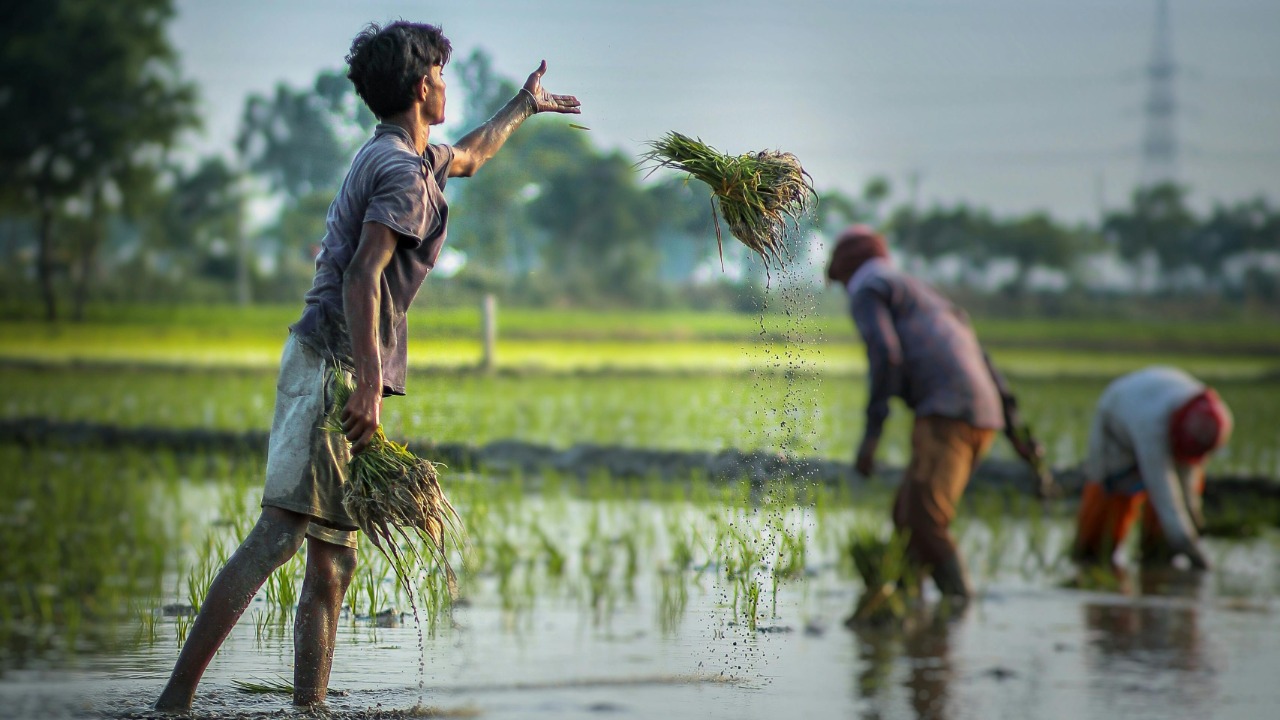
India has clinched a politically delicate trade understanding with the United States that preserves core protections for its farmers while promising a surge in purchases of American energy, aircraft, and defence hardware. The arrangement, framed as a step toward a formal pact to be signed in March, balances domestic sensitivities in New Delhi with Washington’s demand for market access and big-ticket export orders. At its heart is a bargain that keeps India’s farm shields largely intact even as it commits to buy up to $500 billion-worth of American goods over time.
The stakes are high for both sides. For India, agriculture remains the backbone of the rural economy and a flashpoint for protest, so any opening to foreign competition carries political risk. For the United States, where President Trump has pressed for lower trade deficits and better terms with partners, the deal offers headline export numbers and a chance to deepen strategic ties with a rising Asian power.
Farm protections survive, but with narrow openings
Indian negotiators have treated agriculture as a red line, and the emerging pact reflects that stance. Officials have signalled that India will grant the United States only limited new access to its farm market while maintaining key protections for staples such as grains and dairy. Reports from WASHINGTON describe a compromise in which India keeps high tariffs and quotas on sensitive products while offering modest openings in less politically charged categories. An Indian government official told an Indian reporter that the country would maintain some agricultural protections in the deal with Trump, underscoring that the government is not prepared to expose smallholders to a sudden surge of imports.
Domestic briefings in New Delhi have stressed that sensitive sectors are protected and that New Delhi will continue to shield vulnerable producers even as it trims tariffs on a range of industrial and agricultural goods. One analysis of how India is likely to shield its farmers notes that Mayank Bhardwaj and the government are likely to rely on tariff rate quotas, minimum support prices, and sanitary rules to manage any new inflows. Commentators in Agriculture policy circles argue that this approach allows India to claim a partial win on agriculture while still offering Washington some commercial gains.
Big-ticket US purchases anchor the bargain
To offset its defensive posture on farming, India has put a series of large procurement pledges on the table. Officials in NEW DELHI have said that India has agreed to ramp up purchases of US petroleum, defence goods, and aircraft, tying the trade package to its broader energy security and military modernisation plans. A separate briefing from WASHINGTON notes that India will buy US aircraft, arms, and energy as part of the understanding, giving American exporters a clear commercial stake in the relationship.
The headline figure is striking. According to one senior official, India says the agreement with the US to buy $500 billion-worth of goods and services includes existing projects as well as plans. The same account stresses that the $500 headline number and the reference to $500 billion fold in deals already in the pipeline rather than representing entirely new orders. Even so, the scale of the commitment helps President Trump argue that the United States has secured a substantial boost for its exporters, while New Delhi can present the purchases as aligned with its own infrastructure and defence priorities.
Timeline, politics, and the Trump–Modi equation
The choreography of the deal has been as carefully managed as its content. Trade minister Piyush Goyal has said in New Delhi that a formal agreement on the deal will take 30 to 45 days and will be signed in March, giving negotiators time to convert political commitments into legal text. A separate briefing from the TOI Business Desk at TIMESOFINDIA.COM notes that the story carried a timestamp of 14:56 IST and highlighted the figure 56, reflecting the intense public interest in the timeline. Live coverage of Trump’s tariff moves has also flagged that India and the US expect to sign a formal trade deal in Mar, underlining how closely the process is tied to the broader tariff agenda.
At the political level, the agreement is the product of sustained engagement between President Trump and Indian Prime Minister Narendra Modi. A detailed assessment from the Stimson Centre notes that on February 2, President Trump and Indian Prime Minister Narendra Modi announced that they had reached a long-awaited deal on trade, confirming an 18% tariff rate on certain products as part of the package. Coverage in agricultural News outlets has noted that President Trump announced a trade deal with India earlier this week, but that there is still uncertainty over how farm provisions will work in practice. That tension between political messaging and technical detail will shape how the pact is received in both capitals.
Strategic stakes and the road ahead
Beyond tariffs and purchase orders, the trade understanding is embedded in a wider strategic realignment. Analysts point out that India and the US have reached a trade agreement in which the US reduces tariffs on Indian goods in exchange for India halting certain imports from Russia, a linkage that underscores the geopolitical dimension of the talks. One detailed explainer notes that India and the U.S. have paired this with a cautious opening of India’s agricultural market, suggesting that trade concessions are being calibrated alongside foreign policy choices. For Washington, which has sought to build a coalition on critical minerals and energy, India’s pledge to buy more US oil and gas fits neatly into that strategy.
At home, New Delhi still has to sell the package to farmers and industry. Commentaries on how Indian farmers are likely to be shielded stress that the government will continue to use policy tools to protect livelihoods even as it accepts some market access. Business-focused analysis describes the outcome as a partial win on agriculture for India, while also noting that Trump’s tariff cuts have sparked relief in India despite limited new access for US farm exports. As the legal text is finalised over the next few weeks, the durability of this balance between farm shields and big US buys will determine whether the pact is remembered as a narrow truce or the foundation of a deeper economic partnership.