
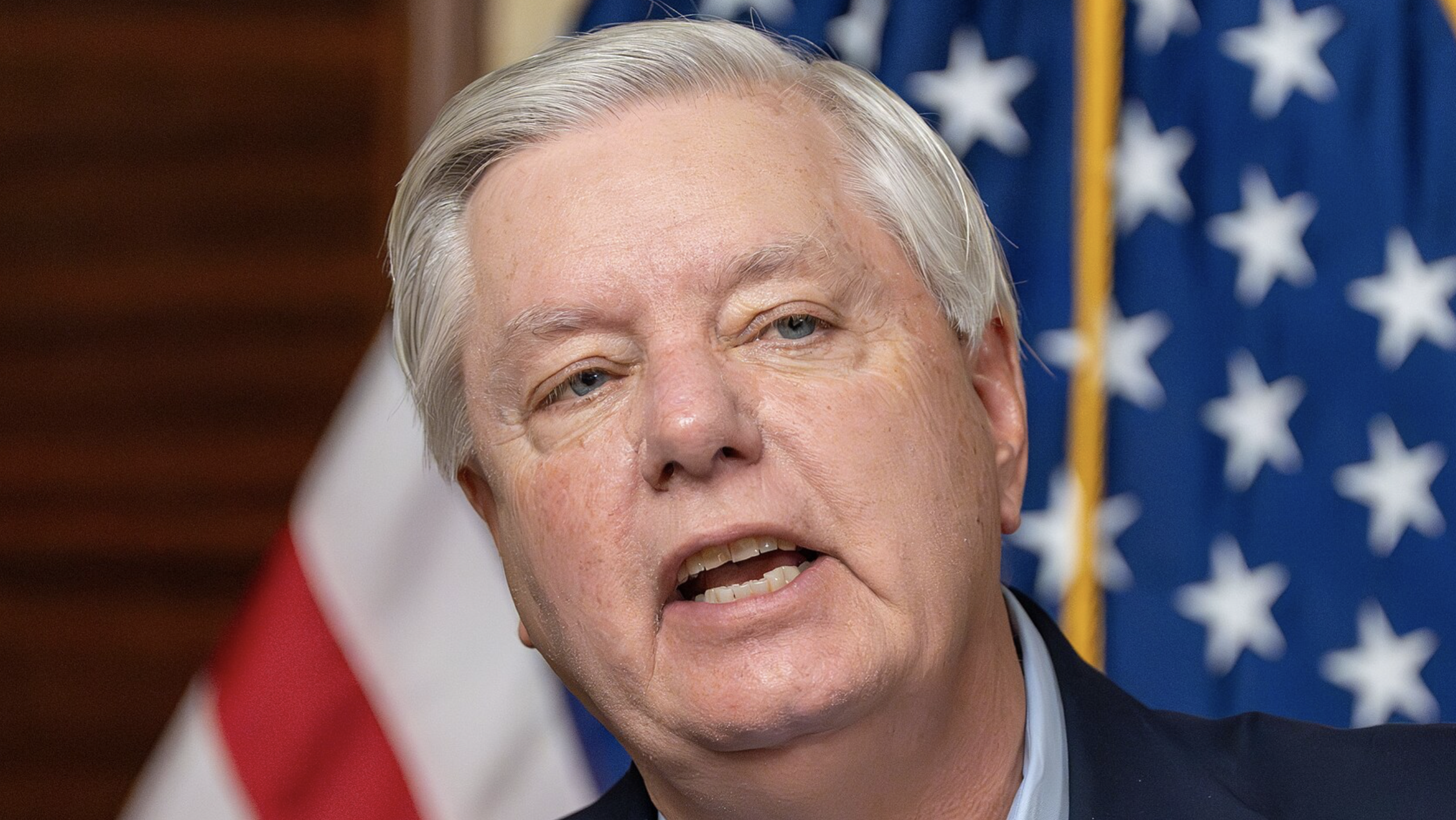
Senator Lindsey Graham defended the Trump administration’s military actions in Iran, framing them as essential to U.S. national security and regional stability. Graham warned that allowing the Iranian regime to obtain a nuclear weapon would have catastrophic consequences, both for the Middle East and for global energy markets. “If you think gas prices are high now, give the Ayatollah a nuclear weapon to terrorize the region to threaten the streets of Hormos. He will control gas prices forever. That regime would if they had a nuclear capability and I think he’s a homicidal maniac. I think he would use the weapon as part of a religious agenda. So do the American people. What we’re doing in Iran is necessary,” Graham said.
Senator Graham on Iran:
— Clash Report (@clashreport) March 12, 2026
If you think gas prices are high now, give the Ayatollah a nuclear weapon to terrorize the region and threaten the Strait of Hormuz.
He will control gas prices forever. pic.twitter.com/ioGo3tzPmy
Graham emphasized that the United States has acted preemptively to prevent Iran from achieving nuclear weapons capability. He framed the conflict as a direct response to a regime he described as intent on threatening both Israel and the United States. “Get real here. Get your head out of the sand. These people mean it when they say death to America, death to Israel,” he said, noting that intelligence indicated Iran possessed 460 kilograms of 60% enriched uranium, which could be further refined in less than a month to produce multiple nuclear weapons.
The senator’s comments come amid sharply rising oil prices, with West Texas Intermediate futures testing the $97 per barrel mark due to disruptions in the Persian Gulf. The Iranian Supreme Leader Mojtaba Khamenei recently asserted that the Strait of Hormuz should remain closed, escalating fears that regional tensions could extend the halt of seaborne oil deliveries. The disruption has already removed approximately 20% of global oil trade, prompting Gulf Cooperation Council members to cut production by 10 million barrels per day as storage reached capacity.
The price of crude oil has, once again, risen above $90 per barrel.
— AF Post (@AFpost) March 11, 2026
Follow: @AFpost pic.twitter.com/2QjpscqHQT
International energy organizations have highlighted the unprecedented impact of the supply interruptions. The International Energy Agency has described the ongoing disruptions as the largest in oil market history, prompting coordinated releases of strategic reserves totaling 400 million barrels.
Graham argued that the risks of inaction outweigh the economic costs, asserting that preventing a nuclear-armed Iran is a necessity for American and allied security. He compared Iran’s leadership to historic aggressors, warning that the regime’s religious motivations make its intentions unpredictable and potentially catastrophic. “We now know that they told Witkoff and Kushner, the Iranians, they had 460 kilograms of 60% enriched uranium. To get to 90% less than a month and you can make 10 bombs. So to all the people who think Iran’s not a threat and we shouldn’t be involved in suppressing that threat, you’re wrong,” he said.
The senator concluded that military pressure is essential to curbing Iran’s ambitions. He argued that operations such as Midnight Hammer, which targeted Iranian enrichment facilities, were necessary to prevent the country from advancing from 60% to 90% enrichment. Graham framed the intervention as a protective measure for both American citizens and global energy stability, portraying the current military campaign as a decisive moment in limiting Tehran’s ability to destabilize the region.