
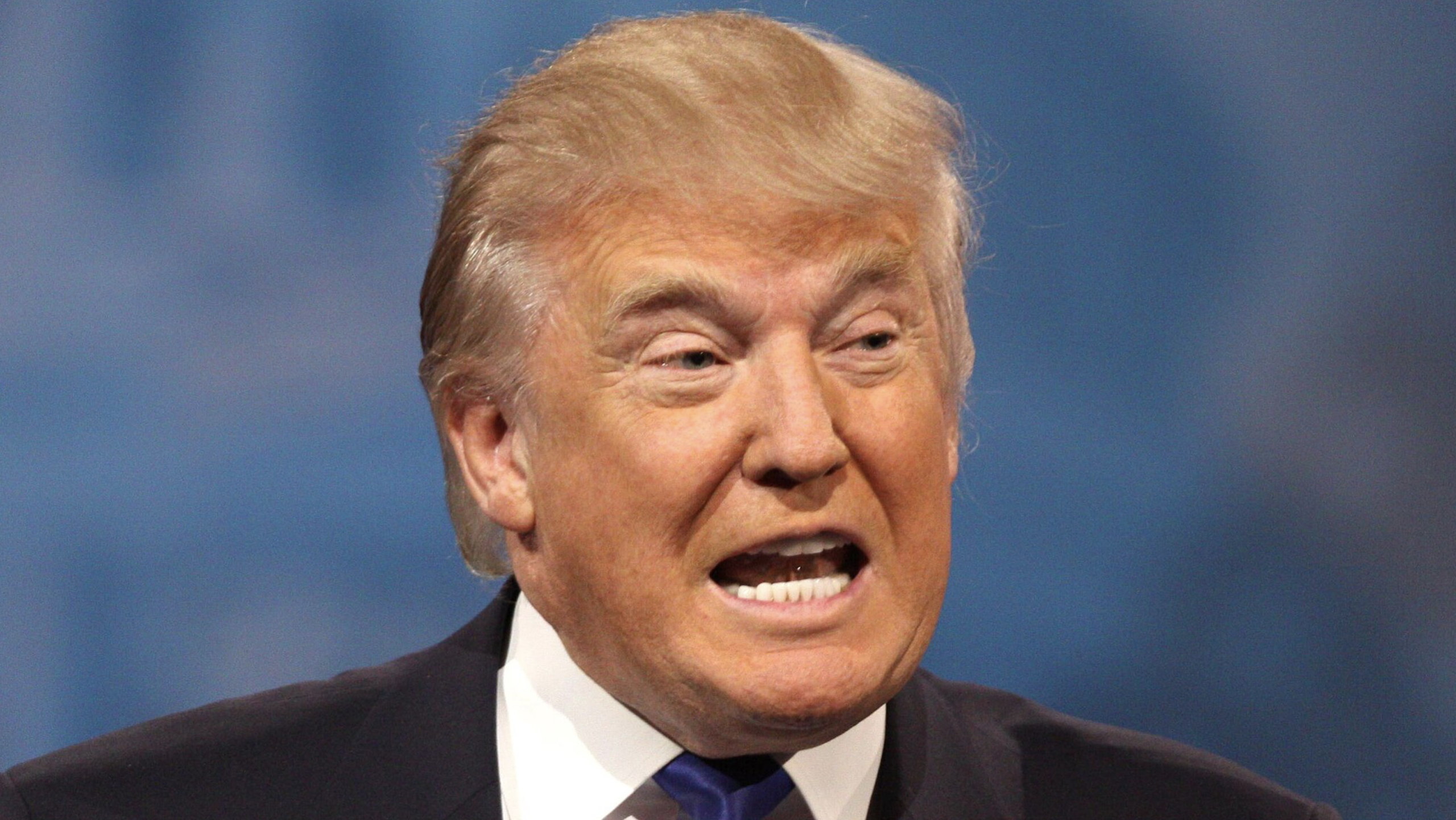
President Donald Trump told the crowd gathered at General Motors’ Milford Proving Ground on Monday that he has done more for them than their own parents, a striking personal claim delivered early in a speech otherwise focused on tariffs, manufacturing investment and the state of the American auto industry. “I’ve done more for you than your parents, okay. Your parents are good. I’m not going to knock your parents but I have been better to you than your parents, that I can tell you and they would agree with me. Wherever they may be, they would agree,” Trump said.
The comment came as Trump pivoted into a broader argument that the auto industry’s recovery under his administration has directly benefited the crowd in attendance. “Today I’m proud to say that the auto industry is back and America is back and it’s pulling Detroit and Michigan along with it,” he said, before crediting the shift to tariff policy he implemented on foreign-made vehicles.
Monday’s remark was not the first time Trump has drawn a comparison between his own influence and that of his audience’s parents. At a 2019 Take Our Daughters and Sons to Work Day event at the White House, Trump told a room of children whose parents worked in the press corps that he “actually” liked them “much more than your parents,” a line that drew laughter at the time. The Michigan remark differed in tone and stakes, framing the comparison not as a lighthearted aside but as a serious claim about material benefit — tying it directly to jobs, tariffs and the return of manufacturing investment to the state.
Trump went on to detail the trade policy he credited for the turnaround, telling the crowd the United States had recorded “the highest trade deficit ever record” before he imposed “historic tariffs, including a 25% tariff on foreign automobiles.” He said a parallel 25% tariff on foreign trucks had similarly reshaped that segment of the market, recounting a phone call with General Motors CEO Mary Barra in which he said foreign trucks were “killing” American manufacturers before the tariff took effect.
Assessing the truthfulness of Trump’s parental comparison requires separating the rhetorical claim from the underlying economic record, which remains contested. The White House has pointed to General Motors’ announced $6 billion investment in U.S. manufacturing, including an expansion at its Orion Township assembly plant, as evidence of the kind of onshoring Trump credits to his trade policy. Michigan House Speaker Matt Hall said ahead of Monday’s event that small manufacturers are benefiting from reshoring, citing Japanese companies reaching out about increasing purchases of Michigan-built products because of tariff pressure.
Whether that investment activity translates into meaningfully lower costs or better opportunities specifically for younger Americans — the demographic Trump’s “better than your parents” framing most directly addresses — is a separate and more difficult question. Affordability has remained a persistent political vulnerability for the administration; Trump’s own economic messaging trip to Detroit in January 2026 was met with skepticism from local reporting, which found little evidence at the time of the manufacturing resurgence he was claiming, despite his repeated assertions that tariffs and reduced electric-vehicle mandates would supercharge the industry.
Trump himself addressed affordability concerns later in Monday’s speech, acknowledging that “they always try and blame me for high prices” while arguing that egg prices, which he said had spiked to “four or five times higher” than normal, have since come down. He credited his administration’s tax policy — including provisions eliminating taxes on tips, overtime pay, and Social Security benefits under what he called the “great big, beautiful bill” — with putting more money in workers’ pockets, though he offered no independent data verifying the scale of that impact during Monday’s remarks.
Younger workers specifically stand to benefit or lose from several of the administration’s policies Trump highlighted Monday, including the tax-deductibility of interest on auto loans for American-made vehicles and the continuation of tax cuts from his first term that he said were made permanent. Whether these policies have measurably improved affordability for young Michigan residents compared with prior years was not addressed with specific data during the speech, and independent economic analyses of the tax law’s distributional effects have varied depending on income bracket and family structure.
Trump’s claim also arrived alongside a broader set of assertions about the health of the national economy, including that the stock market has notched “73 all-time highs” during his time in office and that household retirement accounts have risen by “$32,000 and more” in the past year. Those figures were not independently verified within the scope of Monday’s remarks, though stock indices have in fact reached a series of record closes at multiple points during 2026, consistent with broader market reporting throughout the year.
The parental comparison drew no visible pushback from the crowd inside the GM facility, where attendees frequently applauded throughout the speech, including during the portions focused on tariffs and manufacturing jobs. Trump used the same appearance to grant American automakers explicit permission to build smaller “tiny” cars similar to those common in Europe, telling the crowd, “I go over to Europe, and I see these little cars all over the place.”
Whether life has, in fact, been “better” and more affordable for younger Americans since Trump returned to office in January 2025 remains a matter of active dispute between the administration and independent economists, with inflation, housing costs and wage growth all cited by different analysts as evidence for competing conclusions — a debate Monday’s speech did not resolve, even as Trump framed his own record as self-evidently superior to what any parent could have provided.