
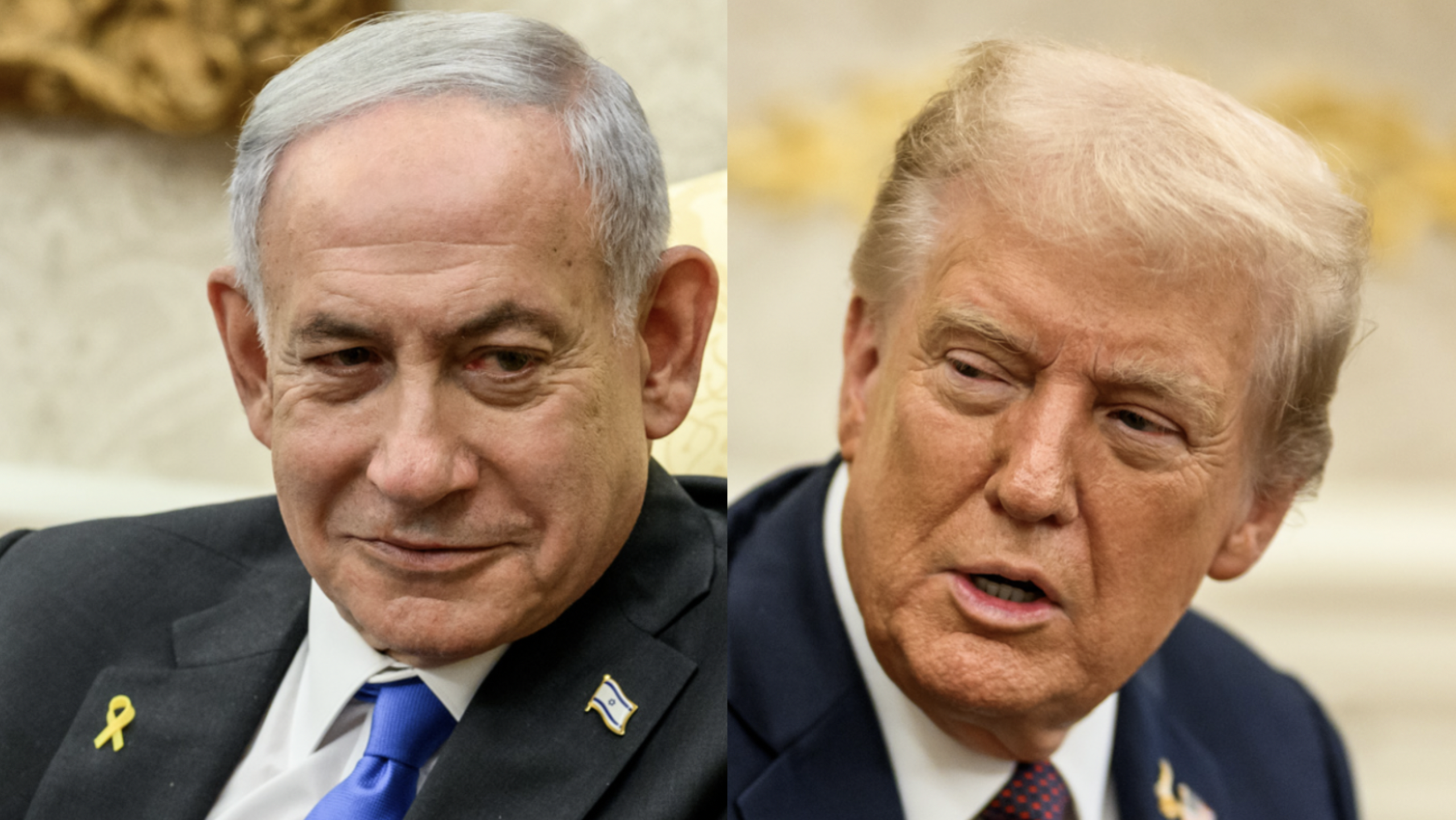
Israel launched strikes against military targets deep inside Iran in the early hours of Monday, defying a direct personal appeal from U.S. President Donald Trump, who had urged Israeli Prime Minister Benjamin Netanyahu to hold fire and allow ongoing peace negotiations to run their course. The overnight attacks marked a dramatic break between two close allies at one of the most sensitive moments in the broader conflict — and raised urgent new questions about how much influence Washington actually holds over its partner’s military decisions.
The Phone Call and the Warning
Trump told Netanyahu directly not to retaliate against Iran’s missile attack and to allow more time for diplomacy, according to a senior U.S. official and an Israeli source familiar with the call. The conversation, which took place Sunday, lasted just under half an hour, with Trump calling from his golf club in Bedminster, New Jersey, according to an Israeli official. According to a U.S. official cited by Axios, Trump told Netanyahu the United States was “close to doing something good in terms of a deal” and urged restraint on those grounds. Hours later, the Israeli military struck anyway.
“He Doesn’t Call the Shots”
Even before the Israeli strikes were launched, Trump made his position unmistakably clear in public. In a phone interview with the Financial Times, the president stated that Israel would have no say in whatever agreement Washington negotiates with Tehran. “He won’t have any choice,” Trump said of Netanyahu. “I call the shots. I call all the shots. He doesn’t call the shots.” Trump further insisted that Iran’s earlier missile barrage against Israeli territory would not derail diplomacy. “It’s not going to have any impact on the deal,” he told the outlet. In a separate interview with NBC News’ “Meet the Press,” Trump struck an even more pointed tone, warning Iran that Washington remained committed to a resolution — one way or another. “What I would suggest to Iran: You’ve shot your missiles, that’s enough,” Trump said in a Fox News interview Sunday.
Israel Strikes Anyway
Despite the presidential admonition, the IDF announced in a post on X that it had “struck military targets belonging to the Iranian terror regime in western and central Iran.” Iran’s Islamic Revolutionary Guard Corps said Israel used air-launched ballistic missiles in the assault, targeting sites in western and central parts of the country. Israel’s ambassador to the United States, Yechiel Leiter, made no apologies for the decision. “No self-respecting country in the world would tolerate such an attack, and neither will Israel,” Leiter wrote on X, adding that Israel was targeting Iranian surface-to-surface missile launch sites and infrastructure facilities unrelated to the energy sector. Leiter also said that Iran had fired 11 ballistic missiles at Israeli territory before the retaliatory strikes were launched.
What Triggered the Escalation
The sequence of events that produced Sunday’s crisis began with an Israeli airstrike on Beirut’s southern suburbs — the Dahiyeh district, a longtime Hezbollah stronghold — the first such strike in the area since the United States announced a Lebanon truce plan the previous week. Iran’s Islamic Revolutionary Guard Corps said that the ceasefire “was conditional on a cease-fire on all fronts,” and warned that “tonight’s operation was a warning, and if aggressions are repeated, the responses will be broader.” Iran’s chief negotiator, Parliamentary Speaker Mohammed Baqer Qalibaf, had also pointed to what Tehran characterized as American violations. Qalibaf stated that U.S. naval blockade activities and what he described as violations of agreements over Lebanon made American bases and Israeli assets legitimate targets.
The Lebanon Factor
Israel’s continued military campaign in Lebanon has remained a persistent flashpoint throughout the broader conflict. A conditional ceasefire between the United States and Iran was declared on April 8, 2026, following a joint U.S.-Israeli campaign against Iranian military, nuclear, and ballistic missile infrastructure that began on February 28. But the ceasefire’s terms were immediately disputed. Just hours after the announcement, the IDF conducted a major operation across Lebanon that killed hundreds of people and wounded more than a thousand others, straining the ceasefire between the U.S. and Tehran from its first day. Iran has long maintained that any peace agreement with Washington must include a halt to Israeli military operations in Lebanon — a demand Israel has rejected, insisting the two conflicts are separate.
Iran’s Air Defense Response and Ramat David
Iran’s Revolutionary Guards stated their missiles had targeted Ramat David Air Base near Nazareth, one of Israel’s primary northern air installations. The Israeli military confirmed it identified the missile launches and said its air defense systems had been activated and successfully intercepted the projectiles. IDF Chief of Staff Lt. Gen. Eyal Zamir and senior military officials monitored the Israeli strikes on Iran in real time from the IAF war room, with the military stating it was “fully prepared for both attack and defense.” The exchange also drew a response from Yemen, where the IDF identified the launch of a missile toward Israeli territory from Houthi-controlled territory — the first such attack since an April 8 truce.
Oil Markets React
The renewed hostilities immediately rattled energy markets. The latest exchange of strikes drove oil prices up more than three percent in early Monday trading, with benchmark Brent crude futures climbing back above $96 per barrel. The price sensitivity reflects the ongoing standoff over the Strait of Hormuz — the narrow waterway through which roughly a fifth of the world’s crude oil and liquefied natural gas passes. Tehran has been blocking most commercial shipping through the strait since the wider conflict stalled in early April, while Washington has maintained its own blockade of Iranian ports in parallel.
A Deal Still Within Reach, Trump Insists
Even as missiles flew, Trump maintained publicly that a negotiated end to the broader war remained achievable. The White House confirmed that Trump had been briefed on the renewed fighting between Iran and Israel. In earlier remarks on NBC News’ “Meet the Press,” the president had laid out the stakes bluntly: “We’re very close to a deal, or I’m going to blow the hell out of them,” Trump said in a recorded interview marking 100 days of the conflict. The administration’s stated goal for any agreement is preventing Iran from developing a nuclear weapon — a bar Trump has said must exceed what was achieved under the 2015 accord reached during the Obama administration, a deal Trump himself repudiated during his first term.
Iran’s Demands and the Asset Dispute
Tehran’s negotiating position has centered on the lifting of U.S. and international sanctions, formal recognition of its influence over the Strait of Hormuz, and the return of billions of dollars in frozen Iranian assets. Those frozen assets themselves became a fresh point of contention over the weekend. A source familiar with U.S. plans told Reuters that Washington was considering making Iranian assets available to Gulf neighbors to help repair damage inflicted by Iranian strikes across the region. Iran’s Deputy Foreign Minister Kazem Gharibabadi responded sharply, stating that any such diversion of Iranian assets would be illegal and warning that Tehran would take countermeasures if it proceeded.
A Pattern of Defiance
Sunday’s episode was not the first time Netanyahu has moved forward with military action despite American reservations. Earlier in June, Trump said he held a “very productive call” with Netanyahu, who had subsequently instructed the Israeli military to continue striking southern Lebanon “as planned” — hours after Trump publicly said Israeli forces would not move on Beirut. The pattern has placed Washington in a recurring bind: publicly asserting control over the trajectory of the war while its closest regional partner conducts operations that complicate the diplomatic track Trump has staked his foreign policy credibility on completing. For now, with Israeli jets over Iran and missiles intercepted above northern Israel, the distance between Washington’s diplomatic ambitions and the battlefield reality in the Middle East has never been more visible.