
The capture of Venezuelan president Nicolás Maduro by United States forces has upended the political map of the Americas and raised urgent questions about the future of Venezuela and the limits of U.S. power. What began as a tightly planned strike on military and communications targets in Caracas ended with Maduro on a plane to U.S. soil and his government in sudden disarray. I want to trace how a single operation, framed in Washington as a necessary intervention, turned into the most dramatic regime-shaking moment in Venezuela since the rise of Hugo Chávez.
The story is not only about the night of explosions in Caracas but also about the months of pressure that preceded it, the intelligence work that made the raid possible, and the legal and moral vacuum that now surrounds Maduro’s detention. From the first warships dispatched to the Caribbean to the steel doors blown open in his compound, each step reveals a White House willing to use hard power to “run” a foreign country, at least for now, and a Venezuelan state struggling to decide who is actually in charge.
The road to confrontation: pressure builds on Caracas
By the time the first U.S. missiles hit Venezuelan targets, the confrontation between Washington and Caracas had been building in plain sight. The United States had already dispatched warships and fighter jets to the region, a visible show of force that signaled President Donald Trump’s willingness to escalate against President Nicolás Maduro rather than rely solely on sanctions or diplomatic isolation. That deployment, described as an effort to “pile pressure” on the Venezuelan leader, set the stage for a military option that many in the region had long dismissed as political theater until it actually began to unfold.
Inside Venezuela, the government responded to the growing threat by tightening its grip on security services and leaning on loyalist units around the capital. Yet the imbalance of power was stark. U.S. forces could strike from the sea and air with precision, while Maduro’s inner circle had to assume that any move outside heavily fortified zones might expose them to surveillance or attack. When reports emerged that The US has dispatched warships and advanced aircraft to Venezuela’s vicinity, it was clear that the crisis had moved beyond rhetoric and into the realm of operational planning.
A fateful phone call and Trump’s decision to strike
The turning point came in a private conversation that underscored how personal this confrontation had become. In a phone call roughly a week before the operation, Trump told Nicolás Maduro that “he had to go,” a blunt message that left little doubt about Washington’s intentions. By that stage, an armada of U.S. warships was already in position, and the president had been presented with a menu of military options that ranged from limited strikes on air defenses to a decapitation raid aimed at the leadership itself.
Trump ultimately chose a course that combined both pressure and spectacle, authorizing a series of airstrikes alongside a covert ground operation designed to seize Maduro alive. According to a detailed timeline, by 1 a.m. on the night of the attack, the president was already receiving updates as explosions lit up Caracas and special operators moved toward their targets. The decision to greenlight that plan, after the warning phone call, transformed a long-running standoff into a kinetic campaign, as described in accounts of how Trump, Nicol, Maduro went from tense dialogue to open conflict.
The opening salvo: airstrikes on Caracas and key facilities
When the operation began in the early hours, residents of Caracas woke to the sound of explosions and the sight of smoke rising from strategic sites. The United States launched a coordinated wave of airstrikes on Venezuela, hitting air defense systems, command centers, and at least one key military facility in the capital. The goal was to blind and disorient Maduro’s security apparatus long enough for a small extraction team to penetrate the inner ring around the presidential compound without facing overwhelming resistance.
Among the targets were installations tied to the regime’s ability to communicate and control loyalist forces, including infrastructure around El Volcán, a cluster of telecoms towers that had become a critical node in the government’s command network. By degrading those assets, U.S. planners hoped to sever Maduro from his commanders and prevent a coordinated counterattack while special forces were on the ground. Reports on what do we know about the initial strikes describe a tightly choreographed assault that combined precision munitions with electronic warfare to maximize confusion inside the Venezuelan chain of command.
Inside the raid: steel doors, a bedroom, and a stunned president
Behind the air campaign, a smaller and more secretive drama was unfolding on the ground. A CIA-supported team, working alongside U.S. special operations forces, moved through the darkened streets of Caracas toward Maduro’s secure residence. The compound was protected by steel doors, multiple layers of guards, and surveillance systems that had been hardened over years of coup attempts and assassination plots. Yet the preceding strikes had knocked out power and communications in parts of the city, giving the raiders a narrow window to breach the defenses before reinforcements could arrive.
According to U.S. officials, the team blew through those steel doors and made its way to the presidential bedroom, where Venezuelan President Nicolás Maduro and his wife Cilia Flores were dragged from their room and taken into custody. The operation was described as swift and violent but also tightly controlled, with U.S. planners insisting that there were no civilian casualties during the capture itself. Accounts of how Maduro and his wife dragged from their bedroom emphasize the shock of a leader who had long portrayed himself as untouchable suddenly finding foreign soldiers at his bedside.
Extraction and announcement: from Caracas to U.S. soil

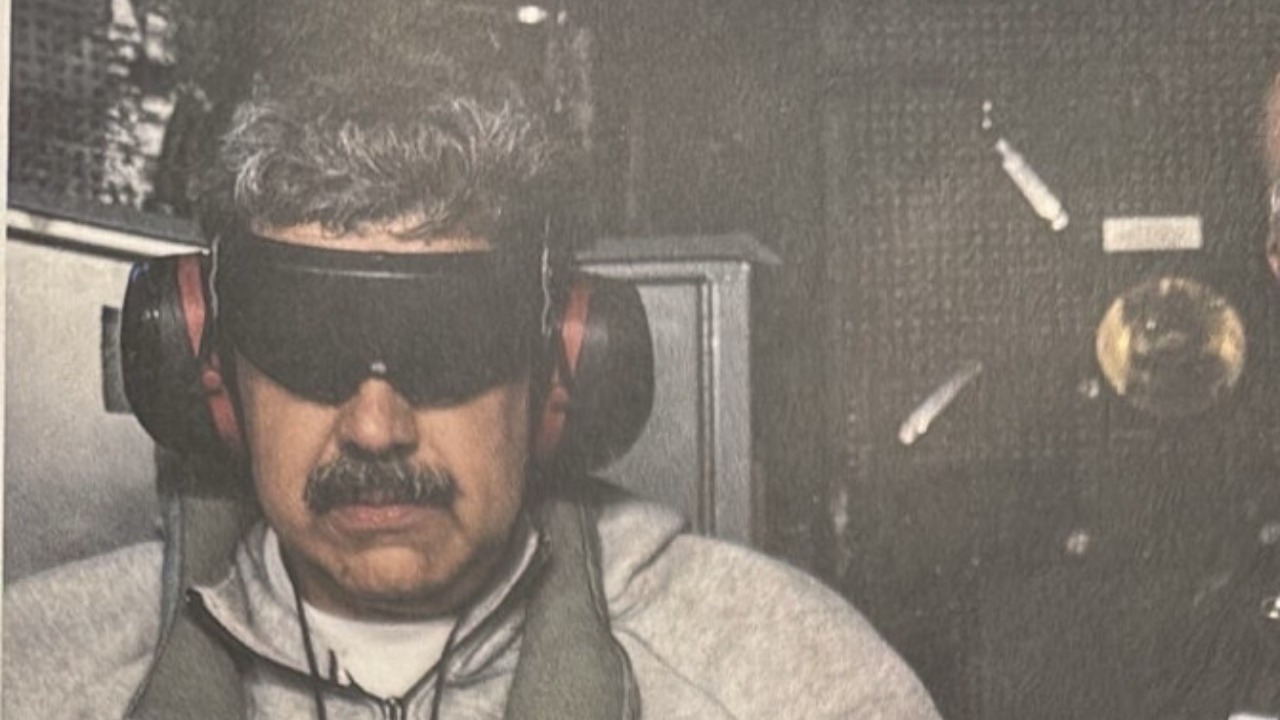
Once Maduro and Cilia Flores were in custody, the priority shifted to getting them out of Venezuelan airspace before loyalist units could regroup. The extraction team moved them to a secure landing zone, where a waiting aircraft flew them to a U.S. military facility and then onward to the United States. Within hours, images began circulating that showed a handcuffed Maduro under guard, visual proof that the operation had achieved its most audacious objective and that the Venezuelan president was no longer in control of his own fate.
Trump quickly seized the narrative, telling the public that Maduro, his wife, and other top figures had been captured and promising more details at a scheduled news conference. He framed the mission as a success that would free Venezuela from dictatorship and hinted that Washington would oversee the country’s transition in the short term. Live coverage noted that Trump says Maduro and his wife were in U.S. hands, while separate reporting confirmed that the captured Venezuelan president was being held at the Metropolitan Detention Center in New York, a detail that underscored how far he had fallen from the presidential palace to a federal jail.
Who runs Venezuela now? A power vacuum and a court decree
With Maduro suddenly removed from the scene, Venezuela’s already fragile institutions were pushed into uncharted territory. The immediate question was who, if anyone, could claim constitutional authority after the president’s capture by a foreign power. Within hours, Venezuela’s Supreme Court moved to assert some semblance of order, directing Vice President Delcy Rodríguez to assume the duties of acting president and declaring that the vice presidency must replace the head of state in such circumstances. That ruling was an attempt to project continuity, even as the real levers of power were being contested in the streets and barracks.
Yet the court’s decree did not resolve the deeper legitimacy crisis. Opposition figures argued that any succession plan blessed by a judiciary long aligned with Maduro lacked credibility, while some within the ruling party questioned whether Delcy Rodríguez could command the loyalty of the security forces without the personal authority that Maduro had cultivated. Reports on how Venezuela’s Supreme Court ordered the transfer of duties highlight a country where formal decisions on paper are racing to catch up with the raw reality of power after a foreign-led decapitation strike.
Washington’s next move: “running” the country, at least for now
Even as Caracas scrambled to define its own leadership, Trump made clear that the United States intended to play a direct role in shaping Venezuela’s immediate future. He said publicly that the United States would “run” the country for now, language that evoked past occupations and protectorates more than the usual rhetoric of partnership or support. That statement suggested that Washington saw itself not only as the architect of Maduro’s removal but also as the de facto manager of the transition, at least until a new political arrangement could be negotiated or imposed.
In practical terms, that posture has meant coordinating with select Venezuelan officials, backing certain opposition figures, and signaling that U.S. economic and security assistance will flow to those who accept the new reality. Coverage of what to know about the U.S. military attack on Venezuela, Former Venezuelan President Nicol Maduro and his wife landing in the United States underscores how Washington is treating Maduro as a former head of state rather than a sitting president. That framing, combined with the promise to “run” the country, has drawn sharp criticism from governments wary of a precedent in which a superpower removes and detains a foreign leader, then claims a supervisory role over the nation left behind.
On the ground in Caracas: fear, images, and contested narratives
For ordinary Venezuelans, the experience of the strike and its aftermath has been a mix of fear, confusion, and cautious hope. Residents of Caracas described a night that felt like a “roller coaster,” with explosions, power outages, and rumors racing faster than official information. In the days that followed, heavily armed patrols appeared in key neighborhoods, while long lines formed outside supermarkets and banks as people tried to secure cash and food in case the crisis deepened. The sense that the country’s fate was being decided in distant capitals, rather than in its own institutions, only added to the anxiety.
Images have played a central role in shaping how Venezuelans and the world understand what happened. Photos obtained by reporters showed a handcuffed Maduro under guard, his expression a mix of defiance and disbelief, providing a stark visual contrast to the carefully staged broadcasts he once used to project strength. Those images, described in coverage where Photos obtained reveal the former president in custody, have become rallying points for both sides: opponents of the regime see them as proof that a long-feared strongman has finally been held to account, while supporters view them as evidence of foreign humiliation inflicted on their nation.
Legal limbo and international fallout
Maduro’s presence in a U.S. detention facility has opened a complex legal and diplomatic front that is still taking shape. On one level, American authorities are treating him as a defendant who could face charges related to corruption, narcotrafficking, or human rights abuses, building on years of investigations that had already targeted members of his inner circle. On another level, he remains, in the eyes of some states, the constitutional president of Venezuela, raising questions about sovereign immunity, jurisdiction, and the legality of his capture during a foreign military operation.
International reaction has been sharply divided. Some governments have welcomed the removal of a leader they saw as illegitimate and repressive, while others have condemned the United States for launching airstrikes on Venezuela and capturing its president without a clear mandate from multilateral bodies. The operation has revived debates about regime change, the use of force, and the balance between human rights enforcement and respect for national sovereignty. As Maduro sits in the Metropolitan Detention Center and Delcy Rodríguez attempts to govern amid chaos, the world is left to grapple with a precedent in which a U.S. strike did not just weaken a foreign government but physically removed its leader from power.
A country at a crossroads
Venezuela now stands at a crossroads shaped by both internal fractures and external control. The Supreme Court’s move to install Delcy Rodríguez as acting president, the presence of U.S. forces in the region, and the detention of Maduro in New York have combined to create a hybrid reality in which formal authority, street power, and foreign influence all compete. Reports asking Trump said US forces were sending an extraction team into the capital, and that Maduro and his wife were seized near El Volcán, capture the sense of a state whose sovereignty has been punctured at its very core.
Where the country goes from here will depend on whether Venezuelan institutions can reassert genuine autonomy, whether the United States is willing to relinquish its self-declared role in “running” the country, and whether a credible political process can emerge from the shadow of a foreign-led raid. For now, the capture of Nicolás Maduro stands as a stark example of how a single U.S. strike, backed by intelligence, special forces, and presidential resolve, can topple a leader but cannot, on its own, answer the deeper question of who truly governs Venezuela and on whose terms.