
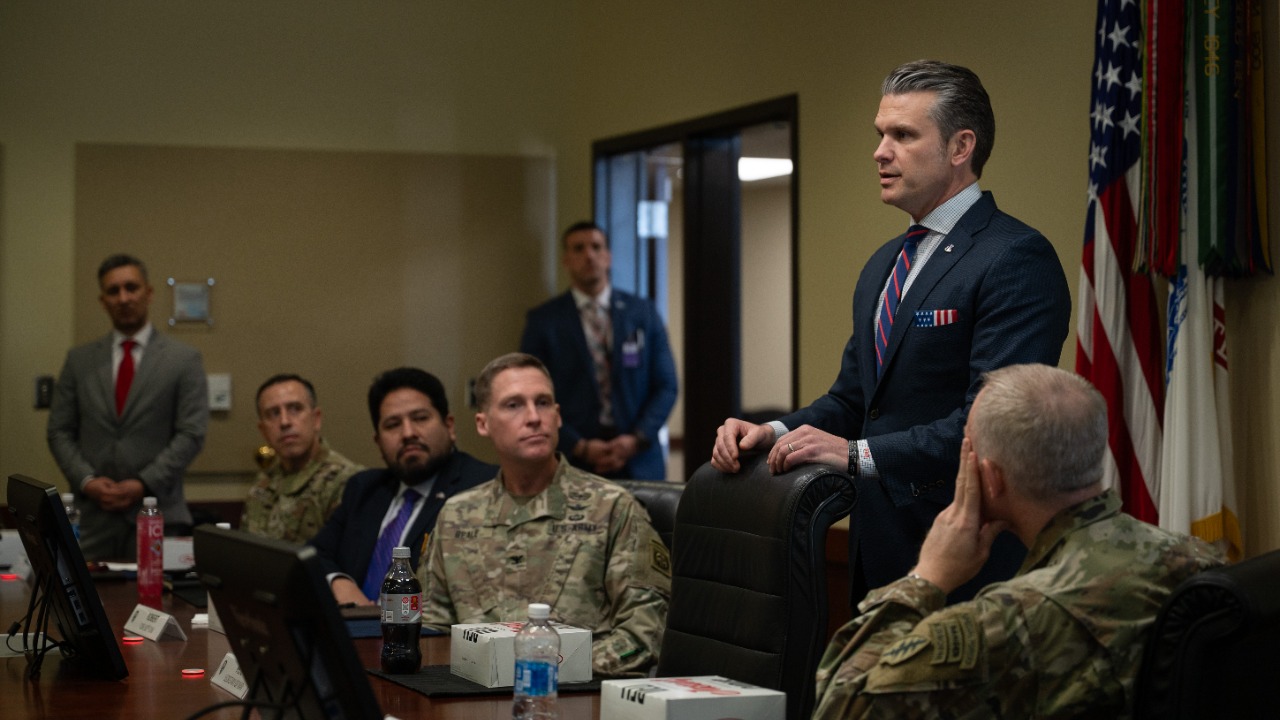
Defense Secretary Pete Hegseth has turned a once abstract slogan about “warrior ethos” into a concrete campaign that now shapes orders, promotion standards, and even what troops must watch on government time. Backed by President Donald Trump, Hegseth is using his control of the Pentagon to demand a harder edge in the ranks and to sideline leaders who resist. The result is a sharp internal struggle over what kind of culture should define the United States armed forces in an era of great power rivalry.
What began as rhetoric about toughness has become a program of directives, convocations, and public ultimatums that reach from Quantico, Virginia, to distant combatant commands. Supporters see a needed correction after years of what they call “woke” distractions. At the same time, critics warn that Hegseth’s push risks politicizing uniforms and narrowing the definition of who counts as a warrior.
From campaign trail slogan to Pentagon doctrine
Under the leadership of President Donald Trump and Defense Secretary Pete Hegseth, the Pentagon has been recast as the main stage for a cultural reset that treats “warrior ethos” as both mission statement and loyalty test. A social media statement describing how, under the leadership of President Donald Trump and Defense Secretary Pete Hegseth, the U.S. military is undergoing a significant shift framed the project as a return to hard warfighting priorities while still insisting that operational effectiveness remains paramount, signaling that ideology and readiness are now being presented as mutually reinforcing rather than competing goals. That framing has given Hegseth political room to argue that changes to grooming rules, training content, and diversity initiatives are not symbolic gestures but direct investments in combat power, even as opponents see them as a partisan litmus test.
The budget process has helped turn that message into policy. When lawmakers outlined their FY26 defense priorities, they stressed investments that would strengthen America’s defense and re-establish deterrence, language that dovetailed neatly with Hegseth’s call for a more aggressive posture. By tying his cultural agenda to those broader funding goals, he has aligned his program with congressional rhetoric about hard power and deterrence, which in turn makes it easier for him to argue inside the building that every personnel reform, from fitness tests to classroom content, is part of a single campaign to prepare the force for high-end conflict.
The Quantico convocation and mandatory viewing orders
Hegseth’s most visible move came when he ordered hundreds of generals from around the world to Marine Corps facilities at Quantico, Virginia, so they could hear him deliver a short but pointed address on military culture. Reporting on that gathering described how Defense Secretary Pete Hegseth summoned this global roster of senior officers to Quantico, Virginia, turning what might have been a routine leadership conference into an unmistakable show of authority over the uniformed brass. The message was not subtle, as he used the stage to press his case that senior leaders had grown too comfortable with bureaucratic management and not focused enough on preparing formations for brutal, high-intensity war.
He followed that up by directing units to watch his later remarks on what he called a “woke” military, turning a speech into mandatory viewing across the services. One account noted that Hegseth ordered troops to watch his speech, decrying a “woke” military and calling out what he described as “fat generals,” a phrase that signaled his willingness to personalize his critique of the current leadership class. By forcing both senior commanders and junior troops to sit through his presentations, he has made clear that the warrior ethos he describes is not just a talking point but a standard he expects the entire chain of command to internalize.
Ultimatums on women, ‘weak men,’ and grooming rules
Hegseth has paired those set-piece events with blunt ultimatums about who he thinks belongs in combat units and how they should look. In one televised exchange, he argued that women and what he called “weak” men should not be shielded from strict physical standards, stating that if women can make it, excellent, and if not, it is what it is, and adding that weak men will not qualify either, since he is not playing games with combat readiness. That framing, captured in coverage of his comments on women and weak men, signaled that he sees the warrior label as something to be earned through demanding tests rather than granted through policy debates about representation.
He has also made clear that his cultural reset extends to grooming and personal appearance. One report on his internal directives noted that his plan includes shaving requirements and that he wants his hands untied so that traditional standards on hair and beards can be strictly enforced as part of a broader push to restore what he calls warrior norms. In a separate event, he told service members that those who oppose his plan to scrap what he brands as woke policies and restore a warrior ethos should resign, a threat that was highlighted when he said that his directives on discipline, including on hair, will be strictly enforced and that anyone who cannot support that direction should step aside. That kind of language has energized supporters who see a long-overdue crackdown on lax discipline, while critics worry it blurs the line between professional disagreement and political disloyalty.
Growing traction and rising backlash in the ranks
The campaign has not been limited to speeches and sound bites. In a sweeping address to top military brass, Hegseth announced a series of War Department reforms that he framed as necessary to align structures and incentives with the warrior identity he wants to cultivate, telling his audience that the topic was the nature of ourselves and that no plan, program, reform, or formation would succeed without a change in mindset. Those reforms, which include changes to fitness standards, promotion criteria, and education content, are designed to reward officers and noncommissioned officers who embrace his priorities and to marginalize those who still champion what he derides as social engineering.