
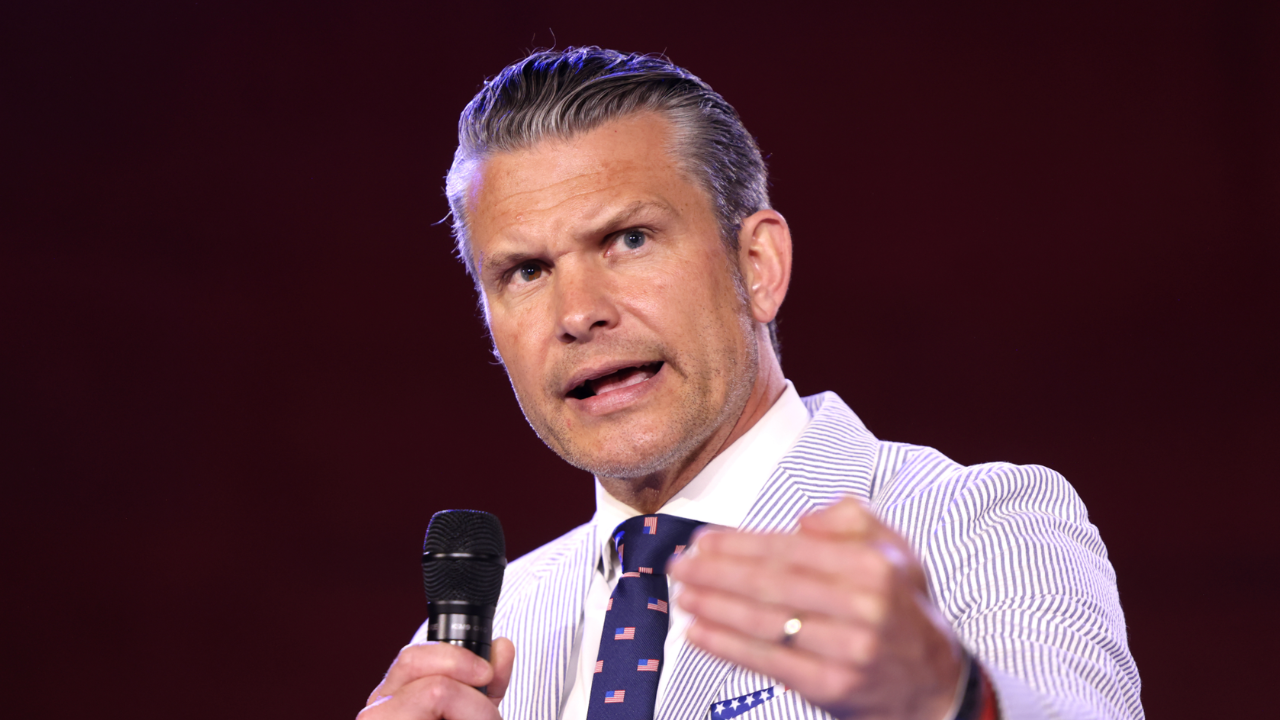
Secretary of War Pete Hegseth told military leaders from across Latin America Tuesday that the current administration has abandoned the priorities of its predecessor. “I understand you may be feeling — and your countries and your militaries may be feeling — some whiplash,” Hegseth said. “Because just 18 months ago, the previous U.S. administration under Joe Biden, especially the previous administration here at Southern Command, stood in front of you promoting priorities like gender issues, climate change, or diversity — dudes in dresses. I’ve said this before, but the Department of War is done with that nonsense.”
The Fuller Remarks, According to the Official Video
According to the full video of Hegseth’s remarks posted on war.gov, he continued: “Full stop. And I assume you and your countries are as well. Real threats, real capabilities, no more leftist make-believe or dress-up time. The hardworking, law-abiding people of our nations suffered together far too long. But now we are working together, we are building together, and we are training together. We are killing terrorists, and we’re defeating the failed and toxic ideologies of radical socialism and communism.”
The Event Where He Spoke
Hegseth delivered the remarks at a forum of the Americas Counter Cartel Coalition in Panama City, addressing civilian defense leaders and generals from 18 other countries, according to the New York Times’ coverage of the conference. Other speakers at the event included Panamanian President José Raúl Mulino, Sen. Bernie Moreno of Ohio, and Marine Corps Gen. Francis L. Donovan, commander of U.S. Southern Command.
A Consistent Phrase Across Multiple Speeches
Tuesday’s remarks were not the first time Hegseth has used this specific language. According to the Advocate’s reporting, he made nearly identical comments — “No more dude in dresses, we’re done with that s**t” — during a keynote address to special operations forces in Tampa, Florida, in May 2025, delivered the same day the Supreme Court allowed the administration to begin discharging transgender service members under Executive Order 14183.
A Larger, More Detailed Version of the Same Message
Hegseth expanded on the same theme at greater length in a September 30, 2025, address to hundreds of assembled military leaders at Quantico, Virginia. According to Common Dreams’ reporting, he told the gathered generals and admirals that the changes meant “no more identity months, DEI offices, dudes in dresses, no more climate change worship,” while separately criticizing the physical fitness of the force, saying, “Frankly, it’s tiring to look out at combat formations and see fat troops.”
How Hegseth Mandated Military-Wide Viewing of the Speech
The Quantico address drew enough attention that Hegseth later ordered the entire department to review it. According to CNN’s reporting, cited by Yahoo News, a memo dated October 6, 2025, directed that “leaders at every level will ensure all personnel will either watch the full recording or read the official transcript of the speech, and review the policy changes no later than 31 October 2025.”
How Military Figures Responded to the Quantico Speech
The September address drew direct criticism from a retired senior officer. Former Lt. Gen. Mark Hertling described the gathering as “somewhat shocking” and said it was “filled with mistruths,” according to Yahoo News’ reporting. Sen. Tammy Duckworth, an Army veteran who lost both legs in the Iraq War, separately called Hegseth “the least qualified secretary of defense in our nation’s history.”
How Trump Responded at the Time
President Trump, who spoke immediately after Hegseth at the Quantico event, called the secretary’s speech “great,” according to Common Dreams’ reporting — a sharp contrast to the criticism the address drew from Hertling, Duckworth, and other commentators who characterized it as an unusual and divisive address to assembled military leadership.
The Broader Policy Context Behind the Rhetoric
Hegseth’s comments reflect a documented shift in Pentagon policy rather than rhetoric alone. Executive Order 14183, which the administration has implemented since Trump’s return to office, mandates the discharge of transgender service members regardless of performance record or qualifications and bars future enlistment of transgender applicants — the policy underlying the “no more dudes in dresses” framing Hegseth has repeated across multiple public appearances since 2025.
What the Prior Administration’s Climate Policy Actually Was
Hegseth’s reference to “climate change” as a Biden-era priority points to a real, formally documented Pentagon policy shift. Under Executive Order 14008, signed by Biden in January 2021, the Secretary of Defense and Chairman of the Joint Chiefs of Staff were directed to incorporate climate considerations into the National Defense Strategy and related planning documents. The department subsequently released a formal Climate Risk Analysis in October 2021 and a Climate Adaptation Plan the following month; then-Defense Secretary Lloyd Austin described climate change at the time as an “existential threat” the department “must tackle” to keep the nation secure, and the Pentagon began providing the White House annual updates on incorporating climate security implications into its strategy documents.
What the Prior Administration’s Gender and DEI Policies Actually Were
Hegseth’s references to “gender issues” and diversity policy similarly point to specific, documented actions. According to Defense.gov’s own contemporaneous reporting, Biden signed an executive order in January 2021 overturning the first Trump administration’s ban on transgender military service, with Austin stating at the time that transgender individuals “who wish to serve in the United States military and can meet the appropriate standards shall be able to do so openly and free from discrimination.” A separate, broader executive order on diversity, equity, inclusion, and accessibility in the federal workforce, signed in June 2021, directed agencies including the Defense Department to expand diversity training and ensure federal employee identification reflected transgender and non-binary workers’ current names and pronouns. Trump revoked both orders within his first days back in office in January 2025, with the White House at the time saying the Biden administration had “embedded deeply unpopular, inflationary, illegal, and radical practices” across government.
What “Women, Peace and Security” Actually Referred To
Hegseth’s fuller remarks, per the War.gov video, specifically named “women peace and security” among the prior administration’s priorities. That phrase refers to the Women, Peace and Security Act of 2017, a bipartisan law signed by Trump himself during his first term. According to a statement from Sen. Jeanne Shaheen’s office, the law’s congressional sponsors included then-Rep. Kristi Noem, now Trump’s Homeland Security secretary, and then-Sen. Marco Rubio, now secretary of state — meaning the specific policy framework Hegseth referenced as a Biden-era imposition was in fact championed by two officials currently serving in Trump’s own Cabinet. Shaheen noted that Ivanka Trump had celebrated the law’s signing in 2019, calling it a mark of the U.S. being “the first country in the world to enact” such legislation.
What the Panama Speech Was Otherwise About
The passage highlighted by @DOWResponse was one part of a broader address focused primarily on regional security cooperation. According to the New York Times, Hegseth used the bulk of his remarks to urge coalition members to intensify joint military operations against drug cartels, describing the coalition’s goal as working “to degrade, dismantle and destroy narco-terrorist networks” and separately announcing that Honduras and Colombia had newly agreed to allow joint operations with U.S. forces.
Where This Leaves Things
As of the Panama remarks, Hegseth’s comments continued a consistent rhetorical pattern he has maintained in public appearances since taking office, tying cultural and personnel policy changes directly to his broader argument about restoring what he describes as a “warrior ethos” within the department — a framing that has drawn both enthusiastic support from Trump and sustained criticism from veterans and lawmakers who argue it mischaracterizes the prior administration’s policies and detracts from operational readiness.