
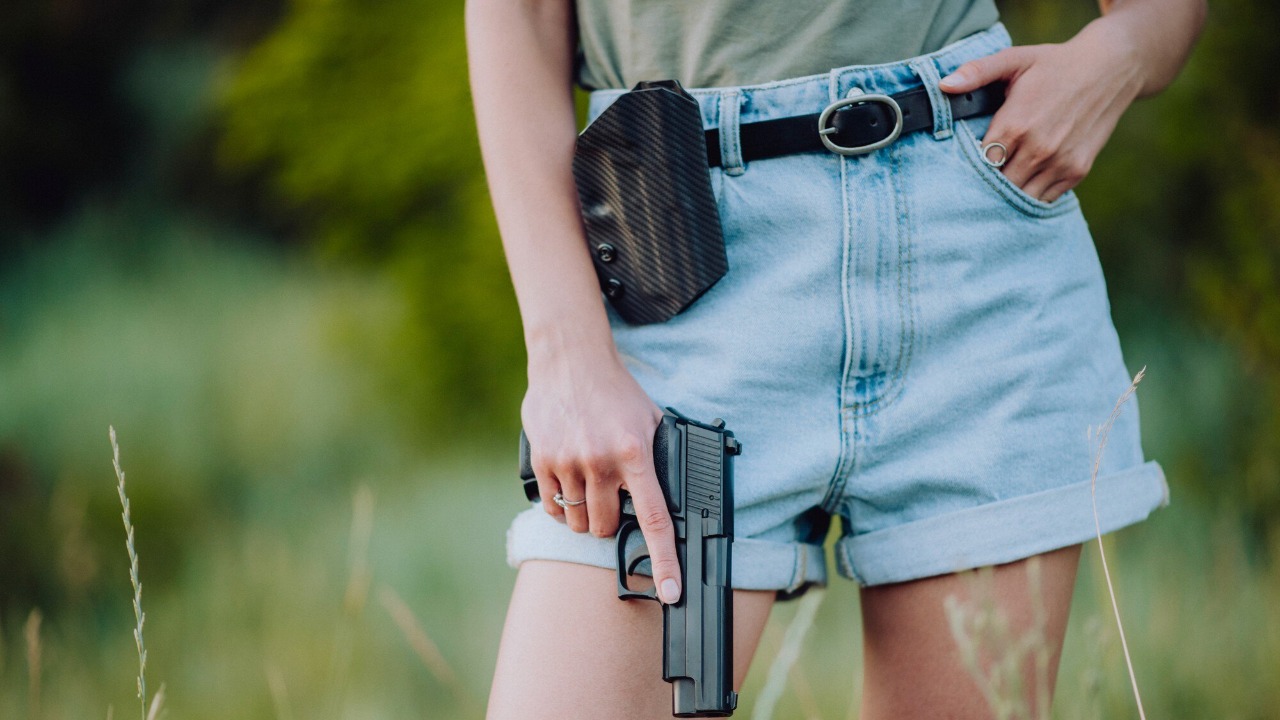
For concealed carriers, the sweet spot is a handgun that disappears under light clothing yet still feels stable and controllable when the pressure is on. That balance is not accidental, it comes from specific choices in size, ergonomics, and capacity that separate practical everyday carry pistols from guns that are either too bulky or too punishing to shoot. The current crop of compact and slimline designs shows how manufacturers are refining that middle ground so owners do not have to trade concealment for control.
Instead of chasing extremes, more shooters are gravitating toward pistols that sit between full-size duty guns and ultra-tiny pocket models. These handguns use compact frames, carefully shaped grips, and moderate barrel lengths to tame recoil while staying easy to hide, a design philosophy that is now reflected across polymer striker-fired pistols, metal-framed compacts, and even modern revolvers.
Why size and frame geometry matter more than labels
Marketing terms like “subcompact” or “micro” often obscure the real question for concealed carriers, which is how a pistol’s dimensions affect both concealment and shootability. Full-size designs, sometimes described as Standard or duty pistols, typically offer generous grips and high capacity, but their longer slides and taller frames are harder to hide under light garments. At the other extreme, ultra-short pistols vanish on the belt yet often give up grip surface and sight radius, which can make fast, accurate strings of fire more difficult for many shooters.
Compact pistols sit in the middle, and that geometry is not accidental. A slightly shortened slide and trimmed grip frame reduce printing under clothing while still leaving enough real estate for a full or nearly full firing grip. Factory descriptions of compact frame 9 mm pistols emphasize that they are designed to fit comfortably in most hands and maintain a secure grip, even when the shooter is wearing gloves. That combination of moderate size and thoughtful contouring is what lets a handgun ride close to the body without feeling like a compromise once it is drawn.
Concealment first: slim profiles, rounded edges, and reduced printing
Effective concealment starts with how a pistol interacts with clothing, not just how small it looks on a spec sheet. Current carry trends show that Concealed carriers increasingly favor shorter barrels and slides because they reduce “printing,” the visible outline of a gun under a shirt, and make it easier to carry discreetly without giving up meaningful firepower. A slim frame also helps the pistol hug the body, which matters when someone is bending, sitting, or reaching in public and wants the gun to remain unnoticed.
Design details that might seem minor on the bench become critical on the belt. Guidance on Choosing the Right Firearm for Concealed Carry highlights slim frames, Rounded edges, and lightweight construction as key features that reduce printing and improve comfort over long days. Deep concealment models like the FN Reflex are described as having thin profiles that will not print under cover garments, a reminder that even a few millimeters of slide or grip thickness can be the difference between a gun that disappears and one that constantly telegraphs its presence.
Control under recoil: grip length, ergonomics, and shootability
Concealment only matters if the pistol can be controlled when it is actually fired, which is where grip length and ergonomics come to the forefront. A grip that is long enough for all fingers to find purchase gives the shooter leverage to manage recoil and get back on target quickly. Reviews of revolvers like the Colt King Cobra note that the grip is large enough to enhance control and offer some protection from recoil without adding so much bulk that concealment becomes a concern, a balance that translates directly to semi-automatic carry guns as well.
Modern compact pistols lean heavily on frame texturing and contouring to lock the hand in place. The GLOCK G43X Gen5 MOS Slimline Sub-Compact Pistol, for example, pairs a slim slide and frame with grip texturing that provides a secure, ergonomic hold for concealed carry, even though the overall package is smaller than a traditional duty gun. Factory descriptions of the GLOCK emphasize that the slim subcompact profile is matched with features that improve control, not just reduce size. Similarly, compact 9 mm pistols with accessory rails are described as having frames that strike a balance between comfort and control, fitting comfortably in most hands while still offering a secure grip, which is crucial when shooters are dealing with defensive ammunition and rapid follow-up shots.
Capacity and caliber: avoiding extremes in everyday carry

Capacity and caliber choices also shape how well a handgun balances concealment with control. Full-size pistols, often categorized under Standard handgun specifications, typically use double stacked magazines that deliver high round counts in calibers like 9 mm. That capacity is reassuring, but the larger grip circumference and added weight can make concealment and all-day carry more challenging for some users. On the other end, ultra-thin single stack pistols may sacrifice too much capacity, leaving carriers with limited ammunition in exchange for a marginal gain in concealability.
Many manufacturers now offer families of pistols that share operating systems but vary in frame size and barrel length so shooters can mix and match capacity and concealment. Reporting on carry options notes that Many makers, especially Glock and SIG Sauer, build these modular lines so a shooter can choose a compact frame with a slightly longer slide or a shorter barrel with a higher capacity grip. Deep concealment pistols like the FN Reflex illustrate this approach by shipping with an 11 round magazine for minimal printing and a 15 round option when clothing and holster choice allow a bit more grip length. That flexibility lets carriers tune their setup to the day’s environment without abandoning a familiar trigger and sight picture.
Real-world examples that hit the concealment and control sweet spot
Several specific models show how this design philosophy plays out in practice. The Smith & Wesson M&P Shield line is frequently cited as a trusted concealed carry option because it keeps the slide and frame slim while still offering enough grip surface for control. Coverage of the platform notes that the Smith & Wesson M&P Shield is compact enough for discreet carry while still offering enough grip surface for control, a combination that has made it popular among women and other shooters who prioritize both concealment and manageable recoil. The updated M&P9 M2.0 Shield builds on that formula, with descriptions emphasizing that it packs the power and features of a full-size pistol into a lightweight pistol the size of a hand, underscoring how far manufacturers have pushed this balance.
Other examples show that small does not have to mean harsh or hard to shoot. The Kahr CW9 and CW380 are described as lighter, smaller, and thinner pistols that remain popular for concealed carry because they combine easy concealment with reliable accuracy and stopping power, rather than simply chasing the smallest possible footprint. Similarly, the GLOCK G43X Gen5 MOS Slimline Sub-Compact Pistol uses a slim slide and frame for a low profile while relying on grip texturing and an ergonomic hold to keep the gun controllable under recoil. Even niche offerings like purple-finished Kahr models or specialized deep concealment pistols such as the FN Reflex follow the same pattern: thin profiles that will not print under cover garments, paired with enough grip and sight radius to make defensive shooting realistic rather than theoretical.
Ergonomics, safety features, and the EDC mindset
Beyond raw dimensions, everyday carry pistols that truly balance concealment and control tend to share a common ergonomic and safety philosophy. Competitive shooter JJ Racaza has contrasted everyday carry pistols with competition guns, noting that Features like decocking mechanisms allow for safer handling in defensive contexts. He also points out that EDC Guns are typically more streamlined, which makes them easier to conceal while still being fast into action. That streamlined approach often includes undercut trigger guards, high grip tangs, and carefully placed controls that let the shooter get a high, consistent grip without snagging on clothing.
Transition guidance for new concealed carriers reinforces that a slim frame, rounded edges, and light overall weight are not just comfort features but safety considerations, because a gun that carries comfortably is more likely to be carried consistently and handled with confidence. When those ergonomic choices are combined with moderate barrel lengths, compact frames, and thoughtful capacity options, the result is a handgun that truly balances discretion with control. Rather than chasing the smallest or highest capacity pistol on the shelf, experienced carriers increasingly look for that middle ground, where the gun disappears when holstered yet feels like a full partner when it is time to shoot.