
Greenland’s government has firmly rejected Donald Trump’s offer to send a United States Navy hospital ship to the Arctic island, calling the unsolicited proposal unnecessary and out of step with its public health needs. The move has revived questions about how the former president views the territory and how Greenland’s leaders want their country to be seen by the outside world.
By turning down the mission, Greenland’s leadership signaled confidence in its own healthcare system and put political distance between itself and a gesture many there saw as more symbolic than practical. The exchange has also drawn in Denmark, the Pentagon, and American political figures, transforming a single social media proposal into a broader debate about sovereignty, consent, and the optics of disaster relief.
The offer that arrived by social media
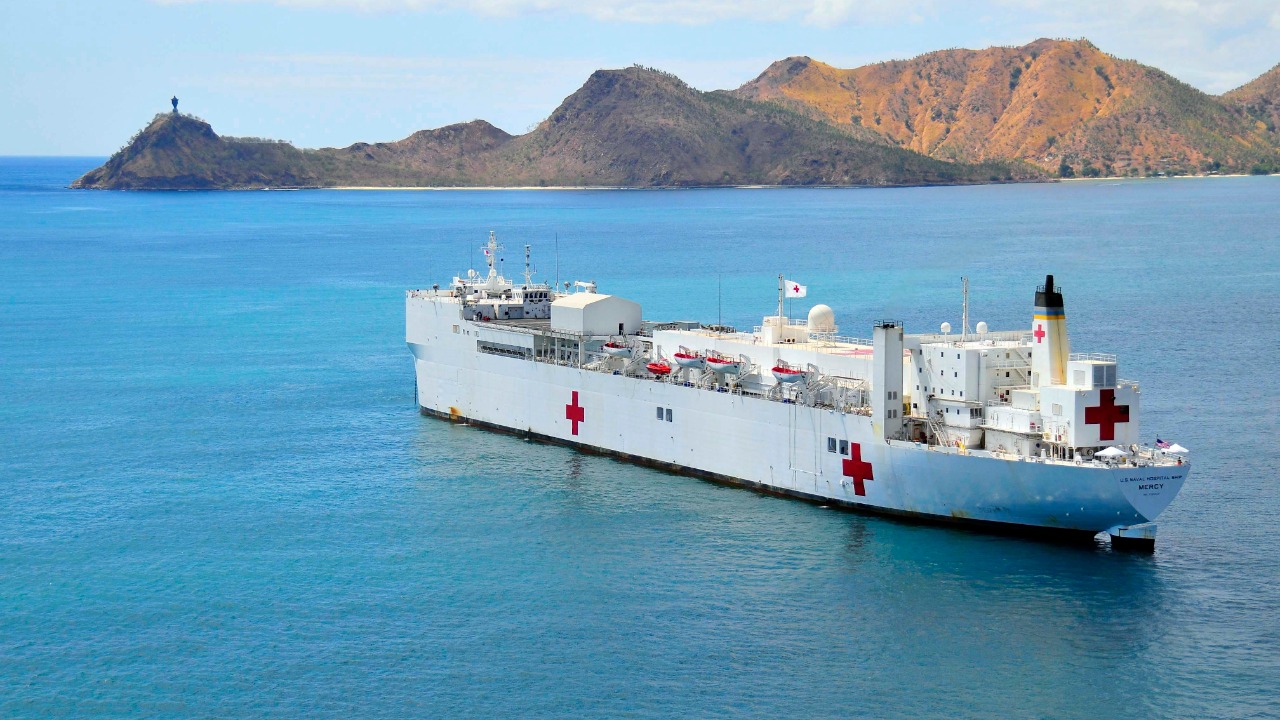
The latest dispute began when President Trump used his social media platform to announce a plan to send a “great hospital boat” to Greenland, complete with an illustration of a Navy vessel similar to the USNS Mercy. His post cast the mission as an act of generosity and hinted at a broader vision for American involvement with the island, which he had previously treated as a strategic prize. Reporting on the Pentagon later indicated that, despite Trump’s public declaration, no U.S. hospital ship had actually been ordered to sail toward Greenland, and military planners had received no operational instructions to match the fanfare of the announcement.
The gap between the grandiose promise and the lack of concrete orders quickly became part of the story. Officials familiar with naval operations described how the Navy’s existing hospital ships, including vessels like the USNS Mercy, were in U.S. shipyards or already assigned to other duties at the time Trump spoke of a Greenland mission. Coverage of the episode highlighted that the Pentagon had “received no instructions” to dispatch a ship to the Arctic, even as Trump’s post circulated widely and was picked up by commentators who treated the plan as if it were already underway. In that light, the offer functioned more as a political signal than a logistical plan.
Greenland’s swift and pointed refusal
Greenland’s response was both rapid and unusually blunt for a small territory often cautious in its public diplomacy. Greenlandic Prime Minister Jens-Frederik Nielsen declared that “we say no thank you from here” and stressed that the island did not need an American hospital ship to care for its people. In comments shared through local channels and amplified internationally, Nielsen argued that President Trump’s idea of sending an American hospital vessel to Greenland was based on a misunderstanding of how healthcare already works on the island. He emphasized that residents were “being taken care of there” and that the implied image of a neglected population waiting for foreign medical rescue did not match reality.
The prime minister’s stance reflected a broader sentiment among Greenlandic leaders who viewed the unsolicited proposal as patronizing. Officials pointed out that Greenland already operates its own network of hospitals and clinics, anchored by a central facility in Nuuk and supplemented by regional hospitals and local health stations across an island of fewer than 60,000 people. In interviews and social media posts, Nielsen framed the rejection as a matter of dignity as much as logistics, signaling that Greenland would decide for itself when and how to request outside medical assistance.
A free healthcare system that feels misunderstood
At the heart of Greenland’s pushback lies a publicly funded healthcare system that its leaders say is functioning, even if it faces the familiar challenges of remote and sparsely populated regions. Health services are tax-financed and provided free at the point of use, a model that the Nordic Council of Ministers describes as universal and anchored in the principle that residents should not pay to go to the doctor. The system includes six hospitals serving a population of fewer than 60,000 people, with telemedicine links and referral pathways to Denmark when highly specialized care is needed.
Greenlandic officials argued that Trump’s offer ignored this existing infrastructure and risked portraying the island as medically abandoned. Nielsen and his allies stressed that while the system can be stretched by geography and weather, it is not collapsing and does not require a foreign hospital ship to function. Their message aligned with information from regional health authorities that describes a structured network of care, supported by Danish cooperation and Nordic funding frameworks, rather than an isolated outpost waiting for American rescue. In that context, the proposed ship looked less like help and more like a political prop.
Danish and Nordic sensitivities over sovereignty
Denmark, which retains responsibility for Greenland’s foreign and security policy, reacted with similar skepticism toward Trump’s hospital ship idea. Danish officials signaled that they had not been consulted in advance and questioned why a foreign leader would announce such a mission unilaterally to a territory that is part of the Kingdom of Denmark. Commentators in Copenhagen noted that any large foreign military vessel entering Greenlandic waters would normally involve careful coordination with Danish authorities, especially when framed as a humanitarian deployment.
Nordic institutions also weighed in, pointing to the role of the Nordic Council of Ministers in supporting Greenland’s health service and broader welfare systems. The council’s own information on the health service in Greenland stresses cooperation and capacity building rather than one-off, high-profile interventions. For Danish and Nordic policymakers, Trump’s proposal revived memories of his earlier interest in acquiring Greenland outright, a notion that had already strained relations. The hospital ship episode, in their view, risked blurring the line between humanitarian rhetoric and strategic signaling in a region where sovereignty questions are highly sensitive.
U.S. political reactions and the domestic spin
Inside the United States, Trump’s hospital ship plan and Greenland’s rejection quickly became fodder for political narratives. Supporters of the former president framed the offer as an example of American generosity and argued that the refusal reflected ingratitude or ideological hostility to Trump. Some conservative commentators linked the episode to broader debates about Arctic strategy and accused critics of ignoring the potential benefits of a U.S. medical presence in a region that is gaining military and commercial importance.
Others focused on the discrepancy between Trump’s rhetoric and the Pentagon’s confirmation that no hospital ship had been ordered to Greenland, using that gap to question the seriousness of the proposal. National security analysts noted that the Navy’s hospital ships, including the USNS Mercy and USNS Comfort, are finite assets whose deployment carries significant opportunity costs. They argued that announcing such a mission on social media without prior coordination with Greenland, Denmark, or U.S. defense planners risked undermining trust in American commitments. The episode also drew comment from regional politicians such as Gov. Landry in the United States, who used Greenland’s refusal to argue about how Arctic partners view American offers of assistance.