
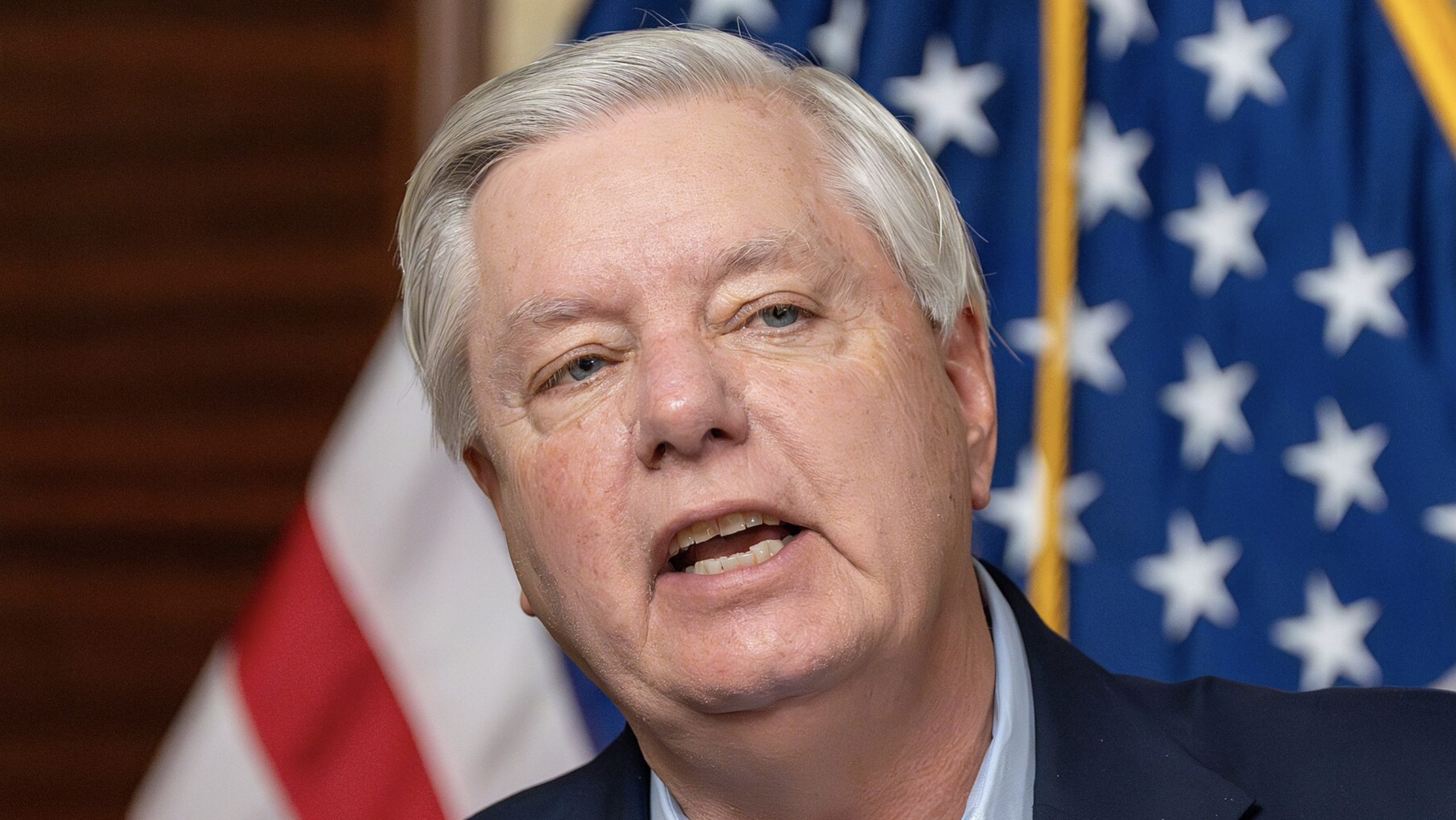
Sen. Lindsey Graham (R-S.C.) declared Wednesday that President Donald Trump’s push to dramatically expand the Abraham Accords — bringing Saudi Arabia and a bloc of Muslim-majority nations into formal peace with Israel — would represent the most consequential realignment in the Middle East in thousands of years, and possibly the event that finally ends the Arab-Israeli conflict.
“The biggest news out of the cabinet meeting is President Trump’s determination to expand the Abraham Accords, to include Saudi Arabia making peace with Israel,” Graham wrote in an X post on May 27, 2026. “This would be the biggest change in the Middle East in thousands of years, effectively ending the Arab-Israeli conflict. I am convinced that President Trump — above all others — has the ability to make this happen.”
What the Abraham Accords Are — and What They Have Achieved
The Abraham Accords were first signed on September 15, 2020, during Trump’s first term, in a White House ceremony that produced normalization agreements between Israel and the United Arab Emirates and Israel and Bahrain — the first formal normalization of Arab-Israeli diplomatic relations since Israel’s 1994 peace treaty with Jordan and the 1979 Egypt-Israel agreement following negotiations at Camp David.
Morocco joined in December 2020 and Sudan signed the general declaration, though ongoing instability delayed its ability to formalize the bilateral agreement. Kazakhstan formally joined the grouping on November 6, 2025, although it has had normalized relations with Israel since the 1990s.
The framework has delivered tangible results for the nations that joined. Trump’s May 25, 2026 Truth Social post — in which he formally demanded a sweeping expansion of the accords — pointed directly to this record, noting that the existing members have experienced what he called a “Financial, Economic, and Social BOOM, even during this time of Conflict and War, with the current Members never even suggesting leaving, or taking so much as even a pause.”
The accords also produced significant military cooperation, integrating Israel into the U.S. Central Command to facilitate greater coordination with U.S. and Gulf Cooperation Council missile systems and logistics operations.
Trump’s Sweeping Demand: Eight Nations, Now
The scale of Trump’s current Abraham Accords ambitions goes far beyond anything attempted in his first term. In a Truth Social post published May 25, 2026, Trump disclosed that during weekend discussions with the leaders of Saudi Arabia, the UAE, Qatar, Pakistan, Turkey, Egypt, Jordan, and Bahrain, he told them that joining the Abraham Accords should be considered mandatory as part of any broader regional settlement tied to the Iran conflict.
“I stated that, after all the work done by the United States to try and pull this very complex puzzle together, it should be mandatory that all of these Countries, at a minimum, simultaneously, sign onto the Abraham Accords,” Trump wrote. The countries he named were Saudi Arabia, the UAE, Qatar, Pakistan, Turkey, Egypt, Jordan, and Bahrain — with the UAE and Bahrain already existing members. He called for Saudi Arabia and Qatar to sign immediately, and said that if nations decline, they should not be considered part of any deal — as refusal would “show bad intention.”
Trump went further still, suggesting that if Iran signs a nuclear agreement with the United States, it too could one day be welcomed into the accords. “In speaking to numerous of the Great Leaders mentioned above, they would be honored, as soon as our Document is signed, to have the Islamic Republic of Iran as part of the Abraham Accords,” he wrote. “Wow, now that would be something special!”
The Saudi Piece: Why It Changes Everything
Of all the nations Trump is pressing to join, Saudi Arabia is by far the most consequential. The Kingdom has never formally recognized Israel, and a Saudi-Israeli peace deal has been considered the holy grail of Middle East diplomacy for decades — the agreement that, more than any other, could reshape the region’s political and economic architecture.
Graham acknowledged both the complexity and the historic weight of that specific goal. In his May 27 post, he specifically cited Trump’s relationship with Saudi Crown Prince Mohammed bin Salman as a key enabling factor — noting that “he has been a good, reliable partner to Saudi Arabia and the Crown Prince.” That relationship, Graham suggested, is what makes Trump uniquely positioned to pull off what no prior American president has managed.
The second Trump administration has been pushing to expand the Abraham Accords beyond their initial signatories since coming to power, though progress on bringing in additional Arab states faltered earlier while Israel maintained its military operations in Gaza and beyond. The Iran conflict and the emerging ceasefire framework have now created a new window — one that Trump and his team appear determined to use.
Graham: Years in the Making
Graham made clear in his post that his investment in this outcome is personal and long-standing. “I have been working on normalization for years, including during the Biden administration, because I know this leads to a lasting peace and a new Middle East that could become an economic powerhouse, not a powder keg,” he wrote. The senator pledged to work in a bipartisan fashion to support Trump’s effort, signaling that he views this as a cause that transcends partisan politics.
The full text of Graham’s May 27, 2026 X post read:
“I very much appreciate President Trump’s desire to end the Iranian conflict with a diplomatic solution that is real and sustainable. I have complete confidence in President Trump and his team to achieve this shared goal. However, the biggest news out of the cabinet meeting is President Trump’s determination to expand the Abraham Accords, to include Saudi Arabia making peace with Israel. This would be the biggest change in the Middle East in thousands of years, effectively ending the Arab-Israeli conflict. I am convinced that President Trump — above all others — has the ability to make this happen. He has been a good, reliable partner to Saudi Arabia and the Crown Prince, and no one has been a better friend of Israel than President Trump. I have been working on normalization for years, including during the Biden administration, because I know this leads to a lasting peace and a new Middle East that could become an economic powerhouse, not a powder keg. I will do everything in my power, working in a bipartisan fashion, to help President Trump achieve peace between Saudi Arabia and Israel.”
What It Would Mean
Trump’s own Truth Social post from May 25 framed the potential outcome in the most sweeping possible terms. If the full coalition of nations he named were to join — and if Iran ultimately became part of the framework as well — it would represent the largest and most comprehensive regional realignment in the modern history of the Middle East. Trump wrote that the Abraham Accords “will be a Document respected like no other that has ever been signed, anywhere in the World. Its level of Importance and Prestige will be unparalleled.”
He added: “The Middle East would be United, Powerful, and Economically Strong, like perhaps no other area, anywhere in the World.”
For Graham — a senator who has spent decades working toward Israeli security and regional normalization — Wednesday’s post was a declaration that the moment he has long worked toward may finally be within reach, and that the man he is counting on to deliver it is already in the room with the right leaders and the right leverage to make it happen.