
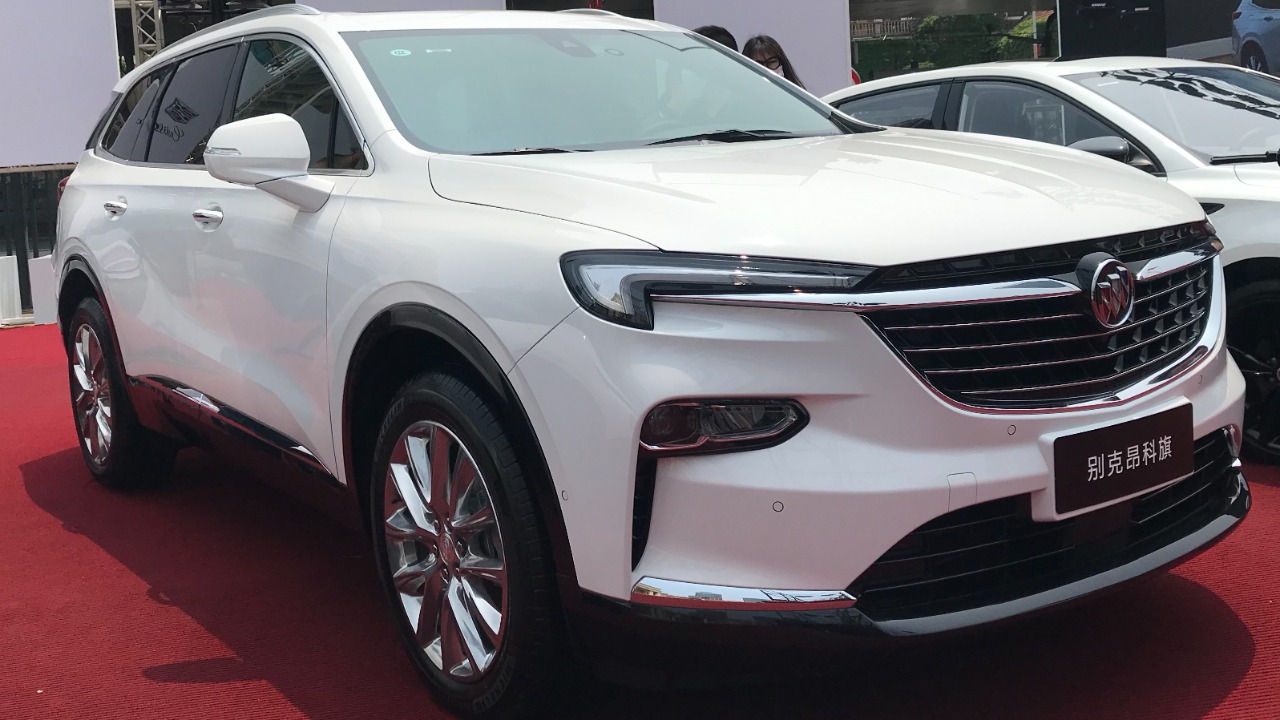
General Motors is reshaping Buick’s manufacturing footprint, shifting a key compact SUV program from Chinese plants back to a long-established assembly line in Kansas. The move signals a strategic retreat from reliance on Chinese production for U.S. buyers and a renewed bet on domestic capacity at a moment when tariffs and politics are reshaping the auto industry.
By committing the next generation of its compact Buick SUV to Fairfax Assembly in the Kansas City area, GM is not only responding to trade pressure but also aiming to reinforce Buick’s image as an American-built brand. The decision will ripple through supply chains, labor markets, and dealership showrooms as the company prepares for the model’s U.S. launch later in the decade.
From China-built import to Kansas City mainstay
For years, Buick’s compact utility for American drivers has been built in China and shipped across the Pacific, an arrangement that kept costs in check but left the brand exposed to trade friction. General Motors now plans to move production of that Buick SUV for the U.S. market to its Fairfax Assembly plant in the Kansas City region, ending the era in which a core Buick utility arrived as a fully built import. Company statements confirm that Buick is moving production of its next compact SUV from China to the United States buyers.
The shift is scheduled to take effect in 2028, when Fairfax Assembly in Kansas City, Kansas, will begin building the next-generation Buick SUV for domestic customers. GM has confirmed that the successor to the Buick Envision compact crossover will be produced at Fairfax Assembly, while production in China may continue for other markets outside the United States. The company has not confirmed the final model name, although it has acknowledged that the new compact SUV follows directly in the Envision’s segment and role.
Tariffs, politics, and the retreat from the Pacific
GM’s decision is rooted in a changing trade environment in which importing vehicles from China into the United States has become significantly more expensive and politically fraught. The company has been adjusting to higher tariffs on vehicles built in China, which erode the cost advantages that once justified shipping a Buick SUV across the ocean for American buyers. Analysts note the SUV will be built in the United States to mitigate tariffs and to better match changing vehicle demand in the compact crossover segment.
The move also reflects a broader strategic retreat from the Pacific as GM reassesses its exposure to geopolitical risk and supply chain disruption. Internal guidance has urged suppliers to reduce reliance on Chinese content, with GM telling partners to exit China supply chains to shield the automaker from sudden export restrictions and other shocks. In that context, relocating Buick’s compact SUV production to Kansas is part of a larger effort to de-risk operations, reduce tariff exposure, and align with political pressure in Washington to bring manufacturing back to U.S. soil.
Fairfax Assembly’s reboot and local economic stakes
For the Kansas City region, GM’s decision represents a major vote of confidence in the Fairfax Assembly plant and its workforce. The company has said that its Kansas City area facility will take over production of the next-generation Buick SUV in 2028, ending a period in which the plant’s future product mix was uncertain. Local reporting notes that General Motors’ Fairfax plant will also build the Chevrolet Equinox beginning in mid 2027, creating a two-vehicle lineup that should help stabilize employment and justify new investment in tooling and technology.
GM is already preparing Fairfax for a broader overhaul to accommodate the Buick program and other compact utilities. The company has described a significant retooling at its Fairfax Kansas facility to support new small SUVs, with executives arguing that it “makes sense” to concentrate compact utility production there for North America. Local coverage emphasizes that Fairfax Assembly will receive substantial upgrades to handle the next-generation small Buick SUV, a move expected to support jobs and ancillary investment in the surrounding community.
Reshoring, brand identity, and Buick’s next chapter
Beyond tariffs and logistics, GM is using the production shift to recalibrate Buick’s identity for American buyers. For a brand that has long leaned on comfort and quiet refinement, being associated with Chinese-built imports has at times clashed with political rhetoric and consumer expectations about domestic manufacturing. By committing the next compact Buick SUV to a Kansas City assembly line, GM is trying to restore Buick’s American manufacturing identity and distance the nameplate from the perception that its most important SUV is primarily a product of China.
The product itself is central to Buick’s future in the United States, even if GM has not fully confirmed its final nameplate. Company statements describe “Buick Moving Production of Next Compact SUV from China to U.S.” and acknowledge that, although GM has not officially said the SUV will be called the Envision, the next compact SUV will occupy the same role in the lineup. The new model will be built at the Kansas City plant, reinforcing Buick’s presence in the heartland and giving dealers a domestically assembled compact SUV to market to buyers who increasingly scrutinize where their vehicles are made.
What the shift signals for GM’s global footprint
GM’s Buick decision is also a signal about how the company intends to balance its global footprint in the years ahead. General Motors has made clear that production of the Buick compact SUV in China may continue for markets outside the United States, even as U.S. supply moves to Fairfax. Company communications shared on social platforms highlight that General Motors announced it is building its next generation Buick SUVs in Kansas City and moving assembly from China, while still leaving room for Chinese plants to serve other regions where tariffs and politics differ.
The move fits into a broader pattern in which GM is consolidating key North American products in U.S. plants while maintaining selective overseas capacity. Reports on the shift note that General Motors on Thursday announced plans to relocate production of its next-generation Buick compact SUV for the U.S. market, while production in China may continue for other markets, a strategy that allows the company to hedge against regional shocks without fully abandoning its established Chinese operations. At the same time, GM’s Kansas City area plant, located in the Fairfax industrial district, will become a more prominent hub in that global network as it takes on the Buick SUV program.
Inside the company, the Buick reshoring decision is being framed as part of a larger portfolio adjustment rather than a one-off gesture. Internal briefings describe General Motors reallocating compact crossover production to Fairfax Assembly while continuing to evaluate where other nameplates should be built. GM has reiterated that General Motors plans to move production of a Buick compact SUV from China to the U.S. for domestic sales, and that the next-generation Buick SUV will be assembled at Fairfax in Kansas City beginning in 2028, a timeline that underscores how far ahead automakers must plan when trade policy and consumer demand are both in flux. At the same time, GM’s Kansas City area plant has not built a Buick SUV in nearly a decade, according to General Motors, so the program’s return to U.S. soil marks a notable turning point in the brand’s manufacturing story.