
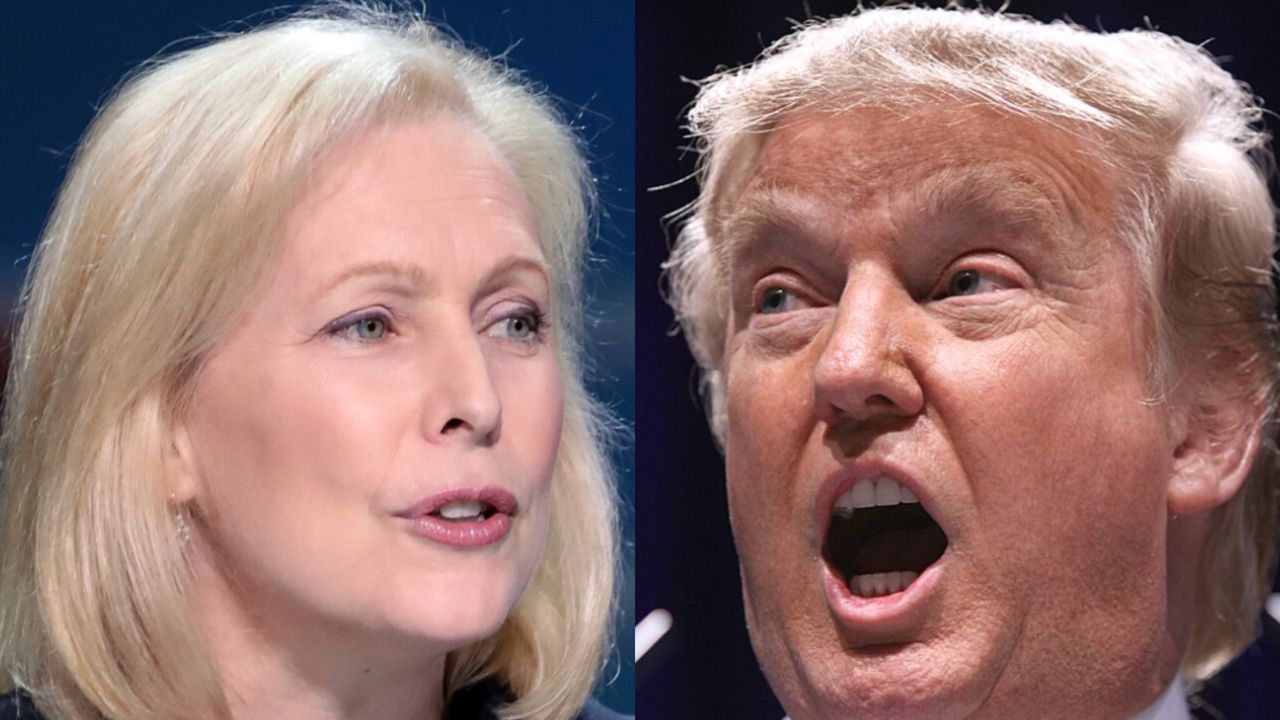
U.S. Sen. Kirsten Gillibrand (D-N.Y.) accused President Donald Trump on Friday of failing to deliver the economic “golden age” he promised. She used an X post to say Americans are instead getting “slow job growth, lagging wage growth, and higher costs.” The post came hours after the Labor Department reported that U.S. employers added only 29,000 jobs in September.
Gillibrand published the message at 11:02 a.m. on Oct. 2, 2026, from her official @SenGillibrand account. Her full post, reproduced in its entirety, reads:
“We were promised a golden age. Here is what we are getting:
Slow job growth, lagging wage growth, and higher costs.
Trump’s economic policies are hurting working Americans.”
What the September Jobs Report Showed
The post responded directly to the monthly employment report, which Reuters described as showing that U.S. job growth slowed more than expected. Nonfarm payrolls increased by 29,000 jobs in September after a downwardly revised gain of 133,000 in August, according to the Labor Department’s Bureau of Labor Statistics. Economists polled by Reuters had forecast an increase of 90,000, with estimates ranging from 35,000 to 180,000.
Revisions deepened the weakness. July was revised to show the economy shed 10,000 jobs, the second time this year that payrolls turned negative. All told, the economy added 60,000 fewer jobs in July and August than previously estimated. Job growth averaged 51,000 per month over the past three months, compared with 23,000 during the same period in 2025. Economists estimate that roughly 50,000 jobs per month are needed to keep pace with growth in the working-age population.
The unemployment rate rose to 4.2% from 4.1% in August as more people entered the workforce. The household survey showed employment rising by 406,000, which was not enough to absorb the 485,000 people who joined the labor force. Long-term unemployment also climbed, lifting the median duration of joblessness to near a 4-1/2-year high of 11.5 weeks. A broader measure of unemployment, which includes discouraged workers and involuntary part-timers, fell slightly to 7.6% from 7.7%.
Wage growth, the second element of Gillibrand’s post, also cooled. Average hourly earnings edged up 0.1% in September after rising 0.3% in August, lowering the annual increase to 3.0% from 3.1%. Wage growth is lagging inflation and that consumers have been saving less and dipping into their nest eggs to fund purchases. That raised concerns over the sustainability of robust consumer spending.
Economists Point to Mixed Signals and Mounting Headwinds
Not all economists read the report as a sign of sudden deterioration. Reuters noted that payrolls tend to underperform when Labor Day falls late in September, and that volatility in the government’s seasonal adjustment model likely contributed to the weak gain and the downward revisions. First-time applications for unemployment benefits are hovering at 57-year lows. Scott Anderson, chief U.S. economist at BMO Capital Markets, said, “There is nothing in this report to suggest the jobs market is in real trouble, but its resilience probably isn’t on as secure a foundation as GDP growth.”
Others were more downbeat. Olu Sonola, head of U.S. economics at Fitch Ratings, said, “This is a disappointing jobs report and a reminder that the low-hire, low-fire labor market never went away.” He added, “Weak job growth, a slightly higher unemployment rate, contained wage gains and downward revisions to earlier payroll estimates give the Fed little reason to keep an October rate hike on the table.”
Economists told Reuters they expect growing headwinds from the U.S.-Israeli war with Iran, including high energy prices and strained supply chains. They said these would begin to disrupt the labor market by the end of this year and into 2027. Diesel prices are at record highs, and ongoing tariffs remain a concern. An Institute for Supply Management survey on Thursday showed rising anxiety among manufacturers over the trade war with Canada. Reuters also tied part of the labor shortfall to the Trump administration’s immigration crackdown, which has sharply reduced labor supply.
Gillibrand’s Months-Long Campaign on Costs
Friday’s post fits a pattern in Gillibrand’s public statements. On Nov. 7, 2025, after a report from New York Gov. Kathy Hochul’s office estimated that the administration’s tariffs cost New York households $4,200 annually and could jeopardize 500,000 jobs, Gillibrand said, “The numbers don’t lie. President Trump’s tariffs are hitting New Yorkers like a sledgehammer.” She called the tariffs “a hidden tax on working families” and said, “These tariffs are economic self-sabotage, and New Yorkers are paying the price.”
On Jan. 28, 2026, Gillibrand held a virtual press conference to demand that Trump stop threatening tariffs against American allies after he threatened a 100% tariff on Canadian goods. “As the president continues to recklessly and haphazardly threaten countries with tariffs, working New Yorkers and small businesses are paying the price,” she said. She noted that Upstate New Yorkers “rely heavily on Canadian products,” from fertilizer to electricity to car parts.
After the Supreme Court struck down Trump’s sweeping reciprocal tariffs, Gillibrand demanded that the administration end the tariffs and refund small businesses and consumers. “Last week, the Supreme Court confirmed what Democrats have been saying for months—President Trump’s tariffs are illegal,” she said. Her office noted that she had joined 206 members of Congress in sending the Supreme Court a legal brief arguing the tariffs were illegal.
In a later press conference, held amid rising gasoline prices, Gillibrand announced she would cosponsor legislation to exempt small businesses from the latest round of tariffs and require refunds of tariff costs already paid. She also called for an end to the war with Iran. “President Trump must put the American people first, end the war with Iran, and revoke his harmful tariffs once and for all,” she said. Her office stated that oil and gas prices have skyrocketed since Trump struck Iran, making it more expensive for New Yorkers to heat their homes and power their vehicles.
On Aug. 24, 2026, after the administration launched its latest trade action against Canada, Gillibrand issued a statement that previewed the language of Friday’s post. “President Trump and Republicans promised to lower costs and make life more affordable, but they’ve used their total power in Washington to make life more expensive than ever,” she said. She also accused Republicans of having “cut Medicare and Medicaid to give tax cuts to billionaires, launched a reckless war in Iran that sent gas prices skyrocketing, and pushed tariffs that are making groceries and essentials more expensive.” Her office noted that New York imports more than $20 billion annually from Canada.
What Comes Next
The political stakes are rising with the Nov. 3 midterm elections about a month away, when all House seats are on the ballot. According to Polymarket, the prediction market, the odds of Democrats winning the House currently stand at 93%. Prediction-market odds are not polls, and they can shift quickly with news.
The next test for the economic picture is the Federal Reserve’s Oct. 27-28 meeting. Reuters reported that markets initially lowered bets on a rate hike to 13% after the jobs report before lifting them to about 23%. The Fed raised its benchmark rate by 25 basis points last month to a range of 3.75%-4.00%, its first hike in three years, and economists still expect another increase in December with inflation above the central bank’s 2% target.
The White House has not been quoted in the information provided for this article. Gillibrand’s message, with its pairing of the “golden age” promise against weak hiring, slow wage growth and rising costs, is likely to be echoed by other Democrats as the midterm campaign enters its final weeks.