
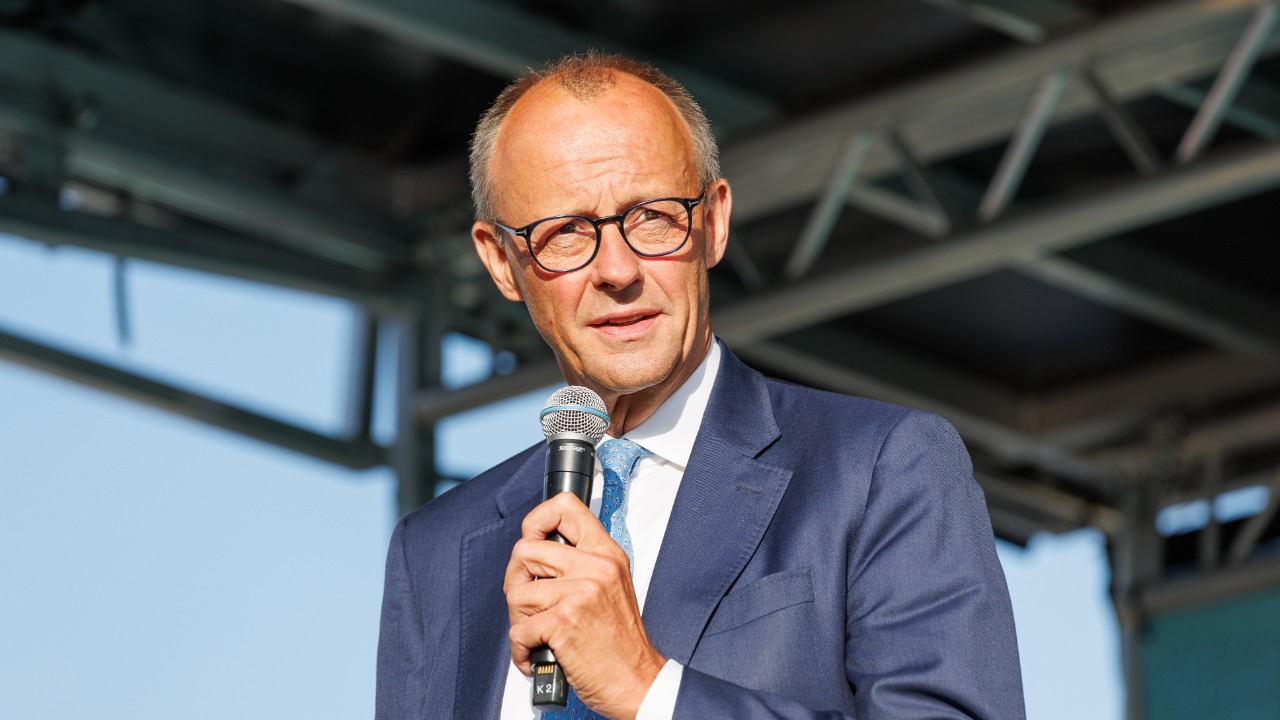
German Chancellor Friedrich Merz has injected rare bluntness into European diplomacy by warning that Iran’s leadership may be living through its “final days and weeks” as protests intensify and the state responds with lethal force. His language goes beyond routine condemnation, framing the unrest not as a passing crisis but as a potential terminal phase for the Islamic Republic’s current rulers. I see his remarks as a test of whether Europe is prepared to match moral outrage with concrete pressure while Iranians risk their lives in the streets.
The stakes are high on both sides. For Tehran, the choice is between deeper repression and the possibility of negotiated change. For Berlin and its partners, the question is whether to treat Merz’s warning as a rhetorical flourish or as a signal that the strategic bet on gradual engagement with Iran has run its course.
Merz’s stark warning and what it signals
When German Chancellor Friedrich Merz chose to describe Iran’s rulers as being in their “final days and weeks,” he was not simply offering a moral judgment, he was making a political forecast. He argued that a government that survives only through fear and bullets cannot sustain itself indefinitely, and he cast the current wave of unrest as evidence that the social contract in Iran has broken down. In his view, the very fact that the state is resorting to mass arrests and live ammunition against its own citizens is proof that its authority is eroding rather than consolidating, a point he has underlined in several recent appearances.
Merz has gone further than most European leaders by stating that he is “expecting the Iranian regime to collapse soon,” a formulation that turns his critique into a prediction of imminent change. He has framed the crackdown on demonstrators as a sign of structural fragility, telling audiences that “when a regime can only stay in power by shooting at its own people, then it has lost any legitimacy,” a sentiment reflected in his comments on the Iranian regime. In parallel, he has described the suppression of protesters as a clear sign of the and its weakness, not its strength, and he has urged Iranians to keep pressing for change despite the risks.
Protests, repression, and a regime under strain
On the streets of Iran, the confrontation that Merz is describing is brutally concrete. Large crowds have challenged the authorities in cities across the country, and the state has responded with what United Nations officials have called a “cycle of horrific violence” that must end. I see that phrase as more than diplomatic language, it is a recognition that the security forces are using systematic intimidation, fast-track courts, and executions to try to break the momentum of the protests, a pattern that has drawn sharp criticism from European capitals and human rights advocates alike.
Tehran has warned of accelerated trials and executions for those it labels enemies of the state, a threat that has prompted European figures such as Roberta Metsola to urge that The European Union act now against Iran and not wait for more bloodshed. In parallel, United Nations officials have stressed that the cycle of horrific in Iran must stop, even as Germany signals that the regime may be in its final weeks. The Iranian authorities, for their part, insist that they are defeating “terrorists” who kill civilians and police officers, and they have lashed out at Merz for declaring that such violence is an “instrument of power” that strips them of legitimacy, a clash captured in their reaction to the German Chancellor.
Germany’s shifting posture and the wider European debate
For Germany, Merz’s rhetoric marks a notable hardening of tone toward Tehran. Earlier this month he condemned the use of lethal force against demonstrators and called for an immediate end to the crackdown, arguing that a state that guns down its own citizens forfeits any claim to normal relations with Europe. I read his comments as an attempt to align Berlin’s moral language with the lived reality of Iranians who face batons and bullets, and as a signal that the old formula of quiet engagement is no longer tenable while protesters are being killed.
At the same time, the German leader has framed the unrest as part of a broader struggle for democratic change, telling audiences that the world is witnessing the “final days” of the Islamic Republic of as an unprecedented protest movement unfolds. In that context he has urged that Iranian patriots keep protesting, a message echoed in calls for solidarity that describe the suppression of demonstrators as a crime against humanity. Within the European Union, figures such as Metsola have pressed for faster sanctions and diplomatic isolation, arguing that if the bloc does not act now against Iran and its regime, it may miss a critical moment to influence events.
International pressure, nuclear stakes, and Tehran’s response
Merz’s warning does not exist in a vacuum, it intersects with long running concerns about Iran’s nuclear program and regional behavior. He has linked the fate of the regime to its willingness to de escalate abroad, warning that “If Iran does not withdraw” from destabilizing activities, the “complete destruction of its nuclear program will be on the table,” a threat captured in his If Iran remarks. In another setting he repeated that “If Iran does not withdraw, the complete destruction of its nuclear program will be on the table,” a line that underscores how closely Berlin now ties domestic repression to the question of nuclear leverage, as reflected in the BREAKING comments he made during an official visit to India.
Tehran has pushed back hard, accusing Berlin of siding with violent extremists and of encouraging unrest. Iranian officials insist that they are defending public order against armed groups, and they have portrayed Merz’s prediction of collapse as wishful thinking. Yet the diplomatic consensus on Tehran’s survival is starting to fracture, with some analysts arguing that the combination of economic crisis, inflation, and unrelenting protests has created a tipping point. In that context, Merz’s assertion that the world is seeing the final days and of the current rulers, echoed in reports that the Iran regime is in its “final days and weeks,” has resonated far beyond Germany’s borders.
What Merz’s bet means for Iran’s future and Europe’s role
By framing Iran’s turmoil as the beginning of the end for its current leadership, Merz is making a bet on the power of sustained civic resistance. He has argued that the protests are not isolated outbursts but part of a broader movement that could usher in a democratic government in Iran, a hope he has tied explicitly to the idea that the leadership is in its final days. In his public remarks he has stressed that the Iranian people deserve international backing as they push for change, and he has urged other governments to recognize that a regime that relies on firing squads and torture cannot be a stable partner.
For Europe, this stance raises difficult questions about what comes next. If leaders accept Merz’s assessment that “we are now seeing the final days and weeks” of the current order in Iran, they will need to plan for scenarios that range from negotiated transition to violent fragmentation. I believe that preparation should include clear support for accountability over abuses, contingency planning for nuclear risks, and a willingness to listen to Iranian civil society rather than only to exiled elites. As Germany, Merz, and other European actors weigh their options, the central test will be whether their policies match the gravity of their words and the courage of those still marching in Iran’s streets.