
The Pentagon working group meant to coordinate how the military uses artificial intelligence responsibly went months without meeting, and the office behind it was running at less than a third of its authorized staff. Those are two central findings of a Government Accountability Office report released Oct. 14, 2026. GAO found that as of February 2026, the Chief Digital and Artificial Intelligence Office’s Responsible AI Division had filled three of its 10 authorized positions.
The report, titled “Artificial Intelligence: Actions and Opportunities to Implement Responsible Use in DOD,” also found that the department has a framework in place and that most of the components GAO surveyed have started applying it. Its two new recommendations are aimed at the council and the staffing.
On the meeting gap, the GAO-27-107837 summary page is specific: “CDAO officials said the council did not meet from late 2024 until August 2025.” The council is the Responsible AI Working Council, which the Chief Digital and Artificial Intelligence Office (CDAO) created to bring the department’s components together on the issue. GAO wrote that the council resumed meeting in August 2025 but “does not have a charter that defines roles and responsibilities and specifies meeting frequency,” which leaves it at risk of lapsing again.
A council with no charter
According to the full report, DOD has used the Responsible AI Working Council as its permanent working-level group on the subject since May 2021. The department’s Responsible AI implementation Pathway describes it as a body that “serves as a permanent working group to receive reports on DOD components progress implementing the Pathway.”
Components noticed the silence. Officials from four DOD components told GAO they faced Responsible AI implementation challenges during that period, according to the report. The Joint Staff described coordination problems in completing its lines of effort. The Defense Threat Reduction Agency said it wanted help interpreting federal guidance consistently for high-impact uses. The Air Force and the Navy each began building their own governance structures; the Air Force said it struggled to get practices from other components and relied on informal, ad hoc contacts.
GAO surveyed 10 components on 10 selected AI use cases: the Army, Navy, Air Force, Space Force, Marine Corps, Defense Intelligence Agency, National Geospatial-Intelligence Agency, Defense Threat Reduction Agency, U.S. Special Operations Command and U.S. Cyber Command. The report says most of them had taken at least initial steps to set up oversight and apply the department’s six tenets for Responsible AI in those use cases.
Three of 10 seats filled
The staffing finding traces to a 2023 resourcing memorandum that authorized 10 Responsible AI positions for CDAO, per the full 24-page report. As of February 2026, three were filled. CDAO officials cited ongoing restructuring after the office was realigned under the Under Secretary of Defense for Research and Engineering in August 2025, along with the need to account for the department’s 2026 AI Strategy. GAO reported that officials said CDAO is “unlikely to fill vacant positions or increase staffing.”
The Responsible AI Division is one of three CDAO offices with significant Responsible AI roles, according to the report, and officials described its task as “building trust via rigorous assessment, test and evaluation, and monitoring.”
The framework those people are meant to run is not new. DOD adopted its AI Ethical Principles in a February 2020 memorandum from the Secretary of Defense, GAO noted, and later defined six tenets to guide implementation: Responsible AI Governance, Warfighter Trust, AI Product and Acquisition Life Cycle, Requirements Validation, Responsible AI Ecosystem, and AI Workforce.
Two recommendations, both accepted
GAO made two new recommendations to the Secretary of Defense, both to be carried out through CDAO. The first is to develop and issue a charter for the Responsible AI Working Council that defines roles and responsibilities, includes the Responsible AI Division and DOD components, and sets a meeting frequency. The second is to address the division’s workforce needs. “The Department provided comments via email indicating concurrence with both of GAO’s recommendations,” the summary page says.
GAO also flagged older advice that remains open. A March 2022 report (GAO-22-105834) recommended defining roles and responsibilities for AI collaboration, and a December 2023 report (GAO-24-105645) made recommendations on identifying the AI workforce; as of May 2026, GAO lists the collaboration recommendation and two of the workforce recommendations as open. The report asked Congress to consider directing DOD to carry them out.
The review was requested in Senate Report 118-188, which accompanied the fiscal 2025 National Defense Authorization Act bill. Both new recommendations are listed as open on GAO’s page, and GAO will update their status there as the department acts.
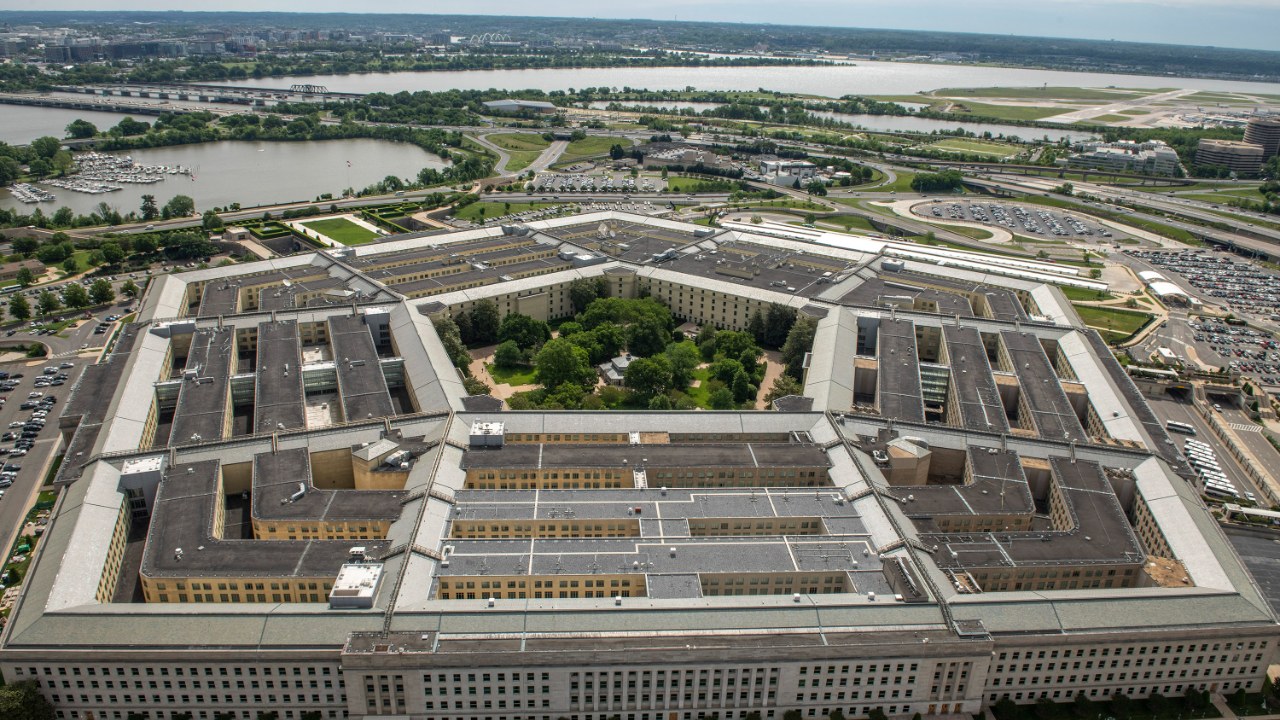
Top image: The Pentagon from the air, May 11, 2021. Image Credit: Staff Sgt. Brittany A. Chase / U.S. Air Force — Public domain / Wikimedia Commons