
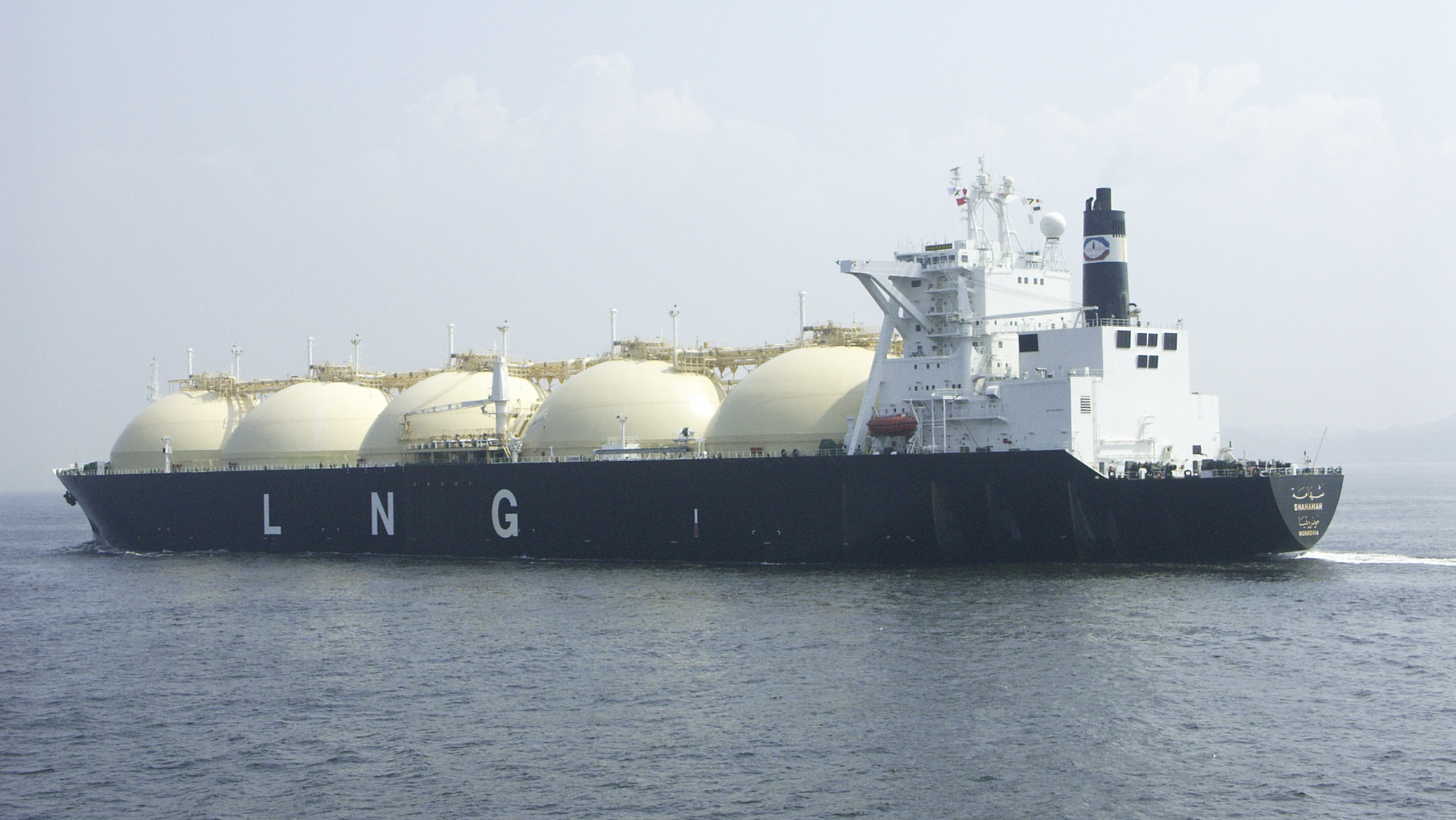
An LNG tanker managed by Abu Dhabi National Oil Company appears to have become the first fully loaded liquefied natural gas carrier to cross the Strait of Hormuz since the Middle East war erupted on February 28, according to ship-tracking data published by Reuters, Bloomberg, and other major outlets.
The vessel, identified as the Mubaraz — a 136,357-cubic-meter LNG carrier operated by ADNOC Logistics & Services under a Liberian flag — reappeared off India’s west coast on April 27 after going dark on tracking systems for nearly a month.
The tanker is now passing the southern tip of India and is signaling a Chinese terminal as its destination, with arrival estimated around May 15, tracking data from LSEG, ICIS LNG Edge, and Kpler indicate.
Weeks of Silence
The Mubaraz loaded its cargo at ADNOC’s Das Island facility in the United Arab Emirates around March 2, according to Kpler data analyzed by AFP. It then idled inside the Gulf before ceasing to transmit its location signal on approximately March 30–31.
Switching off transponders while passing Hormuz has become common practice for vessels since the war began, as ships seek to mask their movements in a high-risk zone. Data jamming and identity spoofing have also been reported in the area, making precise verification difficult.
ADNOC said in an emailed statement that it does not comment on the position, movements, or routing of its vessels.
A Near-Halt in Loaded Transits
The crossing, if confirmed, marks a significant, if fragile, development for global energy markets. The Strait of Hormuz — a narrow passage connecting the Persian Gulf to the Gulf of Oman — normally carries approximately 20 percent of global LNG supply and 25 percent of world seaborne oil trade, according to the International Energy Agency.
Traffic through the strait collapsed after Iran issued navigation warnings on February 28 following U.S. and Israeli military strikes. Iran’s Revolutionary Guard boarded and attacked merchant ships and laid sea mines. Since April 13, the U.S. has blockaded Iranian ports, creating what analysts describe as a dual blockade.
According to data from Kpler and SynMax, daily ship transits through the strait fell from 125–140 before the conflict to just seven in late April. The IEA has described the disruption as the “greatest threat to global energy security in history.”
Earlier in April, tracking data showed an empty LNG tanker exit the strait, and an Indian merchant vessel carrying liquefied petroleum gas also completed a crossing. But no loaded LNG cargo had been confirmed to have transited since the war began. Several Qatari LNG tankers approached the strait in recent weeks and turned back.
Market Impact
The closure effectively shut off roughly 20 percent of global LNG supply. Asian spot LNG prices surged to approximately $21 per MMBtu in March, multi-year highs not seen since January 2023, while European gas benchmarks rose to around $18 per MMBtu, according to market analysis. LNG spot prices in Asia more than doubled from pre-war levels, and QatarEnergy declared force majeure on its buyer contracts.
The IEA launched its largest-ever emergency oil stock release in response, and Asian LNG imports fell to their lowest levels since June 2020.
Cautious Signals
Analysts urged caution about reading too much into a single transit. Alex Froley, senior LNG analyst at ICIS, said there had been no official confirmation of the vessel’s position and that signal errors or identity spoofing can sometimes occur, according to Marine Insight. He added that even if the crossing is confirmed, one successful transit would not necessarily mean other LNG vessels will follow.
Some analysts suggested the Mubaraz may have benefited from a tactical clearance extended to UAE vessels — a U.S. ally that has also maintained dialogue channels with Tehran. Iran has reportedly offered to reopen the strait if the U.S. lifts its blockade and hostilities cease, according to Gulf News.
No major government has issued a press release confirming the transit as a diplomatic breakthrough. Broader Hormuz shipping remains far below pre-war levels, with Iranian oil tankers reportedly turned back by U.S. naval forces as recently as April 26.
The International Maritime Organization has warned that approximately 20,000 seafarers remain stranded aboard 1,600 ships inside the Gulf, with food and water supplies running short on some vessels.