
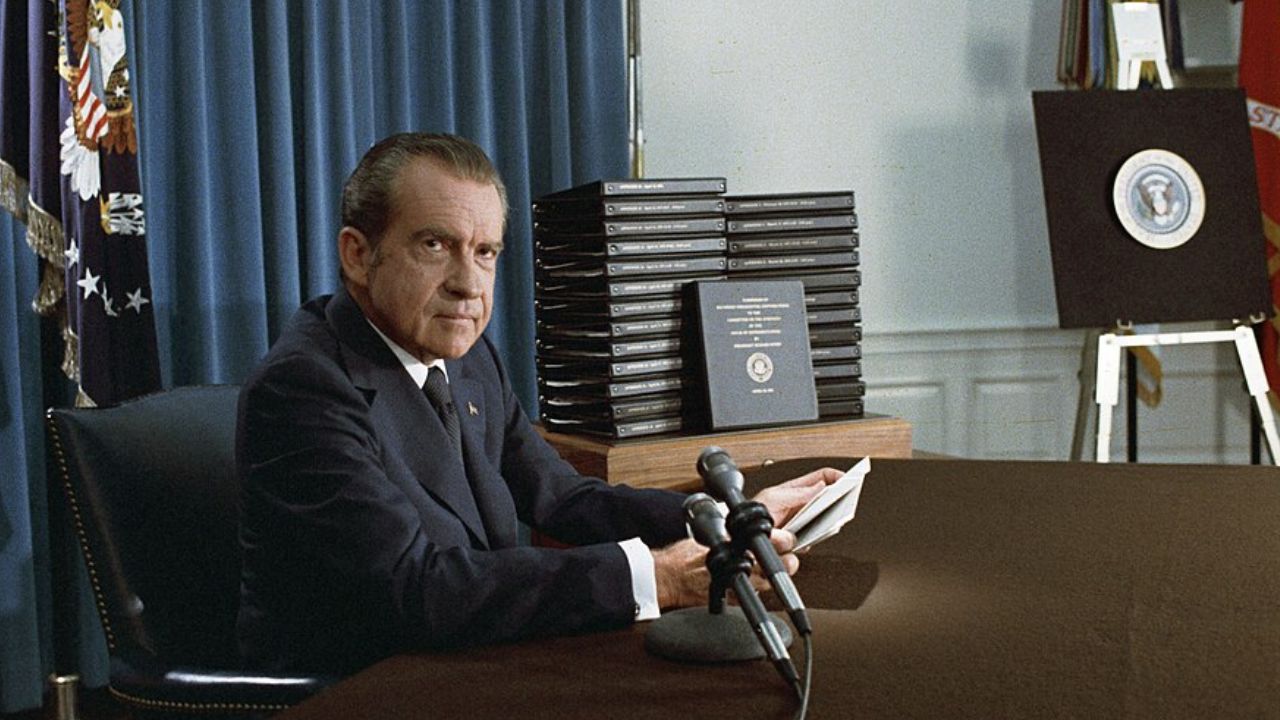
Richard Nixon’s story is one of those political arcs that feels almost too dramatic to be real. He didn’t just climb to power; he fought, scraped, and reinvented himself until he reached the top. And then, in a matter of months, he watched it all unravel on live television. Few presidents have ever had a career that swung so sharply between comeback and collapse.
What makes Nixon so fascinating isn’t just Watergate, even though that’s the part most people remember. It’s the fact that he was also a shrewd strategist, a surprisingly impactful president in policy terms, and a man who seemed perpetually at war with his own insecurities. If American politics were a long-running show, Nixon’s season would be the one everyone still argues about.
From scrappy beginnings to political fighter
Nixon didn’t come from money or an easy network of family connections. He was raised in a hardworking Quaker family in California, and the image he carried for life was of a guy who had to earn every inch. That background fueled his drive—and also his chip-on-the-shoulder intensity.
He made his name in the late 1940s as a sharp-elbowed congressman during the Red Scare era. Nixon’s role in the Alger Hiss case, where Hiss was accused of being a Soviet spy, turned him into a national figure fast. Supporters saw him as tough and fearless; critics saw him as opportunistic and ruthless. Both impressions stuck.
The rise: Vice president, then heartbreak, then comeback
By 1952, Dwight Eisenhower picked Nixon as his running mate, making him vice president at just 39. It was a rocket ride—until it nearly ended in scandal. Accusations about a secret political fund led to the famous “Checkers speech,” where Nixon went on TV, talked directly to the public, and basically saved his career through sheer storytelling.
Then came 1960, when Nixon lost a razor-thin presidential race to John F. Kennedy. Two years later, he ran for governor of California and lost again, delivering his bitter “you won’t have Nixon to kick around anymore” line to reporters. Most people assumed he was done. In classic Nixon fashion, that assumption turned out to be premature.
By 1968, with the country shaken by Vietnam, assassinations, and unrest, Nixon staged one of the most famous comebacks in American politics. He presented himself as the steady hand for a chaotic moment. He won the presidency and, in 1972, won reelection in a landslide—one of the biggest in U.S. history. At that point, Nixon looked politically untouchable.
A presidency that was bigger than the scandal
It’s easy to reduce Nixon’s White House years to one word—Watergate—but the reality is messier. He made major moves in foreign policy, including opening diplomatic relations with China in 1972. That trip to Beijing wasn’t just symbolic; it reshaped Cold War strategy and still echoes in U.S.-China relations today.
Nixon also pursued détente with the Soviet Union, helping negotiate arms control agreements like SALT I. Domestically, he signed major environmental measures, including establishing the Environmental Protection Agency. It’s one of those historical quirks that surprises people: the Republican president associated with political paranoia also helped build modern environmental regulation.
And yet, Vietnam hung over everything. Nixon promised “peace with honor,” expanded bombing early on, and pursued “Vietnamization,” shifting more fighting responsibility to South Vietnamese forces while drawing down U.S. troops. The war’s end didn’t come neatly, and the national trust in government kept fraying. That distrust mattered, because Nixon’s downfall relied heavily on one thing: Americans believing the White House could lie.
The break-in that detonated a presidency
Watergate began with a botched break-in at the Democratic National Committee headquarters in June 1972. At first, it sounded like a weird, small-time crime—until it didn’t. The burglars had ties to Nixon’s reelection operation, and reporters (especially Bob Woodward and Carl Bernstein at The Washington Post) kept pulling at the threads.
The scandal wasn’t just the break-in; it was the cover-up. Investigators uncovered a web of dirty tricks, political spying, and efforts to obstruct justice. Then came the revelation that Nixon had a taping system in the Oval Office. Those tapes turned a confusing political mess into something much simpler: evidence.
As hearings unfolded, the country watched in a kind of stunned slow motion. Allies peeled away. Courts demanded tapes. Nixon tried to hold the line, including the infamous “Saturday Night Massacre,” when he fired officials who refused his order to shut down the special prosecutor. If you’re trying to look innocent, that’s not the move.
The fall: resignation, pardon, and the long shadow
By mid-1974, the dam broke. The Supreme Court ordered Nixon to turn over the tapes, and one recording—the “smoking gun” tape—showed him involved in the cover-up soon after the break-in. Support in Congress evaporated, including among Republicans. Impeachment and removal were no longer theoretical.
On August 8, 1974, Nixon announced he’d resign, and the next day he left the White House. It was a moment that felt both historic and strangely human: a president boarding a helicopter, waving goodbye, and exiting power in the most public way imaginable. Gerald Ford became president and soon issued a full pardon, arguing the country needed to move on. A lot of Americans disagreed, and many still do.
Nixon spent the rest of his life trying to rebuild his reputation. He wrote books, advised later presidents behind the scenes, and reemerged as a kind of elder statesman on foreign policy. But his name never fully separated from Watergate, and maybe it couldn’t. The scandal didn’t just end a presidency; it permanently changed how the public looks at government.
Why Nixon’s rise-and-fall still feels so personal
Nixon’s story sticks because it’s not just about politics—it’s about personality. He was brilliant and deeply insecure, strategic and suspicious, capable of big decisions and small vendettas. He wanted respect almost more than he wanted power, and he never seemed convinced he’d truly earned either.
That mix helped him rise and helped him fall. The same instincts that made him a relentless competitor also fed a bunker mentality—an obsession with enemies, leaks, and loyalty tests. Watergate wasn’t a random lightning strike; it was the outcome of a culture that treated winning as survival.
In the end, Nixon remains one of the most complicated presidents the U.S. has had. He changed foreign policy, reshaped parts of government, and won elections many politicians would envy. And yet, he also became the only American president to resign, leaving behind a cautionary tale about secrecy, power, and what happens when a leader starts believing the rules are for other people.