
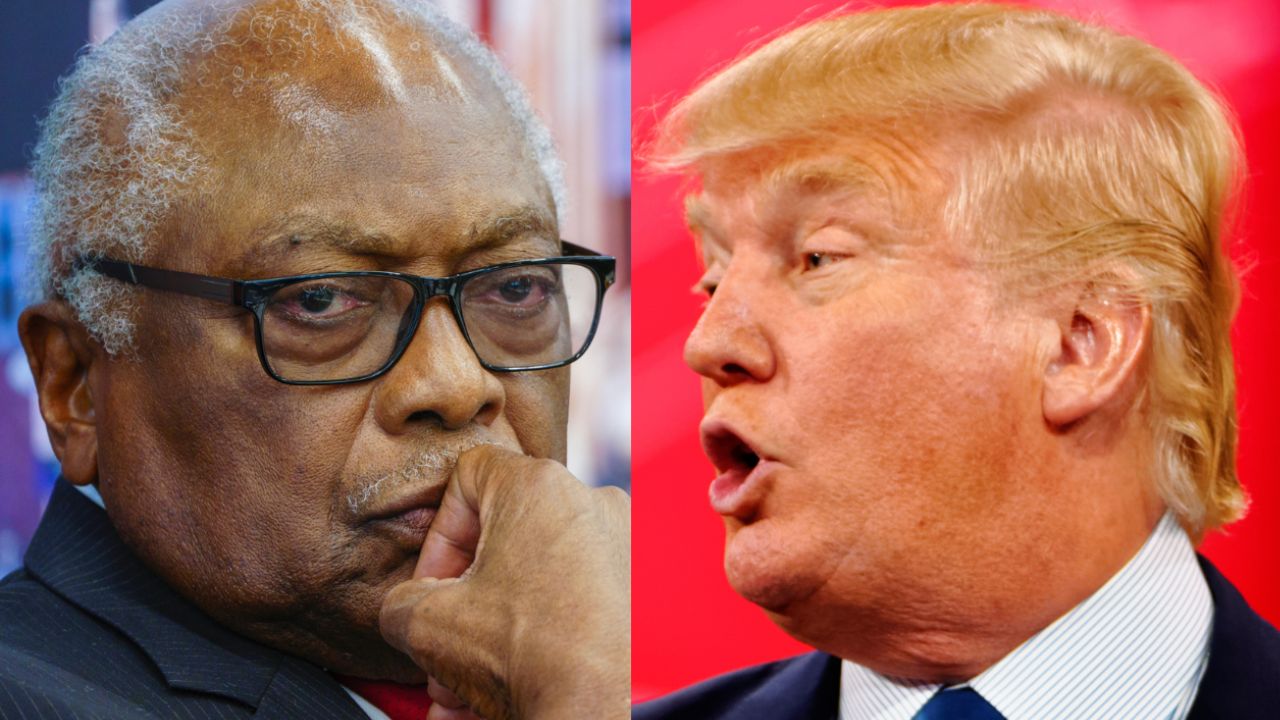
Rep. James Clyburn, D-S.C., said President Donald Trump’s decision to lead a convention crowd in a pledge naming him “the greatest president in the history of the United States” reflected personal insecurity rather than political strength. Clyburn’s post on X responded to a clip posted by Acyn of the pledge.
Clyburn: “What a Sad Man”
“He is forcing an arena full of people to call him the greatest president. What a sad man,” Clyburn wrote.
Trump Led Crowd Through Multi-Part Pledge on Convention’s Final Night
Closing the Republican Party’s first-ever midterm convention in Dallas on the night of Sept. 10, Trump asked the American Airlines Center crowd to raise their right hands and repeat a pledge he delivered in parts: “I pledge to the greatest president in the history of the United States, that loves us so much he can’t even breathe.” He continued, departing from the call-and-response format: “That I will go out with my family, my friends. I’ll do it anyway. I don’t care if I’m registered or not, I’m gonna try and cheat like hell like they do. They never — there’s never been bigger cheaters. They don’t care.” Trump then had the crowd pledge to vote on Nov. 3 or before, closing with “so help me God.”
Trump Warned Non-Voters They Would “Go to Hell”
Later in the same address, Trump told the crowd there would be consequences for skipping the election. “You know what happens if you don’t vote, right? You go to hell, you know that. You go to hell. And I don’t want that,” Trump said, according to multiple outlets that covered the speech.
Trump Told Crowd to “Pretend” He Was on the Ballot
Trump also urged supporters to treat the midterms as a personal referendum on him, telling the crowd, “So on Election Day, November 3, you’ve got to do me a favor. You’ve got to get out and vote, and you’ve got to pretend I’m on the ballot because in a way, I am on the ballot.”
Commentators Across the Political Spectrum Compared the Scene to a Cult
The moment drew what one outlet described as “a remarkably consistent verdict” from critics: comparisons to a cult of personality. UnHerd U.S. editor Sohrab Ahmari compared the spectacle to rituals under former Iraqi dictator Saddam Hussein. Former Virginia Republican Party official Barbara Comstock described the scene as “a cult of sheep led by a deranged wannabe authoritarian.” Atlantic contributor Tom Nichols compared the moment to former President George W. Bush’s remark that some of Trump’s 2024 campaign conduct was “weird,” and Toronto Star columnist Bruce Arthur raised questions about disinhibited behavior in older age without offering a clinical diagnosis.
Convention Also Featured Trump’s $5,000 “Dividend” Promise
During the same speech, Trump promised every American adult a $5,000 “Trump dividend” contingent on Republicans retaining control of Congress in November, comparing it to “a successful company” issuing “a cash distribution to its shareholders.” The proposal drew bipartisan criticism, including from Rep. Jim McGovern, D-Mass., who wrote that “nothing says confidence like trying to bribe people for votes,” as well as from Republicans: Rep. Ralph Norman, R-S.C., raised “serious concerns” about funding the plan, and former Rep. Bob Good, R-Va., called it a “socialist vote-buying scheme.” Election law specialists offered a different legal assessment, however; Rick Hasen, a law professor who runs the Election Law Blog, wrote that the promise was “almost certainly protected by the First Amendment against bribery or vote buying charges,” citing the Supreme Court’s 1982 ruling in Brown v. Hartlage, and noted Trump’s offer was made to all voters generally rather than conditioned on any individual’s vote. Former federal prosecutor John Day similarly compared the pledge to a candidate promising a tax cut, telling the New York Times that such promises “do not, by itself, make the promise a bribe.”
Dallas Convention Was the GOP’s First-Ever Midterm Gathering
The Sept. 9-10 event at the American Airlines Center marked the Republican National Committee’s first midterm convention, a new format organized specifically to rally the party ahead of November’s elections rather than a presidential nominating cycle.
Trump Has Long Emphasized Personal Loyalty Themes in Public Appearances
Historians and commentators have periodically compared aspects of Trump’s political movement to a personality cult throughout his time in office, citing his consistent emphasis on personal branding and, during his second term, projects including a large statue of himself planned for a Miami golf course and the addition of his name above the sign at the John F. Kennedy Center for the Performing Arts.
Pledge Circulated Widely Online Following the Convention
Video of the exchange spread quickly on social media in the days following the convention, drawing sustained coverage from multiple news outlets and prompting reactions from numerous Democratic officials beyond Clyburn.
Trump’s Team Characterized Elements of the Speech as Rhetorical Rather Than Literal
Following the convention, some coverage noted that people close to Trump described his “cheat like hell” remark as a jab aimed at Democrats rather than a literal instruction to break election laws, though the White House did not immediately respond to requests for comment specifically addressing the loyalty pledge itself.
Clyburn Has Served in Congress Since 1993
Clyburn, the former House majority whip and a senior member of South Carolina’s congressional delegation, has repeatedly criticized Trump’s rhetoric and conduct throughout his second term.