
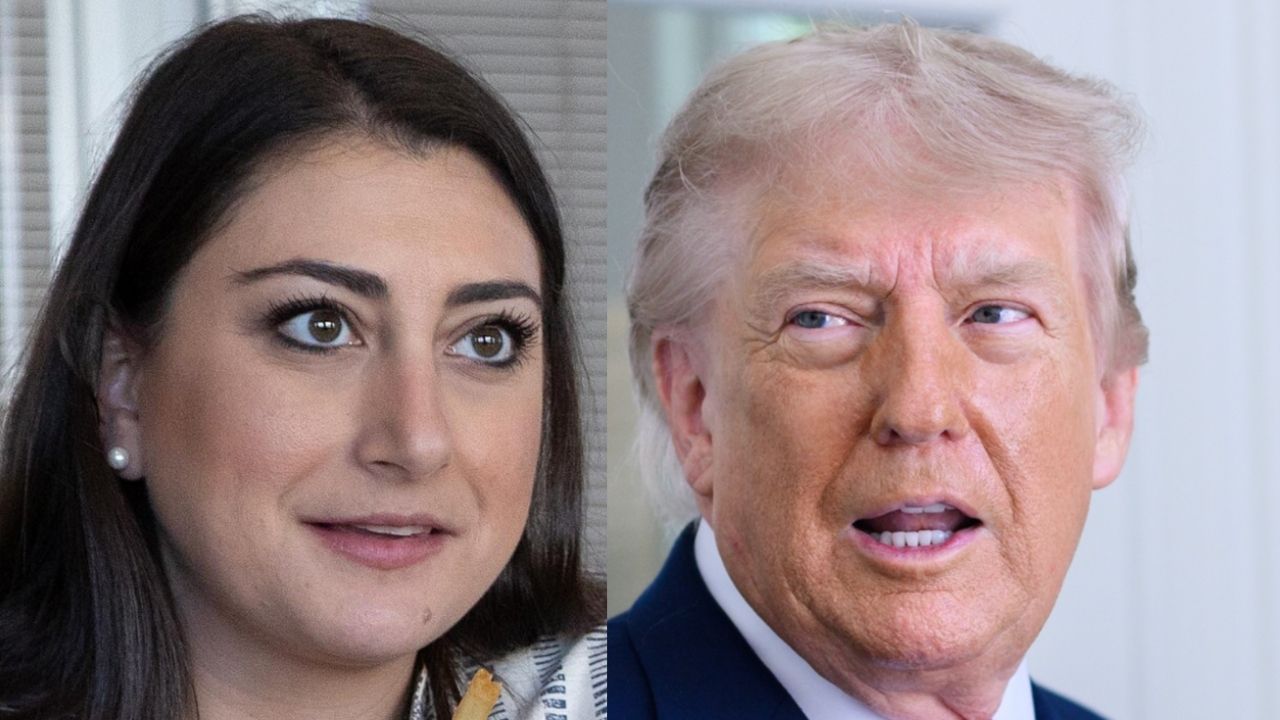
U.S. Representative Sara Jacobs (D-CA) took to social media on Sunday, September 13, 2026, to accuse President Donald Trump of forcing Americans to shoulder the financial burden of his administration’s war with Iran, pointing directly to surging gasoline and oil prices as evidence of the war’s mounting domestic toll. Jacobs, who represents California’s 51st District in San Diego, has been one of the most vocal congressional critics of the war since it began, and her latest post links the economic pain at the pump directly to decisions made in the White House.
In the post, published to X at 3:22 p.m. on September 13, 2026, Jacobs wrote in full:
“Oil and gas prices are surging. Donald Trump admitted gas prices will probably stay up through the midterms – aka, until November. Americans can’t afford this. Every day, we are paying the cost of Trump’s bad decision to go to war with Iran.”
Responding to Fresh Reporting on Oil Prices
Jacobs’ post came directly in response to reporting from NBC News detailing a fresh spike in global oil prices tied to escalation in the Iran conflict. According to the outlet, Brent crude, the international benchmark, jumped 3.3% to close at $101.21 per barrel, while U.S. crude oil rose 3.2% to end the day at $96.05 per barrel — the highest closing levels for both benchmarks since May 22, 2026.
The same NBC News report noted that gasoline prices rose to $4.22 per gallon for unleaded fuel, the highest level recorded since June 5, while diesel set an all-time record at $5.94 per gallon. NBC News further reported that since the start of 2026, both major oil benchmarks have climbed nearly 70%, and since the war with Iran began on February 28, they have risen by nearly 40%.
What Trump Actually Said About Prices Holding Through the Midterms
Jacobs’ claim that Trump “admitted” gas prices would stay elevated through the midterm elections traces back to remarks the president made on Wednesday, September 9, 2026, while speaking to reporters at Joint Base Andrews before departing for the Republican Party’s midterm convention in Texas. Asked how he intended to explain the price surge to Americans, Trump said he believed prices would eventually come “tumbling down” below $2 per gallon, but not before the midterms. “I think it’s going to take a little bit longer than the midterms,” Trump told reporters.
CNN separately reported that Trump, speaking en route to the Dallas convention that same day, asserted that Iran would deliberately continue the war into November to inflict political damage on him, while conceding gas prices were unlikely to fall before then. “I think it’s going to take a little bit longer than the midterm,” Trump said.
A Deepening Energy Squeeze Tied to the Iran War
The price spikes Jacobs referenced did not occur in isolation. NBC News reported that Wednesday’s surge came a day after the U.S. military said it had destroyed five Iranian tankers in response to attempted missile attacks on a Navy warship, with Tehran responding by striking U.S. ships and a base in Jordan. The outlet also noted that a Tehran-backed rebel group launched new attacks that set oil facilities ablaze in Saudi Arabia, raising fears of further escalation beyond Iran itself.
Commodities experts cited by NBC News warned earlier in the week that Brent crude could climb as high as $120, or even $150 per barrel, if the standoff with Iran continues without resolution. The report noted that roughly a fifth of the world’s oil supply has historically flowed through the Strait of Hormuz, a chokepoint that Iran has moved to restrict since the U.S. and Israel launched their military campaign in February. While the U.S. military has restored some shipping traffic through Hormuz, other trade routes — including Houthi rebel attacks on tankers in the Red Sea — have also come under strain.
Trump Shifts Blame to Zelenskyy Amid Diesel Record
Just hours before Jacobs published her Sunday post, Trump offered a different explanation for the country’s energy pain — one that did not mention the Iran war at all. Speaking to reporters while attending the Irish Open at his golf resort in Doonbeg, Ireland, on Sunday, September 13, Trump blamed record-high U.S. diesel prices on Ukrainian President Volodymyr Zelenskyy, telling reporters he had personally raised the issue with the Ukrainian leader. “Mr. Zelenskyy has to do one thing. He has to stop knocking out diesel fuel in Russia,” Trump said, adding, “Let him go after targets, but not diesel fuel, because he’s causing a shortage of diesel fuel.”
That framing came just two days after national diesel prices hit their record high, and follows Ukraine’s summer campaign of strikes on more than 20 Russian refinery targets — strikes that Russian President Vladimir Putin has himself acknowledged have caused economic pain in Russia.
Jacobs’ Broader Record of Opposition to the War
Sunday’s post is the latest in a sustained pattern of public criticism Jacobs has directed at the administration’s handling of the Iran war and its economic fallout. In March 2026, shortly after fighting began, Jacobs posted on X that “it’s not just gas prices – the cost of Trump’s reckless war with Iran will be felt in food prices, too. Not to mention the direct cost to taxpayers and the sacrifices from our service members and their families.”
Days later, Jacobs wrote that “gas prices are still WAY up – across the country and here in San Diego – thanks to Trump’s war of choice in Iran,” calling the price surge “a huge blunder on the part of the Trump Administration.”
Legislative Action Against the War
Jacobs’ criticism has extended beyond social media into formal legislative action. According to her official congressional website, Jacobs introduced a war powers resolution aimed at ending Trump’s war in Iran, framing the effort around the safety of her San Diego constituents, many of whom serve in the military. “Every day this unnecessary, reckless war continues is another day that my constituents who are deployed to Iran are in harm’s way and at risk of losing their lives,” Jacobs said in a statement announcing the resolution. “Our service members deserve better than to be treated as expendable – and so do the American people who are being forced to pay over $1 billion per day for this military adventurism.”
Jacobs’ website also documents her role pushing colleagues to support an earlier bipartisan war powers resolution, House Concurrent Resolution 38, in early March 2026. On the House floor, Jacobs said: “I rise today as a voice for my generation and for my community in San Diego, the biggest military community in the country,” adding that lawmakers should be “damn sure” any military action asked of service members “is worth it,” because “too often, wars last longer and cost more than promised.”
Calling the War a Historic Foreign Policy Failure
According to a summary published on her official website, Jacobs told CNN’s Kaitlan Collins in the immediate aftermath of the first U.S.-Israeli strikes on Iran that the operation represented “one of, if not the biggest, blunders in American foreign policy,” warning that “we’ve seen this before in Iraq and Afghanistan” and that the administration had shown “absolutely no plan for what comes next, absolutely no real strategy around this.”
The same website summary states that Jacobs told NBC News the country should “feel deeply ashamed by the killing of 175 civilians, mostly little children, who have nothing to do with this awful, reckless war,” while accusing Trump of “denying any U.S. involvement in this strike and blaming Iran without any evidence.” Jacobs has also stated she will vote against any Pentagon defense supplemental package tied to the war, including a floated $200 billion request, telling CNN in March, “I will not” support such funding.
The Political Stakes Ahead of November
The dispute over gas prices arrives at a politically sensitive moment for Republicans, who are defending their House and Senate majorities in the 2026 midterms. Fox News reported in March that Democratic Congressional Campaign Committee Chair Rep. Suzan DelBene told the outlet that House Democrats would keep “spotlighting gas prices” as part of their affordability message, arguing that “Trump went into this war without thinking through the implications, and we’ve seen gas prices skyrocket across the country.”
That same report noted that the DCCC had already launched digital ads highlighting rising prices at the pump with the message “D.C. Republicans Did That!” — signaling that gas prices tied to the Iran war are likely to remain a central theme of Democratic midterm messaging through November.
Continued Uncertainty Over When Prices Will Fall
As of Sunday, September 13, no clear timeline exists for when energy prices might ease. Trump has repeatedly told reporters that relief will come only after the midterm elections in November, while continuing to attribute rising costs at various points to Iran, and now, to Ukrainian strikes on Russian refineries. Jacobs’ Sunday post reflects her continued effort to tie those statements directly back to the administration’s original decision to go to war, framing the ongoing price pressure as a daily, quantifiable cost borne by American consumers rather than an unavoidable consequence of global events.