
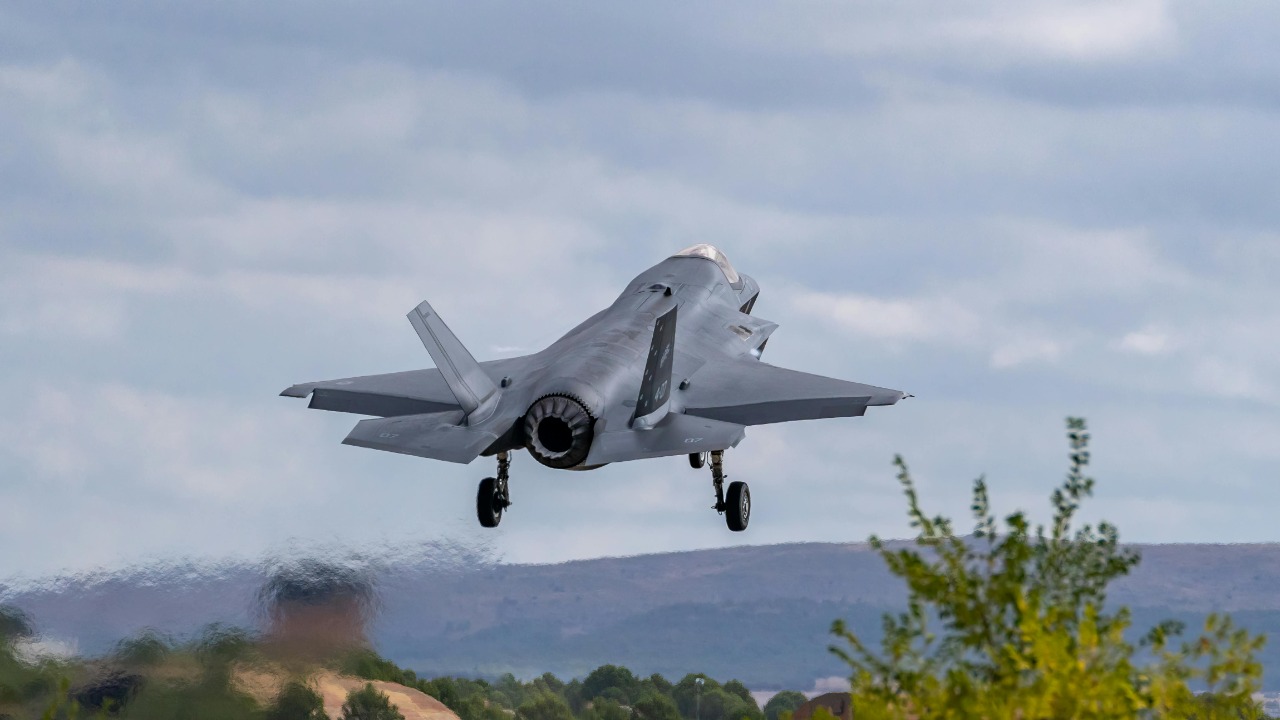
The United States is quietly preparing a radical twist in its fighter strategy, turning the already ubiquitous F-35 into a heavily upgraded platform that could rival the Air Force’s dedicated sixth generation program. Instead of waiting for a clean-sheet successor, Lockheed Martin is pitching a “Ferrari” evolution of the Joint Strike Fighter that layers Next Generation Air Dominance technology onto a proven airframe. If the concept delivers anything close to what the company is promising, the F-35 could become the most important bridge between fifth generation stealth and whatever comes after Boeing’s F-47.
From NGAD loss to “Ferrari” comeback plan
Lockheed Martin’s push to supercharge the F-35 is rooted in a strategic setback. After the Air Force awarded its NGAD contract, now known as the F-47, to Boeing, Lockheed was left with a deep bench of sixth generation research and no flagship program to carry it. Rather than shelve that work, executives have framed a new path: take the existing F-35 chassis and infuse it with the advanced systems originally designed for their NGAD bid, effectively turning the Lightning II into a 5th generation plus fighter that can compete with the F-47 on capability and cost. In public remarks, Lockheed Martin CEO Jim Taiclet has described the plan as turning the F-35 into a Ferrari, a metaphor that has quickly become shorthand for a more agile, more powerful, and more refined version of the jet.
The company’s pitch is blunt. Lockheed argues that a heavily upgraded F-35 can deliver roughly 80% of sixth generation performance at about half the price of a new F-47, a claim that has been repeated in detailed discussions of the program and in coverage of the proposed “Ferrari” F-35D. In one analysis of the concept, Lockheed Martin is described as making the case that the F-35 Joint Strike Fighter can provide 80% of the capability of a next generation platform at half the cost, while another report on the Ferrari F-35D highlights the same “80 Percent” and “Half the Cost” framing for a fighter pitched as a direct NGAD alternative. That cost-capability balance is the core of Lockheed’s comeback play: weaponize sunk NGAD research, keep the production line hot, and offer the Air Force and allies a near term rival to the F-47 without the risk and expense of another clean-sheet design.
What the “Ferrari” F-35 would actually change
Behind the sports car branding is a concrete set of technical ambitions. Lockheed Martin has already begun engineering analysis on how to graft sixth generation features onto both the F-35 and the F-22, using lessons from NGAD development to guide the work. The company’s own descriptions and independent reporting converge on a similar upgrade package: refined stealth shaping and coatings, more powerful propulsion, expanded internal fuel, and a new generation of sensors and electronic warfare tools. One detailed breakdown of the proposed F-35 upgrade notes that the changes would improve stealth and supersonic performance while allowing for a 38% increase in onboard fuel storage, a significant leap for a jet whose range has been a persistent concern for Pacific scenarios.
Lockheed’s public messaging also leans heavily on the idea of turning the F-35 into a “Ferrari of” fighter jets, a phrase that has appeared in short video explainers and investor-focused briefings. Those presentations describe a package that includes advanced sensors, stealthier communications, and enhanced electronic warfare, all drawn from NGAD research. Other analyses of the Ferrari concept add further detail, pointing to potential integration of longer range weapons, including hypersonic and directed energy systems, and even the possibility of pilot optional or unmanned operations in the longer term. While some of the more exotic elements remain aspirational, the consistent throughline is that the F-35 airframe is being treated as a modular host for technologies that were once reserved for future platforms, with Lockheed Martin using structured analysis to determine which NGAD-derived systems can be retrofitted at acceptable cost and risk.
Rivaling the F-47: 80% of NGAD at half the cost
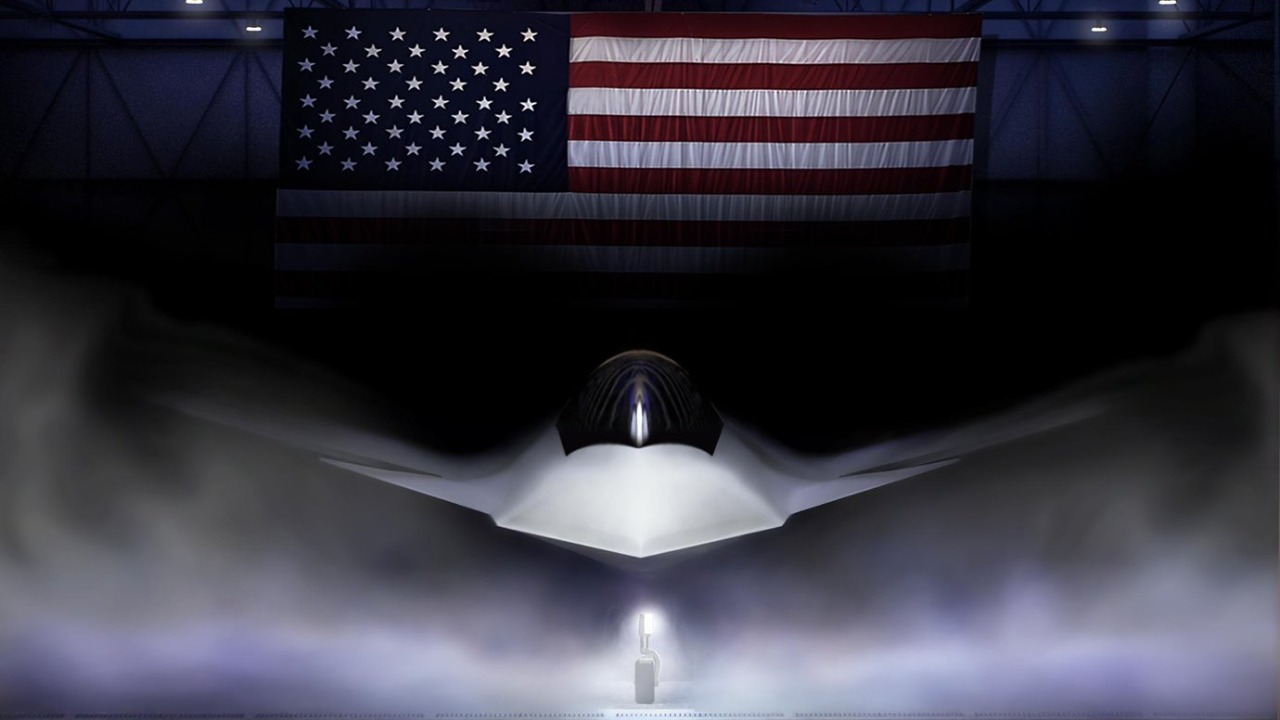
The Ferrari F-35 concept is explicitly framed as a counterweight to Boeing’s F-47 NGAD, not just a routine midlife refresh. Lockheed Martin has argued that its upgraded F-35 could deliver around 80% of the F-47’s capability at roughly half the price, a claim that appears across multiple detailed reports on the program. One widely cited breakdown of the “NASCAR” style upgrade describes Lockheed Martin pitching the F-35 Joint Strike Fighter as able to provide 80% of sixth generation capability at half the cost of the NGAD combat jet, while a separate analysis of the Ferrari F-35D repeats that the aircraft “Could Mean” “80 Percent” NGAD “Fighter” performance at “Half the Cost.” The numbers are not incidental marketing lines; they are the central argument for why the Air Force should treat an evolved F-35 as a real competitor to the F-47 rather than a second tier backup.
Lockheed’s own executives have reinforced that framing in public comments. In one earnings call referenced in coverage of the Ferrari F-35D, the CEO described the plan as taking the F-35 chassis and turning it into a Ferrari, a line that has been echoed in later reporting that characterizes the new F-35 as a Ferrari type fighter aimed squarely at the NGAD space. Another detailed “Mission Briefing” style analysis of Lockheed’s comeback strategy after losing the Air Force’s NGAD contract to Boeing’s F-47 underscores that the company is not simply trying to keep the production line alive. Instead, it is attempting to reposition the F-35 as a near peer to the F-47 by importing as much NGAD technology as the airframe and budget will allow, then offering that package to the Air Force and international operators as a lower risk, lower cost path to sixth generation like capability.
From Block 4 to 5th generation plus
The Ferrari concept does not start from zero. The F-35 is already in the midst of a significant modernization cycle, anchored by the Block 4 hardware and software upgrade effort that is expected to run through the early 2030s. Block 4 is designed to boost the fighter’s weapons capacity and overall systems performance, building on the implementation of the Technology Refresh 3 (TR-3) architecture that underpins future enhancements. Reporting on the program notes that the F-35’s hardware and software upgrades under Block 4 are intended to expand weapons options and digital capabilities for the 35 series, creating a more flexible baseline for any further leap toward a Ferrari style configuration.
Lockheed Martin has publicly described its ambition as pushing the F-35 “beyond 5th Gen” into what some analyses call a 5+ generation fighter. One detailed assessment of the company’s plans concludes that Lockheed Martin wants to transform the F-35 into a 5+ generation platform that remains globally interoperable and strategically indispensable, a vision that dovetails with the Ferrari narrative. Another report, focused on the broader implications of the Ferrari F-35, argues that the United States would gain a relatively rapid way to stay ahead in aerial competition by fielding what is almost a sixth generation fighter without waiting for a full NGAD fleet. Taken together, the Block 4 roadmap and the Ferrari proposal suggest a layered modernization strategy: first stabilize and expand the current fleet’s capabilities, then selectively bolt on NGAD derived systems to create a tier of F-35s that sit between today’s jets and the F-47.
Global operators and the Adir test case
The potential impact of a Ferrari F-35 is not limited to the U.S. Air Force. With hundreds of aircraft already delivered and more than a dozen partner and customer nations, any major upgrade path will ripple across a global user base. Reporting on the Ferrari F-35D concept notes that Lockheed Martin has been in high level discussions with multiple operators, including those flying the F-35A, about what a next generation upgrade package could look like. Another analysis focused on the F-35I Adir Stealth Fighter from Israel, illustrated with an Image Credit to the Israeli Air Force, frames the Ferrari style evolution as a way to aim directly at Russia and China by giving frontline allies a more capable stealth platform at half the price of a clean sheet sixth generation jet. The Adir, already customized with national mission systems, offers a glimpse of how deeply some air forces are willing to modify the basic F-35 design when given the option.
Lockheed Martin’s own messaging reinforces that international dimension. Coverage of the company’s Ferrari plans notes that up to 1,500 of the remaining F-35s could be built or upgraded into these plus variants, with ongoing talks with the Pentagon and foreign customers about configurations and timelines. Another detailed report on the new Ferrari F-35 for the Air Force emphasizes that such an upgrade path would give the United States a relatively rapid way to field an almost sixth generation fighter while also allowing allies to flex their figurative muscles with a more advanced stealth fleet. For countries that already operate the F-35, the prospect of unlocking NGAD derived capabilities without buying into an entirely new platform is likely to be attractive, particularly in regions where Russia and China are accelerating their own stealth and air defense programs.
Hype, skepticism, and the path ahead
Not everyone is convinced that the Ferrari F-35 can fully deliver on its marketing. Some of the more speculative discussions, including community debates that reference what a Ferrari version of the F-35 might look like, stress that many of the proposed features remain entirely notional at this stage. One such discussion, framed around the idea that “As Pratt” and others have reasoned, acknowledges that incorporating advanced capabilities into the F-35 could theoretically push it into a new performance tier but cautions that the concept is still conceptual rather than programmatic. Even more formal analyses of the upgrade note that while the engineering analysis is underway, there are open questions about how much of the NGAD technology stack can be retrofitted into an airframe originally optimized for a different set of requirements.
There are also practical constraints. A detailed look at the proposed F-35 upgrade package points out that while the changes would improve stealth and supersonic performance and allow for a 38% increase in onboard fuel storage, they would not be applied to the entire existing fleet. One report notes that as impressive as the Ferrari style modifications might be, they would likely be limited to a subset of aircraft rather than retrofitted to all 620 unmodified F-35As already in service. Another analysis of Lockheed Martin’s broader strategy underscores that the company is pitching a fifth generation plus fighter that can deliver 80% of sixth generation capability at half the cost, but that this still requires substantial investment, careful integration with Block 4 and TR-3, and buy in from both the Air Force and international partners. For now, the Ferrari F-35 remains a powerful idea backed by serious engineering work, positioned as a real rival to the F-47 NGAD, yet still dependent on budget decisions and technical tradeoffs that are, based on available sources, not fully resolved.