
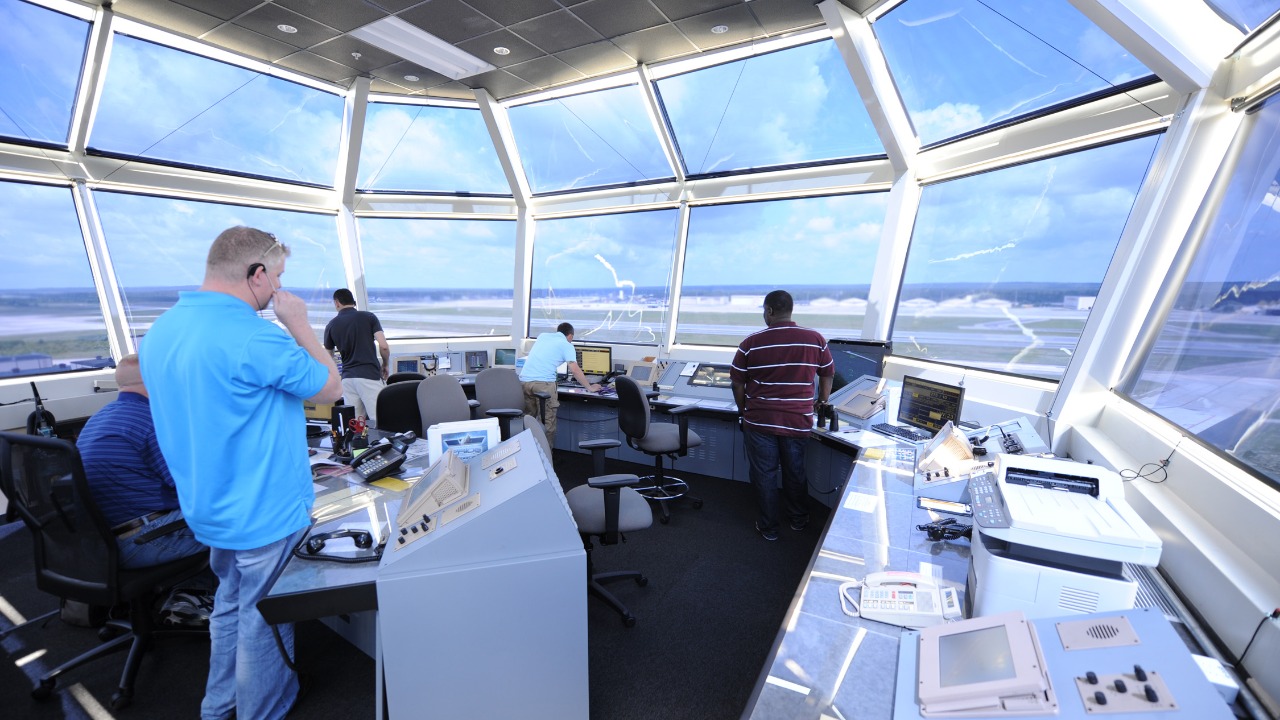
The Federal Aviation Administration has awarded a $1.5 billion contract to lead a sweeping modernization of the nation’s air traffic control infrastructure, signaling a decisive shift from aging systems to a more digital, data-driven network. The award places a single integrator at the center of a complex web of radar, communications, and automation upgrades that will shape how aircraft move through United States airspace for decades. It also ushers in a new phase of collaboration between government and major technology and engineering firms that are already securing related work across the modernization program.
The contract comes as the broader airspace system faces rising traffic, new entrants such as drones, and mounting pressure to improve resilience after several high-profile disruptions. By tying a multiyear, $1.5 billion commitment to a defined modernization roadmap, federal transportation leaders are betting that a coordinated approach can reduce risk, accelerate deployment, and avoid the patchwork of bespoke systems that have complicated previous upgrade efforts.
How the $1.5 billion award fits into the FAA’s overhaul strategy
The new $1.5 billion award is structured as the central integration engine for what officials describe as a Brand New Air Traffic Control System that will replace or upgrade core elements of the current network. The winning integrator, identified as Peraton, is responsible for coordinating hardware, software, and network changes across multiple facilities and technologies under an IDIQ framework that can scale with project needs. That structure allows the FAA to issue task orders as designs mature while keeping a single entity accountable for system-level performance.
FAA leadership has publicly endorsed the value of this arrangement, with Administrator Bryan Bedford describing the Peraton contract as a central pillar of a broader ATC overhaul that spans communications, surveillance, and automation. In that context, the $1.5 billion figure is not a standalone investment but part of a layered modernization portfolio that includes separate efforts to refresh radar, reconfigure communications backbones, and update software platforms in control centers. The integrator’s role is to ensure these parallel tracks converge into a coherent operational system rather than a collection of disconnected upgrades.
Deadlines, pressure, and the push for a 2028 operational date
The Transportation Department has set an aggressive schedule for the new architecture, pressing for the core system to be online by 2028. That timeline, described in contracting documents as a priority for the Transportation Department, reflects a view that incremental fixes can no longer keep pace with traffic growth and technology change. It also raises the stakes for the integrator, which must coordinate with radar, communications, and facilities vendors on a schedule that leaves little margin for major redesigns once deployment begins.
Pressure on timelines is not theoretical. Earlier work on the communications backbone shows how delays can ripple across the program, after FAA awarded the to overhaul a system that supports the nation’s air traffic control network and the Department of Transportation later pressed the company to accelerate delivery. That experience hangs over the new $1.5 billion effort, reinforcing the need for tight program management, clear accountability, and realistic sequencing of field deployments so that one lagging component does not stall the broader modernization.
Radar, engineering, and the growing ecosystem of modernization contracts
The integrator award lands amid a wave of related contracts that together define the technical shape of the future system. On the surveillance side, RTX has been awarded a $438 M contract in a $438 Million Million FAA contract for Gen Air Traffic, aligning its Corporation with the Department of Transportation’s modernization plan. In parallel, Collins Aerospace has secured a $438 FAA award to modernize U.S. air traffic radar, with the Cedar Rapids-based company expected to supply next-generation systems that feed richer data into the new control environment. These radar projects will depend on the integrator to define interfaces, testing regimes, and deployment schedules that align with the broader system cutover.
Engineering support and facilities modernization are also expanding around the core contract. Parsons has been selected for a $593 million FAA program that provides nationwide airspace modernization services, and the Early exercise of contract options highlights the agency’s reliance on the company for risk, schedule, and scale improvements across the network, with work centered in CHANTILLY. Taken together, these awards show how the $1.5 billion integrator contract sits at the hub of a larger ecosystem of vendors whose radar, engineering, and communications products must interlock smoothly if the modernization effort is to deliver the promised gains in capacity and safety.
Risks, governance, and what success would look like for travelers
The scale of the $1.5 billion commitment brings corresponding risk. A single integrator that falters could slow multiple dependent projects, particularly when its responsibilities stretch across communications networks first shaped by the Verizon contract and surveillance systems built by radar specialists. Program governance will need clear performance metrics, independent testing, and contingency planning so that if one element lags, other upgrades can still proceed in a way that preserves safety. The FAA’s decision to use an IDIQ structure for the integrator gives it some leverage, since future task orders can be adjusted based on performance.
For travelers, success would show up less in visible hardware and more in the absence of disruption. A mature Brand New Air Traffic Control System should reduce delays during severe weather, allow more efficient routing that cuts fuel burn for aircraft such as a 2026 Airbus A321neo or a Boeing 737 MAX 9, and support new entrants like advanced air mobility aircraft without eroding safety margins. If the combination of the Peraton integration contract, the radar work by RTX and Collins Aerospace, the communications overhaul anchored by Verizon, and the engineering support from Parsons under its FAA program delivers on that vision, the $1.5 billion award will be remembered less for its price tag than for how quietly and reliably it reshaped the experience of moving through U.S. airspace.