
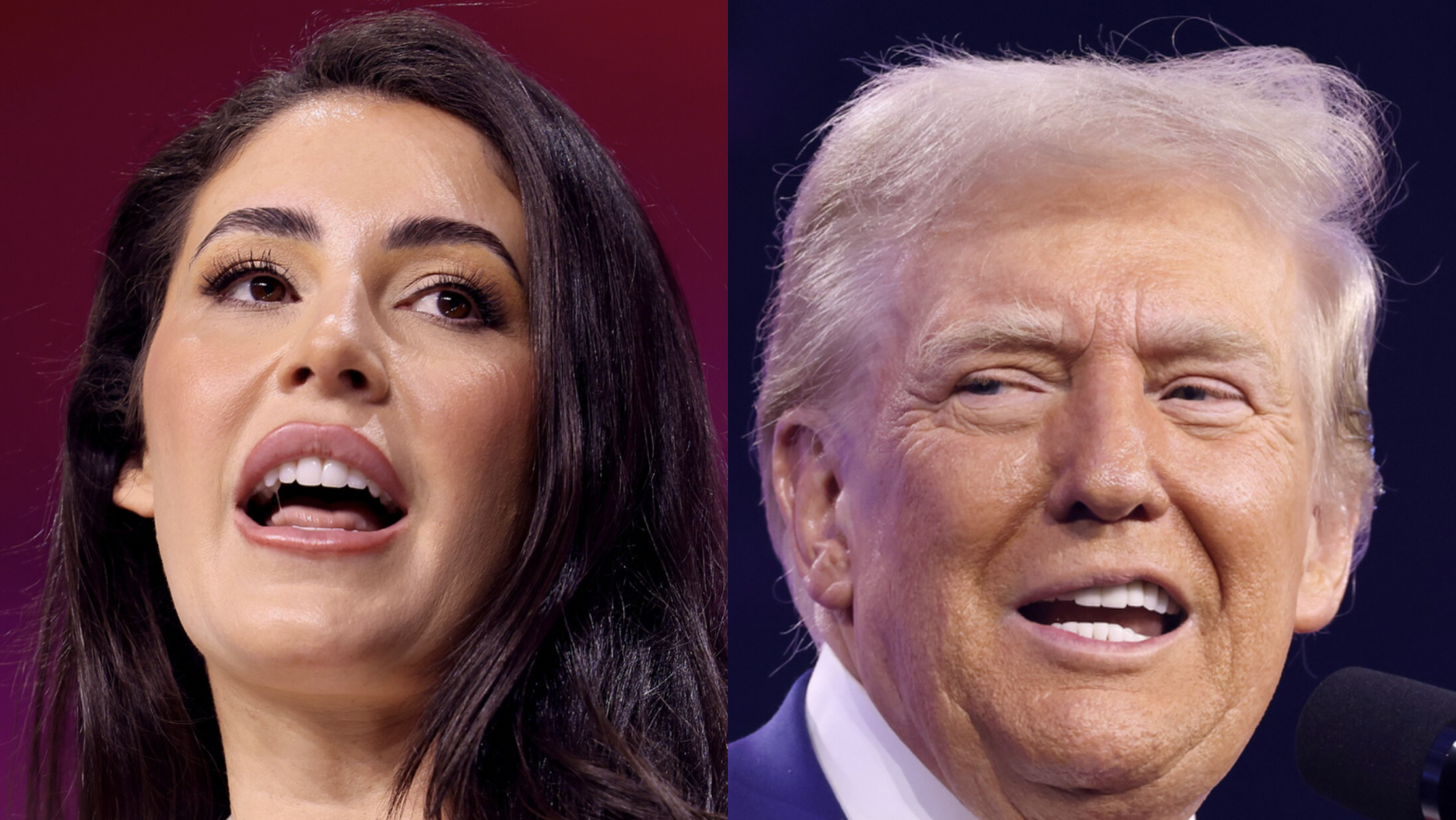
U.S. Representative Anna Paulina Luna (R-FL) took to X on Sunday, May 24, 2026, with a pointed message directed at the entire American public, urging unified support behind President Donald Trump as his administration works to finalize a peace agreement with Iran. “EVERY American should be supporting POTUS during these PEACE negotiations ref Iran,” Luna wrote, making clear that in her view, partisan divisions have no place when the nation’s commander-in-chief is at the negotiating table pursuing an end to an active armed conflict.
The post comes at one of the most consequential moments in U.S.-Iran relations in decades. President Trump announced Saturday that the United States was in the final stages of negotiations to extend a ceasefire in the U.S. war against Iran and to reopen the Strait of Hormuz. Writing on Truth Social, Trump stated that “An Agreement has been largely negotiated, subject to finalization between the United States of America, the Islamic Republic of Iran, and the various other Countries.” =
Luna’s call for American unity reflects a consistent posture she has maintained since the conflict began. The Florida congresswoman has been one of President Trump’s most vocal supporters in Congress throughout the Iran conflict and the subsequent ceasefire and negotiation process, repeatedly framing his approach as rooted in strength and results-oriented diplomacy rather than weakness or appeasement.
Luna first won her seat in the House of Representatives in 2022 with the endorsement of then-former President Donald Trump in the Republican primary, and that alliance has only deepened since Trump’s return to the White House. She serves on the House Committee on Foreign Affairs and the House Committee on Oversight and Government Reform, giving her direct oversight responsibility over matters of international conflict and diplomatic negotiations — including the ongoing U.S.-Iran situation.
Her support for Trump on the Iran question has been extensive and publicly documented. In October 2025, Luna formally submitted a nomination to the Nobel Peace Prize Committee recognizing President Trump for his “bold and unprecedented leadership in advancing peace around the globe.” In that letter to the Norwegian Nobel Institute, she cited Trump’s role in brokering a historic ceasefire between Israel and Hamas, a diplomatic breakthrough achieved through direct engagement with Egypt, Qatar, and Turkey. Luna has framed Trump’s approach to foreign policy as uniquely effective, writing at the time that “Three regions, three conflicts — and in each case, President Trump achieved what career diplomats could not: real peace.”
Earlier in the Iran conflict, Luna publicly defended Trump’s military campaign and its framing. In a post on X, she wrote that Trump “built real partnerships across the Gulf, pursued negotiations, and made clear that Iran could have worked with us had they chosen a different path,” adding that Iran “chose arrogance, defiance, and continued aggression.” That framing — placing the responsibility for conflict squarely on Iran’s choices — has been a consistent thread in her public commentary throughout the war.
The conflict itself began in late February 2026 with the launch of Operation Epic Fury. According to the White House, President Trump laid out clear objectives in Operation Epic Fury, and in just 38 days, U.S. forces met those objectives with what the administration described as overwhelming strength and lethal precision. Iran subsequently agreed to a ceasefire and the reopening of the Strait of Hormuz as the Trump administration moved toward negotiating a broader peace agreement.
The path to that ceasefire was not straightforward. Iran had initially rejected a draft proposal for a 45-day two-phased ceasefire framework and instead proposed its own 10-point plan for a peace agreement. Trump ultimately announced a conditional two-week pause on planned military action, linked to Iran agreeing to reopen the strategically vital Strait of Hormuz, and expressed confidence that most major issues had been resolved.
The White House was unambiguous in declaring the outcome a victory for Trump’s strategy. White House press secretary Karoline Leavitt stated that Iran had backed down to President Trump in agreeing to a ceasefire deal, arguing that his “tough rhetoric” and negotiating style “led the Iranian regime to cave to their knees and ask for a ceasefire.”
As of May 24, 2026, the day of Luna’s post, the broader peace deal remained in its final stages. The agreement under negotiation involves a 60-day ceasefire extension during which the Strait of Hormuz would be reopened, Iran would be able to freely sell oil, and negotiations would be held on curbing Iran’s nuclear program. Trump wrote on Sunday that negotiations were “proceeding in an orderly and constructive manner,” though he noted he had told his negotiators “not to rush into a deal” because “time is on our side,” and that the blockade on the Strait of Hormuz would remain in full force “until an agreement is reached, certified, and signed.”
The stakes extend well beyond the battlefield. A deal could end a conflict that has choked global energy markets and pushed U.S. inflation to its highest level in years. International partners have also signaled engagement, with Turkish President Recep Tayyip Erdogan’s office stating that his country “stands ready to provide every kind of support during the implementation phase of a potential agreement with Iran.”
Luna’s May 24 post lands at a moment when the administration’s diplomatic effort is at its most delicate and potentially its most decisive. By calling on every American — regardless of political affiliation — to support the president during this stretch of negotiations, the Trump-endorsed congresswoman is making the case that the outcome of these talks is a national interest, not a partisan one. For Luna, whose record on the House Foreign Affairs Committee and whose vocal backing of Trump’s Iran strategy have made her one of the more prominent congressional voices on the conflict, the message is consistent with months of publicly advocating for the president’s approach: that peace achieved through demonstrated military strength is still peace, and that it deserves unified American support.