
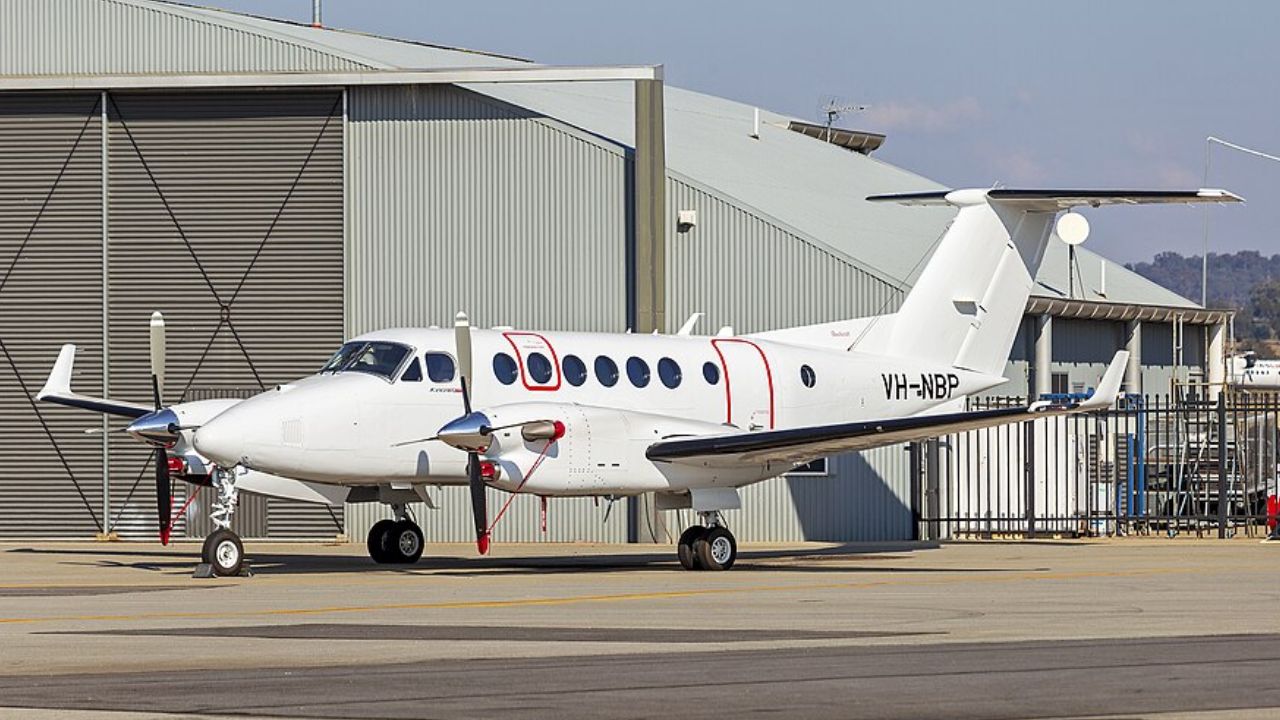
Walk onto almost any ramp where real work gets done—medical flights, charter hops, survey missions, government runs—and there’s a decent chance you’ll spot a Beechcraft King Air. It might not be the flashiest airplane on the line, but it has that “trusted tool” vibe, like a well-worn multitool that somehow still looks classy. And despite decades of new designs, it keeps showing up because it keeps solving problems.
The King Air’s secret isn’t one magic feature. It’s the way the whole package lands in the sweet spot: pressurization, twin-turboprop performance, short-field flexibility, and a cabin that can swing from plush to practical faster than you can say “cargo net.” Even today, it remains a benchmark for what a utility aircraft is supposed to be.
A workhorse with a surprisingly social life
The King Air name covers a whole family of aircraft, but the reputation is remarkably consistent across models: reliable, adaptable, and hard to replace. Operators love it because it can do “serious mission” flying all week and then quietly handle a VIP trip on the weekend. It’s the rare aircraft that can look equally at home next to business jets and next to a hangar full of rugged utility machines.
That versatility shows up in who flies it. Air ambulance providers, police and border agencies, corporate flight departments, and small charter operators all keep the type in regular rotation. It’s basically the Swiss Army knife of pressurized turboprops—just with better seats and a lot more paperwork.
Why turboprops still make a lot of sense
In an era where jets get most of the spotlight, turboprops keep quietly winning the practical arguments. They’re often more efficient on shorter routes, can use more airports, and don’t demand runway lengths that feel like a small country. If your mission is moving people or cargo between regional points quickly and predictably, a turboprop is often the “why would you do anything else?” option.
The King Air sits right in the middle of that logic. It delivers high cruise speeds for a turboprop, climbs smartly, and handles real weather with the confidence you want when schedules matter. It’s not about chasing headlines; it’s about arriving on time and doing it again tomorrow.
The utility aircraft benchmark: flexibility without drama
Utility aircraft live and die by how easily they adapt. The King Air’s cabin is a big reason it’s still so relevant: you can configure it for passengers, mixed passenger/cargo, medevac stretchers, or special mission consoles without turning the airplane into a science project. That “change roles, keep flying” quality is gold for operators who can’t afford downtime.
And it’s not just the cabin. The aircraft’s overall design—pressurized fuselage, sturdy gear, and a proven systems layout—supports a wide range of operations with fewer surprises. You don’t need to baby it, and you don’t need to invent a new maintenance philosophy just to keep it productive.
Short runways, remote airfields, and real-world performance
Ask pilots why the King Air keeps getting picked, and you’ll hear a lot about access. Plenty of communities, work sites, and secondary airports don’t have long runways or premium services, and that’s where utility aircraft earn their keep. The King Air’s ability to operate from shorter fields (depending on model, loading, and conditions) is often the difference between a direct trip and a two-leg headache.
It’s also a confidence thing. When you’re flying into places where the runway lights might be “suggestions,” having an aircraft with strong climb performance and predictable handling matters. Nobody wants an adventure when the mission is moving a medical team or critical parts.
Special missions: the King Air’s second (and third) career
One of the most telling signs of a true utility benchmark is how often it gets repurposed. King Airs show up with surveillance radars, mapping sensors, maritime patrol equipment, and other specialized payloads that turn the aircraft into a flying toolbox. The platform’s stability, power margins, and cabin volume make it a natural fit for that kind of work.
These aren’t vanity modifications, either. They’re the kind of upgrades that get used hard, in all seasons, on demanding schedules. If an airframe can carry high-value electronics all day and still behave like a dependable commuter aircraft, it’s doing something right.
Comfort counts more than people admit
Utility doesn’t have to mean uncomfortable, and the King Air has always understood that. A pressurized cabin and a generally smooth turboprop ride make a difference, especially when passengers might be executives one day and engineers with tool cases the next. Comfort turns “tolerable” trips into “productive” ones, and that’s a real operational advantage.
There’s also a subtle psychological benefit: people tend to trust aircraft that feel solid and familiar. The King Air has that reputation—serious, capable, and not trying too hard. It’s the aircraft equivalent of showing up in a clean work truck with good tires and a full tank.
Support network: the hidden reason it stays on top
Aircraft don’t remain benchmarks on nostalgia alone. A big part of the King Air’s staying power is the ecosystem around it: training availability, parts support, experienced mechanics, and a well-understood maintenance profile. When an operator can find help quickly and keep dispatch reliability high, the aircraft’s value goes way beyond the brochure specs.
This support network also helps older airframes stay relevant. Many King Airs have been upgraded with modern avionics, improved interiors, and mission-specific equipment, effectively giving them a second life. It’s hard for a newer competitor to beat an aircraft that’s already paid for, already understood, and still fully capable.
The competition has improved, but the standard still holds
To be fair, today’s utility and regional turboprops are excellent, and operators have more choices than ever. Yet the King Air remains the comparison point because it hits that rare balance of performance, flexibility, and day-to-day practicality. When someone says, “We need something like a King Air,” they’re usually describing a mission profile, not a brand preference.
That’s what benchmarks do: they become the shorthand for a whole category. The King Air earned that role over years of dependable service, and it keeps it by staying useful in the most literal sense. In aviation, that’s about the highest compliment you can get—especially if your job is to show up, do the work, and make it look easy.