
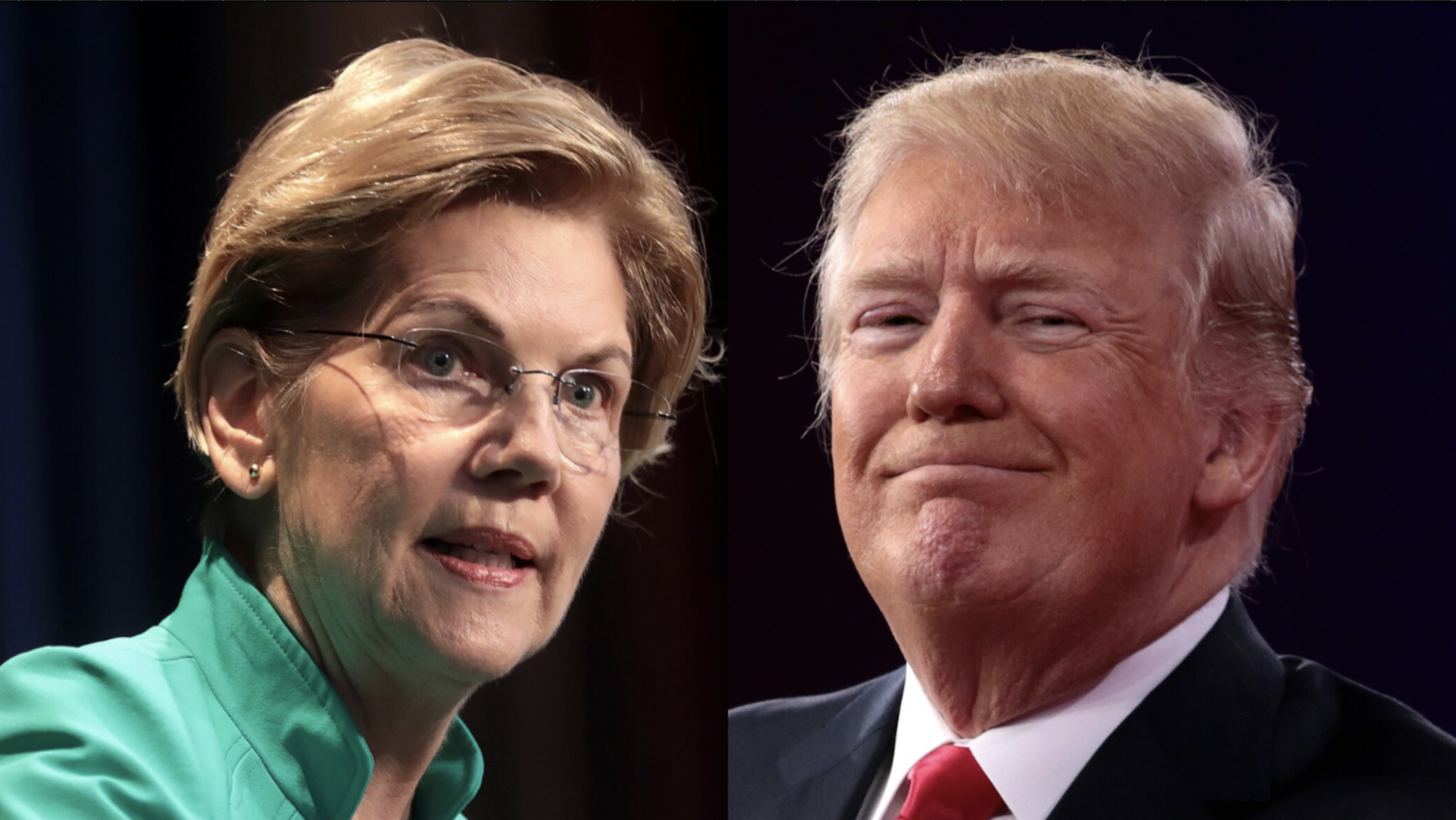
Senator Elizabeth Warren is sounding the alarm over what she calls an unprecedented act of presidential self-dealing — warning that the Trump administration is moving to settle a $10 billion lawsuit that Trump himself filed against the IRS, potentially directing taxpayer money directly into the president’s pocket before a federal judge can rule on whether the lawsuit is even legitimate.
“Donald Trump thinks the U.S. Treasury is his personal piggy bank,” Warren posted Tuesday. “Let’s be clear: the President is trying to steal $10 BILLION of taxpayer money — before a court rules. This is a massive, unprecedented scandal. Congress must stop him. I have a bill for that.”
What Trump’s Lawsuit Is About
Trump filed the lawsuit in January 2026, along with two of his sons and the Trump family business, against the IRS and Treasury Department. The suit seeks at least $10 billion in damages over the leak of his tax returns during his first term, which were disclosed by Charles Littlejohn — a former IRS contractor who pleaded guilty and is currently serving a five-year prison sentence, according to the New York Times.
The core legal problem with the lawsuit is structural: Trump is simultaneously the plaintiff suing the IRS and the president who oversees the IRS. The federal judge handling the case, Kathleen Williams of the Southern District of Florida, has taken a series of novel legal steps to probe whether there is a genuine controversy between the two parties — because a lawsuit requires the parties to actually be on opposite sides. She has ordered Trump’s personal lawyers and the DOJ — which represents the IRS — to submit briefs by May 20 explaining whether they are in conflict. She has also appointed six independent lawyers to advise her on whether the underlying lawsuit is even legitimate.
What the DOJ Is Considering — Before the Judge Rules
The New York Times reported Tuesday that the Justice Department is holding internal discussions about settling the lawsuit in the coming days — before Judge Williams has a chance to rule on its validity. One settlement option under review is the IRS dropping any audits of Trump, his family members, and his businesses — protection that could prove enormously valuable. IRS procedures call for the mandatory audit of the president and vice president’s annual tax returns. A 2024 Times report found that a loss in an IRS audit could cost Trump more than $100 million.
A settlement before the judge rules would effectively allow Trump to benefit from the lawsuit without ever having to prove its merits in court. Former government lawyers and legal experts told the Times they see a clear defense to the suit and do not view it as one the Justice Department would typically settle on its merits. A group of former IRS and Justice Department officials filed an amicus brief arguing the suit was filed too late and that the $10 billion request was far too large.
The Pattern Warren Is Pointing To
The IRS lawsuit is not Trump’s first attempt to extract money from his own government. In October 2025, Trump sought $230 million from his own Justice Department to settle claims related to DOJ investigations of him during his first term, according to Warren’s official Senate press release. The DOJ also recently settled a lawsuit brought by former National Security Adviser Michael Flynn — a case that had already been dismissed by a federal court — paying Flynn more than $1 million from taxpayer funds.
Trump himself acknowledged the awkwardness of his position, saying: “It’s awfully strange to make a decision where I’m paying myself.” Ethics experts have called the effort “a glaring conflict of interest.” Rep. Jamie Raskin described it as “the emerging MAGA grift of suing the government as a ‘plaintiff’ on bogus grounds and then settling the suit as ‘defendant’ for big bucks — a collusive settlement scam.”
Warren’s Bill — The Ban Presidential Plunder of Taxpayer Funds Act
Warren has already introduced legislation designed to close the legal gap that makes this possible. The “Ban Presidential Plunder of Taxpayer Funds Act” — introduced April 15, 2026, with Senate Minority Leader Chuck Schumer, Rep. Jamie Raskin, and Rep. Dave Min — would ban sitting presidents and vice presidents from collecting settlement payments from the government, pause the processing of their administrative claims while in office, and require any settlement agreement to be made public in the Federal Register within seven days, according to the House Judiciary Committee Democrats’ official press release.
The bill also imposes criminal and civil penalties on presidents who violate its restrictions, with a lengthened statute of limitations so that a future DOJ can pursue penalties after the current administration ends. It is endorsed by Common Cause, Citizens for Responsibility and Ethics in Washington, the Project on Government Oversight, and Democracy Defenders Action. “While American families are getting flattened by skyrocketing costs, Donald Trump is trying to snatch up billions of taxpayer dollars to line his own pockets and settle personal scores,” Warren said when the bill was introduced.
The IRS Audit Protection — What It Would Actually Mean
The non-monetary settlement option — the IRS dropping its mandatory audits of Trump and his family — could be worth far more than any cash payment. Federal law prohibits the president from ordering the start or conclusion of an IRS audit of a specific taxpayer. But a settlement in his own lawsuit would achieve the same outcome through a different mechanism: the IRS, represented by Trump’s own DOJ, would simply agree to stop auditing Trump as part of a legal settlement he initiated, according to NBC News’s reporting on the original January talks, confirmed by NBC News.
What Happens If the Judge Is Overridden
Legal experts told the Times that even if Judge Williams determines the settlement was reached in bad faith, her authority to stop money or other benefits from changing hands would be limited. Trump could withdraw the suit entirely and come to a private agreement with the federal government — an outcome the judge may be unable to prevent. That is precisely why Warren’s bill — and the public pressure she is applying Tuesday — targets Congress rather than the courts. Only legislation can create a legal barrier that a settlement between Trump and his own DOJ cannot circumvent, according to Warren’s Senate Finance Committee press release from February, when she first raised the alarm alongside Ranking Member Ron Wyden.
Warren and Wyden’s February letter noted a further suspicious detail: the Treasury Department canceled its contracts with Booz Allen Hamilton — the firm that employed Littlejohn — just days before Trump filed his lawsuit in January. They asked whether that cancellation was coordinated with the White House to strengthen Trump’s legal position. Neither Bessent nor Bondi responded to that letter by the February 17 deadline. As the DOJ now moves toward a settlement before a judge can rule, the question Warren posed in February has become more urgent: whose side is the Justice Department on — the American taxpayer, or the president suing the government he runs?