
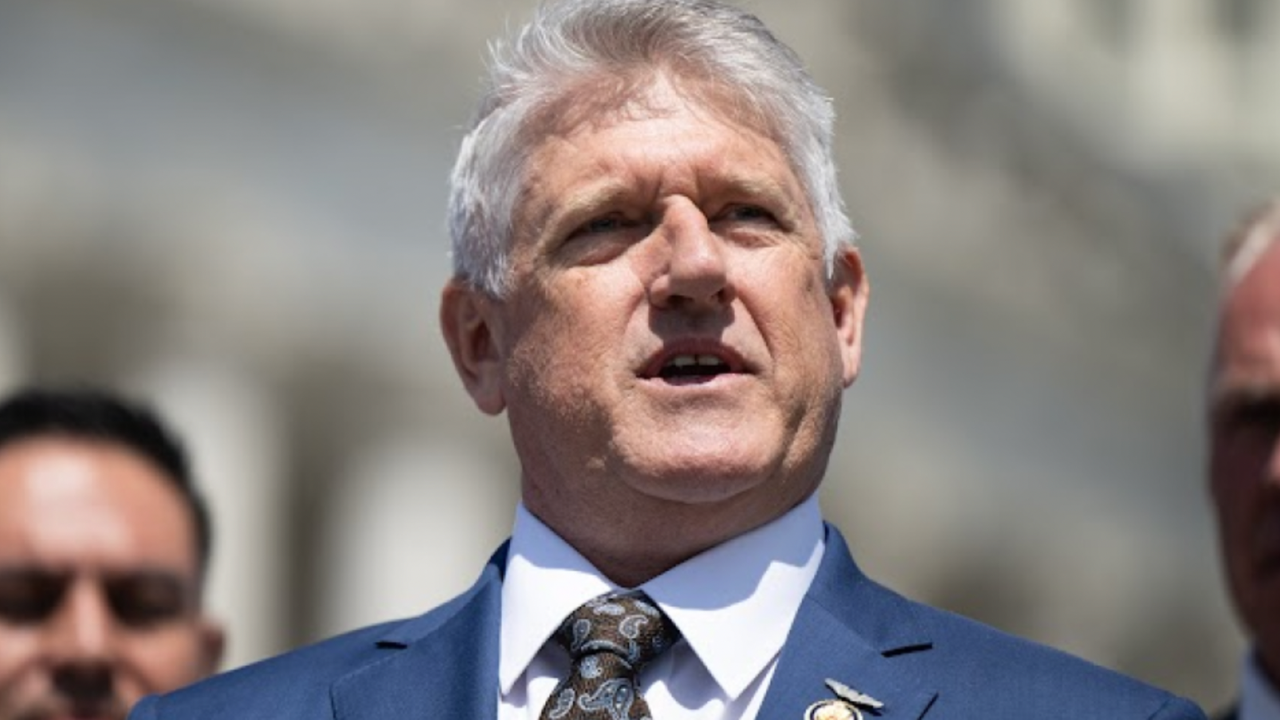
Rep. Troy Downing said Saturday that the U.S. naval blockade of Iran is steadily working, predicting the regime will eventually be forced to capitulate on reopening the Strait of Hormuz. “Eventually, they’re just gonna run out of resources and have no, have no choice,” Downing told hosts Kyle Lowder and Kenzie Beach on Newsmax’s “Wake Up America Weekend”. “So really, the thing is, is we’ve got them against the ropes, and they’re gonna continue to bleed out resources till they can’t do this anymore.”
Why Downing Doesn’t Trust Iran to Negotiate
Asked directly whether the regime could be trusted to negotiate in good faith on reopening the strait, Downing, a former U.S. Air Force enlisted aviator, was blunt. “That’s the $20,000 question right there, because we’ve seen 47-plus years of bad faith negotiations,” he said. “I think that they’re never negotiating in good faith, but I think that we’ve got their back against the wall, and we’re gonna compel a result here sooner rather than later. I’m hoping sooner.”
The Ship Count He Cited
Downing’s specific figure — that roughly 51 ships had been turned away from Iranian ports — matches contemporaneous tracking of the blockade. According to the International Crisis Group’s ongoing tracker of the conflict, U.S. Central Command announced during the blockade’s early phase that 51 vessels “have been directed to turn around or return to port.” That tally has continued climbing since; according to a more recent CNBC report, CENTCOM said it had redirected 55 commercial vessels as of Sunday, up from 35 as of August 2, with two ships disabled and two boarded to enforce compliance.
How the Blockade Actually Works
The mission Downing credited with pressuring Iran has an official name and a specific scope. According to the Department of War’s own account, “Project Freedom” is “a targeted U.S. military mission to break the Iranian blockade of the Strait of Hormuz and restore the safe flow of international shipping and oil.” Joint Chiefs of Staff Chairman Gen. Dan Caine clarified at an earlier Pentagon briefing that the U.S. action is “a blockade of Iran’s ports and coastline, not a blockade of the Strait of Hormuz” itself, applying to “all ships, regardless of nationality, heading into or from Iranian ports.”
Shipping Traffic Has Fallen Sharply
Beyond the ship-turnaway count, broader shipping data shows the strait’s traffic has been severely constrained throughout the standoff. The same CNBC report cited shipping tracker Kpler’s finding that crossings had dwindled to just eight confirmed transits on a recent Friday, down 33 percent from the day before — illustrating that Downing’s “bleeding out resources” framing reflects a genuine, ongoing disruption to Iran’s maritime commerce rather than a one-time event.
The Demands Downing Called “Nonstarters”
Downing specifically flagged Iranian demands for war-cost compensation as unacceptable. That aligns with reporting on Iran’s own draft proposal: according to CNBC, Iranian state media published a draft plan that would restrict Hormuz traffic, bar U.S. and Israeli ships entirely, and require “compensation from hostile countries” before allowing transit, with penalties for violators set at 20 percent of a ship’s cargo value — the same category of demand Downing said he hoped the administration would reject.
The Toll Question Downing Raised
Downing cited Vice President Vance’s recent comment that Iran had no plans to impose tolls in the strait as a positive sign. That reassurance follows a period in which Iran had, in fact, attempted exactly that: according to a New York Post report from earlier in the conflict, Iran briefly blocked ships and sought tolls reportedly as high as $2 million per vessel during an earlier phase of the standoff, before backing off amid U.S. pressure — the specific history that makes Vance’s more recent assurance notable rather than simply expected.
How the Broader Blockade Effort Has Evolved
The current phase follows an earlier, short-lived attempt at a more direct approach. According to CNBC’s reporting from that period, Trump briefly launched “Project Freedom” as a military escort operation on May 4 to physically guide commercial ships out of the strait, after Secretary of State Marco Rubio said nearly 23,000 sailors representing 87 countries were stranded and being left “for dead” by Iran’s blockade — but Trump paused that specific escort mission after just one day, citing “great progress” toward a broader agreement that ultimately did not hold.
Downing’s Consistent Framing Since Spring
Saturday’s comments continue a pattern in how Downing has described the conflict for months. In a May post on X, he wrote that “the Iranian Regime is weakened, isolated, and on life support,” and that “America will defend freedom of navigation and commerce in the Strait of Hormuz” — the same prediction of eventual Iranian capitulation under sustained pressure that anchored his Saturday remarks.
The Domestic Cost He Acknowledged
Downing did not dispute that the standoff carries a real cost for American consumers. “I understand Americans are concerned. We’ve got $4 gas at the pumps right now,” he said, adding his expectation that “that will all come back to equilibrium once this is solved” — an argument that ties near-term consumer pain directly to the same pressure campaign he credited with weakening Iran’s position.
The Oman Channel Downing Called a Positive Sign
Downing described Iran’s reported talks with Oman about reopening the strait as a cautious positive, while urging skepticism. “Take this with a grain of salt,” he said of the reports, noting Iran had separately floated demands for compensation alongside any agreement. That caveat mirrors a broader pattern throughout the conflict, in which reported diplomatic progress involving Oman as an intermediary has repeatedly surfaced without translating into a finalized, comprehensive agreement between Washington and Tehran.
Where This Leaves Things
As of Downing’s Saturday appearance, no final agreement to reopen the Strait of Hormuz had been reached, Iran’s own draft proposal for restricted, compensated transit remained under review by its parliament according to Iranian state media, and shipping traffic through the waterway remained far below pre-war levels. Downing’s prediction that Iran would eventually be compelled to fully reopen the strait on U.S. terms remained, as of Saturday, a forecast rather than a confirmed outcome.