
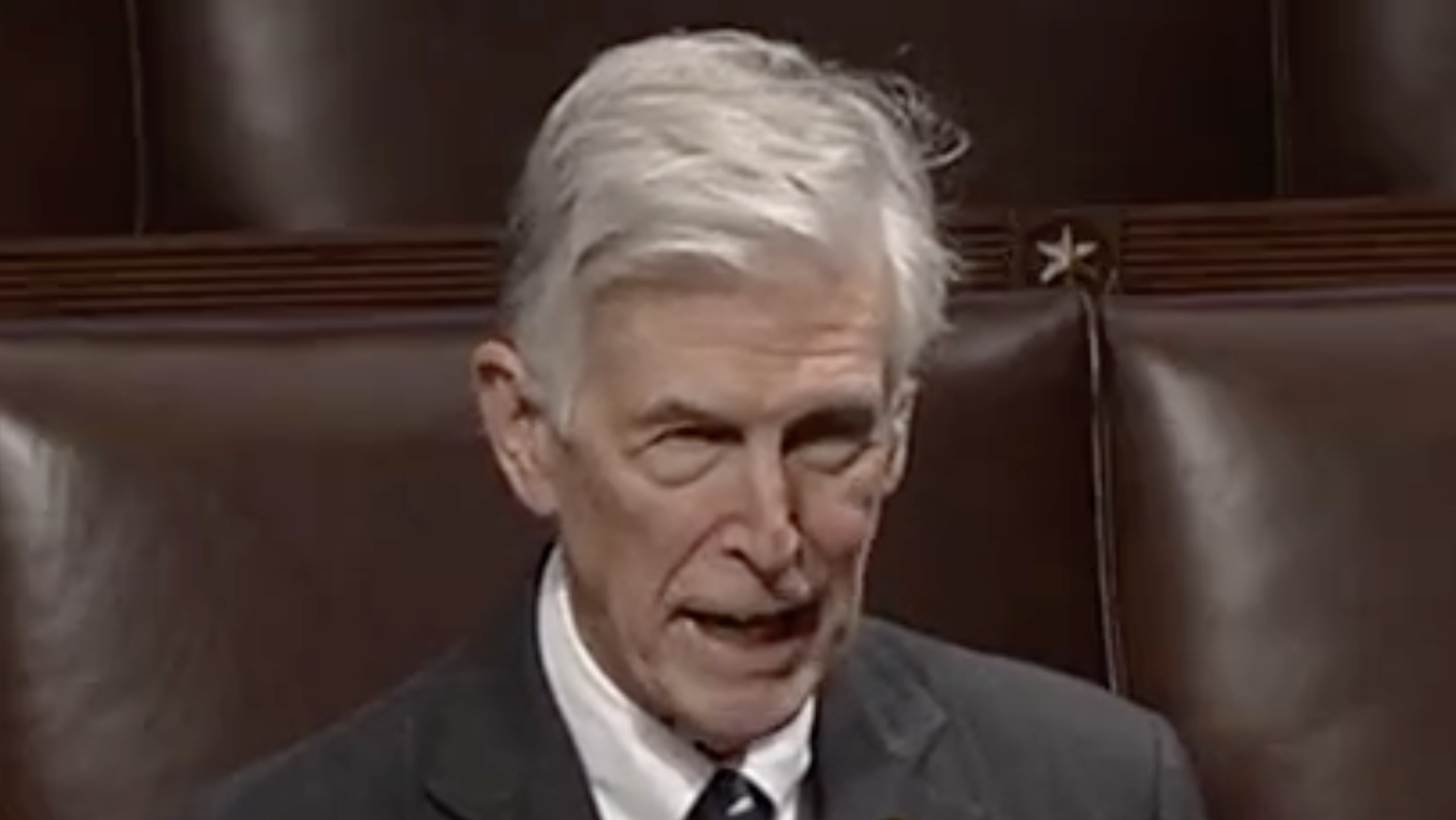
U.S. Representative Don Beyer (D-VA) said Wednesday that Immigration and Customs Enforcement is “beyond reform” and called on Congress to dismantle the agency and rebuild immigration enforcement from the ground up, arguing that a string of deadly incidents involving the agency’s officers can no longer be explained away as isolated mistakes.
Beyer posted the statement to X on the morning of July 29, 2026. The full post reads: “Repeated deadly incidents have made clear this is not a training failure. It is a systemic failure. ICE is beyond reform. It’s time for Congress to replace it with an immigration enforcement system that reflects our values and the rule of law.”
The Virginia Democrat, who represents the state’s 8th congressional district, framed the agency’s problems as structural rather than the product of a few bad actors or insufficient training. By describing the pattern as a “systemic failure,” Beyer aligned himself with a growing bloc of House Democrats who argue that ICE’s conduct over the past several months reflects the way the agency is designed to operate under the current administration, not a series of unrelated errors that could be corrected through additional oversight or retraining.
Beyer’s post did not name specific victims, but it arrived against the backdrop of a year in which fatal encounters involving ICE and Customs and Border Protection agents have drawn sustained national attention. Chief among them are the deaths of Alex Pretti and Renee Good, two American citizens killed by federal agents in Minneapolis in January 2026, incidents that have become central to the broader debate Beyer’s statement is part of.
Renee Good, 37, was shot and killed by ICE agents on January 7, 2026, while driving her car during an immigration enforcement operation in Minneapolis; federal officials said she had “weaponized” her vehicle by driving toward officers, an explanation that has since surfaced in multiple other fatal shootings involving immigration agents, according to Al Jazeera. Seventeen days later, on January 24, 2026, Alex Pretti, a 37-year-old ICU nurse at the VA hospital who had been photographing federal agents, was shot ten times in under five seconds after being pinned to the ground and pepper-sprayed by Customs and Border Protection agents, according to Hennepin County Medical Examiner findings that later ruled his death a homicide.
Beyer responded to those killings within days. On January 26, 2026, he released a video statement calling the deaths of Pretti and Good murders, saying “The Department of Homeland Security is murdering American citizens. Congress cannot allow that to continue, we must act.” In that same statement, Beyer called for the removal of ICE, CBP, and other Department of Homeland Security personnel from Minneapolis, demanded a full and independent investigation into both killings, and called for the impeachment of Homeland Security Secretary Kristi Noem. He added that he had voted against funding for DHS and said Congress “shouldn’t pass funding for this lawless agency without major guardrails.”
The Pretti and Good killings also drew scrutiny from federal lawmakers directly. In February 2026, acting ICE Director Todd Lyons and CBP Commissioner Rodney Scott appeared before the House Homeland Security Committee for the first time since the shootings, facing pointed questioning from Democratic members. Representative Tim Kennedy of New York told Lyons that his written testimony “does not make one single mention of Renee Nicole Good or Alex Pretti,” despite the fact that “two American citizens have been murdered at the hands of your agency.” Noem did not appear at the hearing despite calls for her to testify.
Accountability in the Minneapolis cases has moved slowly. As of April 2026, Minnesota officials had sued the Trump administration, alleging federal officials were withholding evidence in the killings of both Pretti and Good, according to NPR. By mid-July, more than five months after the shootings, federal investigators had turned over previously withheld evidence to Hennepin County Attorney Mary Moriarty, including body camera footage and Good’s damaged SUV, but no charges had been announced against the agents involved, A vigil marking six months since Pretti’s death drew mourners to Minneapolis in late July, with organizers noting that the agents involved in his shooting still had not been publicly named, according to KARE 11.
The Minneapolis deaths were far from isolated. In the weeks immediately preceding Beyer’s Wednesday statement, ICE was involved in two additional fatal shootings within a single week. On July 7, 2026, an ICE officer in Houston fatally shot Lorenzo Salgado Araujo, a Mexican national, during what the agency described as a targeted enforcement operation; witnesses disputed the agency’s account, and civil rights groups including LULAC called for a full federal investigation and release of all evidence. A week later, on July 13, an ICE agent in Biddeford, Maine, fatally shot Joan Sebastian Durán Guerrero, a 26-year-old Colombian national who was authorized to work in the United States; Homeland Security Secretary Markwayne Mullin later confirmed to Senator Angus King’s office that the man had not been the target of an arrest warrant.
The following day, a 28-year-old man fleeing ICE agents during an encounter with Homeland Security Investigations in St. Augustine, Florida, was struck and killed by a tractor trailer after running across a highway, according to CNN. In response to the back-to-back fatal incidents in Houston and Maine, ICE reportedly issued a temporary policy directing officers to avoid traffic stops except in exceptional circumstances while the agency reviewed its procedures and training, a measure described as a stopgap rather than a structural change, according to The Washington Times.
Deaths inside ICE detention facilities have followed a similar upward trend. Immigrant advocacy groups tracking the numbers reported that at least 22 people had died in ICE custody in 2026 as of mid-July, compared with 33 deaths reported by the agency for all of 2025, itself the highest annual total in more than two decades, according to the National Immigration Project. Separate reporting from Axios, citing Detention Watch Network data, put the 2026 custody death count at 19 as of mid-July against 31 for the prior year, and noted that fourteen Mexican nationals have died in ICE custody since President Trump returned to office, with three more dying during ICE operations, according to Mexico’s Foreign Minister Roberto Velasco Álvarez.
Beyer’s Wednesday statement is consistent with a pattern of congressional oversight efforts he has pursued regarding ICE conduct over the past two years, predating the Minneapolis shootings. In 2025, Beyer joined Representative Bonnie Watson Coleman of New Jersey to introduce the ICE Visibility Act, which would have required ICE officers and other deputized immigration officers to wear visible and distinct uniforms during enforcement actions. That same year, Beyer pressed ICE directly on the detention of his constituent, Georgetown postdoctoral fellow Dr. Badar Khan Suri, urging the agency in a formal letter to reevaluate Suri’s custody classification and eligibility for release.
Wednesday’s post extends that record into a more sweeping conclusion: that legislative fixes aimed at individual practices, such as uniform requirements or case-by-case advocacy, are no longer sufficient, and that the agency itself needs to be replaced. Beyer’s office has not yet released additional detail on what a new immigration enforcement structure would look like, or whether he plans to introduce corresponding legislation, though his Wednesday post specifically called on “Congress” to act.
The debate over ICE’s future comes as funding fights over the Department of Homeland Security continue to surface on Capitol Hill, with Beyer and other Democrats repeatedly linking further appropriations for the agency to conditions on oversight and accountability. Whether Beyer’s call to replace ICE outright gains traction among House Democratic leadership, most of whom have thus far focused on reform measures and oversight hearings rather than abolition, remains to be seen.