
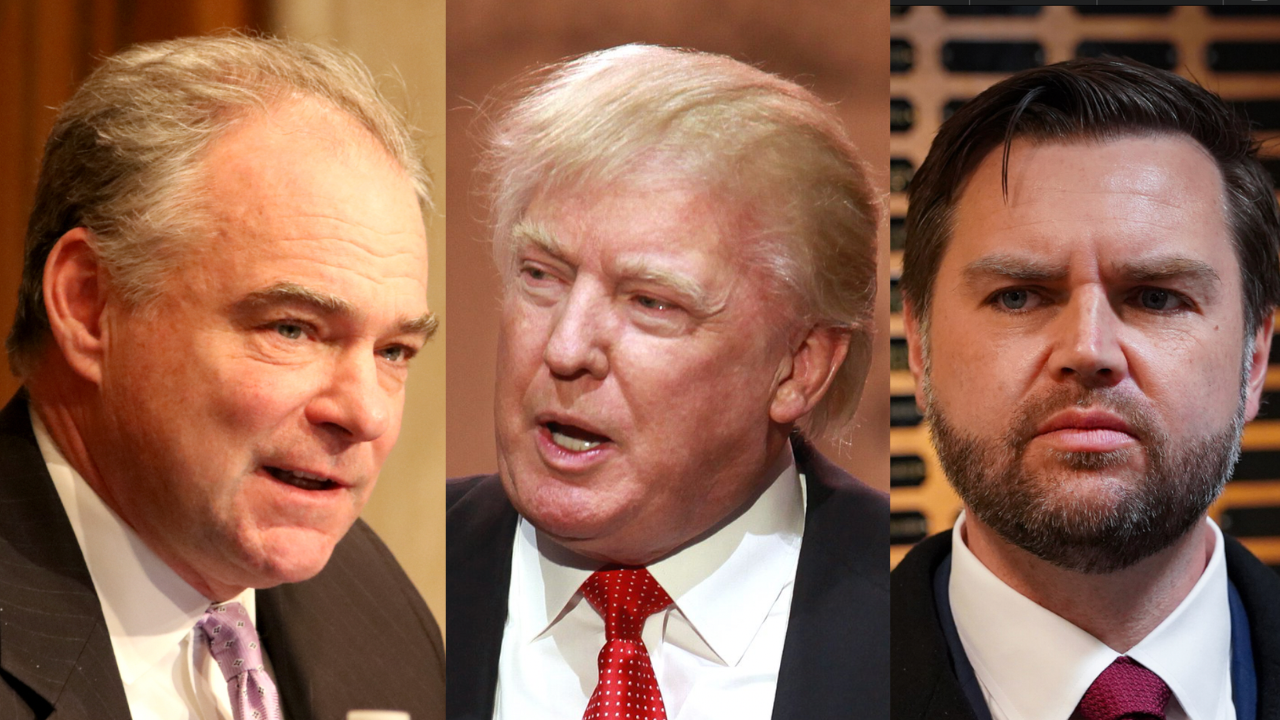
U.S. Senator Tim Kaine (D-VA) accused the Trump-Vance administration on Thursday of trying to conceal the true human toll of the war with Iran, declaring in a post on X that 18 American troops have died in what he called an “unnecessary, illegal war” and that grieving military families learned only after burying their dead that the Pentagon wanted to reclassify their loved ones’ combat deaths.
“18 troops have died in the Trump-Vance Administration’s unnecessary, illegal war with Iran. Families have met flag-draped caskets at Dover, only to learn the Administration wants to reclassify those combat deaths to hide the true cost of war. Shameful,” Kaine wrote in a post published to X at 10:14 a.m. on July 30, 2026.
Kaine’s Post Follows Weeks of Shifting Pentagon Casualty Figures
Kaine’s statement lands amid a month of escalating scrutiny over how the Department of Defense has counted, categorized, and disclosed casualties from Operation Epic Fury, the name the Pentagon has given to the war with Iran that began on February 28, 2026. The Defense Casualty Analysis System (DCAS), the Pentagon’s official casualty tracker, listed a total of 18 American service members killed as of July 22, only for that figure to drop to 14 by the following day.
Three military officials said the four service members removed from the count — three killed in Jordan and one in northern Iraq — were taken off the list because their deaths occurred after President Trump had declared a cease-fire with Iran in April. The Pentagon’s acting press secretary, Joel Valdez, instead attributed the change to “temporary data disruptions” that he said would be corrected quickly.
Casualties Later Moved Into a New “Overseas Operations” Category
Days after the discrepancy was first reported, the Pentagon altered its accounting method again. Rather than restoring the four service members to the main Operation Epic Fury casualty count, the Defense Department created a new web page labeled “overseas operations casualties,” under which the four deaths were listed separately, along with newly disclosed data showing 142 additional wounded service members for the month of July. A Pentagon statement explained that “since Operation Epic Fury has concluded, the department classifies casualties as overseas operations in the CENTCOM area of responsibility.”
Under the revised structure, the wounded total since July 7 rose to 207, bringing the overall number of troops wounded since the war began to 624, while the death toll — now split across two separate web pages rather than one consolidated count — totaled 18 when the categories were combined.
Kaine and Senate Colleagues Formally Pressed Hegseth for Answers
The frustration Kaine voiced on X did not emerge in isolation. On July 27, Kaine joined Senator Mazie Hirono (D-HI) and eight other Senate Democrats — including Armed Services Committee Ranking Member Jack Reed, Foreign Relations Committee Ranking Member Jeanne Shaheen, Kirsten Gillibrand, Richard Blumenthal, Elizabeth Warren, Gary Peters, Tammy Duckworth, Jacky Rosen, Mark Kelly, and Elissa Slotkin — in sending a formal letter to Defense Secretary Pete Hegseth demanding a “comprehensive accounting” of all service members killed, wounded, or injured in connection with the war.
In the letter, the senators wrote that “the American people, Congress, service members, and their families are entitled to a full and accurate accounting of the human costs of war,” adding that “the information currently available to the public suggests that the Department has not consistently provided timely and comprehensive public casualty reporting throughout the conflict.”
Senators Cited a Direct Contradiction Between Pentagon Statements and Official Data
The senators’ letter pointed to a specific inconsistency as evidence of the reporting problems: on July 20, chief Pentagon spokesman Sean Parnell stated in a post on X that “while nearly 100 service members were deemed to have some degree of injury since July 7, 2026, 96% have returned to duty.” Yet as of July 21, DCAS listed only 14 service members killed — despite widespread reporting that 18 had died — and recorded zero wounded in action for the entire month of July.
The senators wrote that this discrepancy “calls into serious question the completeness and reliability of the aggregate totals,” and noted that Stars and Stripes had separately reported on the same data inconsistency. They requested that Hegseth respond to a list of ten detailed questions — covering casualty definitions, CENTCOM reporting practices, traumatic brain injury screening, and undisclosed attacks on U.S. bases in Jordan — no later than Thursday, July 30, 2026, the same day Kaine published his post.
Pentagon Has Repeatedly Disputed Accusations of Concealment
The Defense Department has pushed back forcefully against suggestions that it is deliberately undercounting the war’s toll. After three soldiers were killed in a strike in Jordan last week, Parnell said in a statement that “claims of concealment are fabrications meant to further distress the American people in the wake of three service members killed in action.” Valdez similarly rejected comparisons between casualty figures under the Trump and Biden administrations as an “attempt to politicize the sacrifices of America’s finest warriors in Iran.”
When The New York Times sought comment on the discrepancies ahead of publishing its reporting, Valdez wrote in an email that “the department attempted to explain the anomalies to The New York Times ahead of publication, but given their lack of knowledge in this area, they proceeded to write a non-story,” adding that the Pentagon “remain[s] committed to ensuring the utmost accuracy of all casualty reporting.”
Trump Has Continued to Cite the Higher Casualty Figure Publicly
Even as the Pentagon’s official tally fluctuated, President Trump has continued to reference the 18-death figure in public remarks. On Thursday, July 23, Trump told reporters, “I had a very sad day yesterday. I went to Dover, four great American patriots killed. That’s 18,” adding, “And one is too many, but it’s 18.” Two days earlier, on July 22, Trump and Defense Secretary Hegseth attended a dignified transfer at Dover Air Force Base for four service members killed in the renewed fighting, where Trump told journalists, “All of them said, very strongly, that we can’t let Iran have a nuclear weapon, so we’re going to honor them.”
The War Has Spanned Two Distinct Phases Since February
Operation Epic Fury began on February 28, 2026, when Trump ordered strikes on Iran alongside Israel, prompting Iranian missile and drone retaliation against U.S. forces in the region. The first American deaths of the war came on March 1, when six soldiers assigned to the 103rd Sustainment Command were killed in a drone strike at the Shuaiba Port in Kuwait. A cease-fire took hold in April, but hostilities resumed in early July; on July 10, Trump formally notified Congress that hostilities with Iran had restarted — a move administration officials contend allows them to treat the renewed fighting as a distinct conflict for reporting purposes, separate from the war’s initial phase.
Congress Has Pushed Back With Repeated War Powers Votes
The dispute over casualty transparency has unfolded alongside broader congressional resistance to the war’s continuation. The House of Representatives voted for a second time to direct Trump to end the war in Iran or seek explicit congressional authorization to continue it, reflecting what has become bipartisan discontent over the conflict’s duration and scope under the War Powers Act of 1973, which requires the president to end military operations within 60 days absent congressional authorization.
Military Analysts Have Warned of Long-Term Consequences
Retired Lt. Gen. Ben Hodges, who commanded U.S. Army forces in Europe at the start of Trump’s first term, said the administration’s handling of casualty data reflected a broader pattern. “The administration seems to have a real hard time being honest about what is going on — not just about casualties, but about the whole war in general,” Hodges said, adding that downplaying deaths during wartime indicated “an unwillingness or inability to aggressively learn from mistakes.”
Peter Feaver, a political science professor at Duke University who studies civil-military relations, said the human dimension of the casualty figures should not be lost amid the reporting disputes. “It’s important to remember that every one of those numbers is a personal story,” Feaver said.
Reclassification Raises Concerns for Veterans’ Long-Term Care
Beyond the immediate dispute over the death toll, the Pentagon’s decision to separate recent casualties into a distinct “overseas operations” category has raised concerns among veterans’ advocates that the change could affect service members’ ability to access benefits and care tied to their service in the war long after the conflict ends, given that formal designation of casualties as part of a named operation can carry implications for veterans’ disability claims and other service-connected benefits.
Background Checks on Reporting Requirements Remain Unresolved
Defense Department officials maintain that the Pentagon is legally required to report troop deaths but not injuries, a distinction that has fueled criticism from Democratic lawmakers who argue the administration is nonetheless obligated to keep the public informed about the war’s full toll. The Pentagon previously withheld information about three Iranian strikes in Jordan that injured dozens of U.S. service members and damaged several helicopters, according to multiple U.S. officials who described the episode on condition of anonymity to discuss operational matters.
The Dispute Echoes the Administration’s Past Attacks Over Abbey Gate
The scrutiny facing the Trump administration over casualty transparency carries particular political weight given that both Trump and Hegseth have repeatedly criticized the Biden administration over its handling of the 2021 attack at Abbey Gate in Kabul, which killed 13 U.S. service members during the withdrawal from Afghanistan. Trump told podcaster Lex Fridman in 2024 that the Abbey Gate deaths “died because of Biden and because of Kamala. They died just like if they pulled the trigger.” The Pentagon has indicated it is preparing to release a review of the Afghanistan withdrawal that Hegseth ordered, which he has said will “ensure ACCOUNTABILITY to the American people and the warfighters of our great Nation.”