
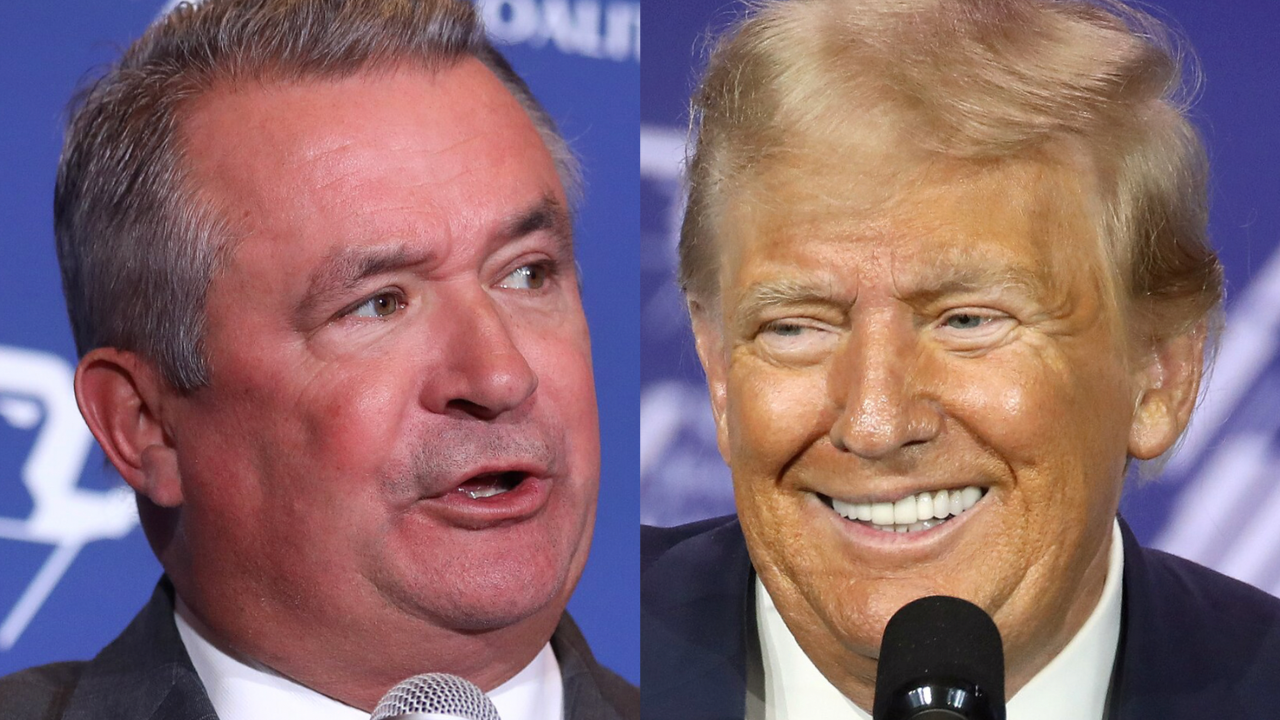
Rep. Don Bacon (R-Neb.), a retired Air Force general and one of Congress’s most consistent voices on Ukraine aid, praised President Trump’s announcement Wednesday that the United States will grant Ukraine a license to manufacture Patriot missile interceptors — calling it a great decision that directly addresses a critical shortage threatening Ukrainian cities.
“This is a great decision,” Bacon wrote on X. “The manufacturer is currently not keeping up with the needs, and this will surely help. Ukrainian cities need the Patriots.”
In a follow-up post, Bacon also flagged the broader air defense picture. “We do need cheaper interceptors for the drones. The F-16s carry done that work. That said, we need more Patriots,” he wrote on X.
What Trump Announced in Ankara
Trump made the announcement during a bilateral meeting with Ukrainian President Volodymyr Zelenskyy at the NATO summit in Ankara, Turkey. “We’re going to give a license to you to make Patriots. That’s pretty cool. This way, you can’t complain that we’re not giving ’em enough,” Trump told Zelenskyy.
“It’s very complex, actually, but it’s — you’ll figure out the complexity quickly,” Trump added. He said the U.S. does not have enough Patriots to provide them directly to Ukraine in large numbers. “We have Patriots, but we don’t have that many. We need them for ourselves too,” he said.
Trump said he had not yet informed Raytheon or Lockheed Martin — the prime contractors for the Patriot interceptor — of the decision. “We haven’t informed the company of that yet, but that’ll work out all right. I’m sure they will be thrilled,” he said.
Why the Decision Matters
The Patriot is Ukraine’s only effective defense against Russian ballistic missiles. Lockheed Martin produces roughly 600 PAC-3 interceptors per year — about 60 to 65 per month — while Russia is producing approximately 120 ballistic missiles monthly. Ukraine’s Patriot batteries intercepted none of the five ballistic missiles Russia fired at Kyiv overnight Wednesday — the third attack on the Ukrainian capital in less than a week — even as they shot down 139 of 169 drones.
The supply shortage has been compounded by the Iran war. The U.S.-Israeli campaign against Iran has depleted almost a third of the global stockpile of Patriot interceptors, with Gulf states collectively firing more than 1,100 of them in recent months, per Euronews. NATO leaders pledged $80 billion to help meet Ukraine’s defense needs this year and next in a summit declaration published Wednesday, but the interceptor shortage remains acute.
The Production Challenge Ahead
Bacon’s praise was tempered by the realities of the timeline. A PAC-3 interceptor can take up to 24 months to produce, with some key components requiring up to 30 months, meaning decisions made in 2026 may not translate into substantial quantities until 2027 or 2028. The missile depends on a supply chain of more than 400 companies covering seekers, rocket motors, guidance software, electronics, composite materials and certification processes that cannot simply be scaled up by adding money.
It is also unclear whether the license will cover the more capable PAC-3 interceptor that can engage ballistic missiles or the simpler PAC-2 variant, and whether production would take place in Ukraine itself or in a third country. The most realistic near-term model is phased co-production with U.S. company supervision, imported components, European industrial participation and gradual Ukrainian involvement in assembly rather than immediate full-scale domestic production, per Army Recognition.
A Diplomatic Turning Point
The announcement marked one of the most significant diplomatic moments between Washington and Kyiv since Trump’s return to the White House. Trump and Zelenskyy had a notoriously bitter confrontation in the Oval Office in February 2025. “We’ve actually developed a good relationship, it’s hard to believe, right from the Oval Office to now,” Trump said Wednesday alongside Zelenskyy.
Trump also dismissed Russia’s offer for peace negotiations to be held in Moscow — a win for Zelenskyy, who joked it was not safe for him to travel to the Russian capital “because there’s too many Ukrainian drones there.” Trump said he would consider visiting Ukraine himself but would rather “the war be over” before he traveled there. Russia’s Foreign Minister Sergey Lavrov criticized the decision, saying the U.S. was abandoning its role as an “honest broker” and shifting back toward more decisively supporting Kyiv, per Defense News.
Bacon’s Role and Broader Republican Support
Bacon represents Nebraska’s 2nd Congressional District and is a retired Air Force brigadier general who flew 100 combat missions. He has been one of the most vocal Republican supporters of continued Ukraine aid and has repeatedly pressed the administration and his own party to maintain commitments to Kyiv. His immediate endorsement of the Patriot license decision reflects a strand of Republican defense thinking that views Ukraine’s air defense as directly connected to U.S. national security interests and the credibility of American alliances.
The announcement came as Trump was simultaneously managing the collapse of the U.S.-Iran ceasefire at the same summit — declaring the June memorandum of understanding “over” and ordering a third consecutive night of strikes against Iran on the same day he gave Zelenskyy the Patriot license. Ukraine’s ongoing ability to defend its cities against ballistic missiles, Bacon argued, depends on not waiting for U.S. production capacity to catch up. A production license that eventually allows Ukraine to manufacture its own interceptors, he said, is the right structural solution — even if it cannot solve the immediate shortage on its own.