
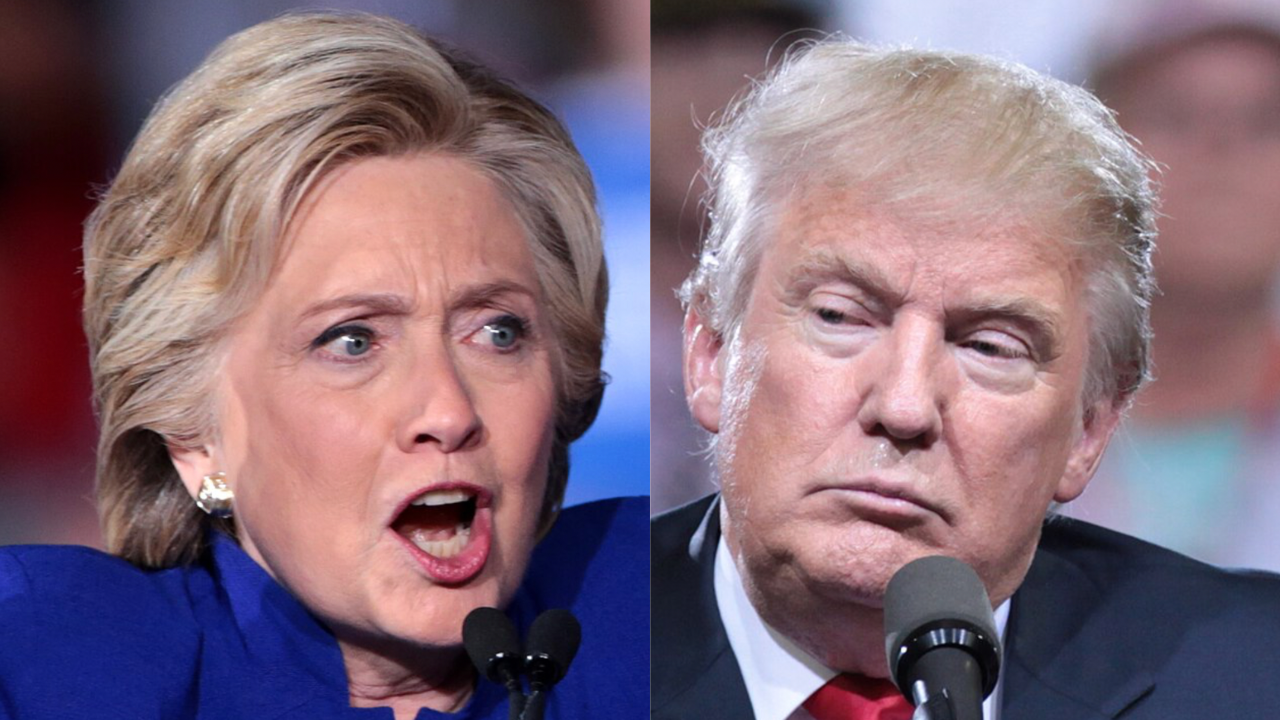
Former Secretary of State Hillary Clinton on Monday accused President Donald Trump of orienting U.S. foreign policy more favorably toward North Korea and Russia than toward Canada and Oman, two countries with which Washington has maintained decades of close diplomatic and security ties. The post, published to X shortly before noon, arrived as Canada faces a Wednesday deadline before steep new U.S. tariffs take effect and as Trump’s past threats against Oman continue to reverberate across the Gulf.
Clinton’s full post read:
“The president is making US policy friendlier to North Korea and Russia than Canada and Oman. Are you kidding me?”
The post did not elaborate further, but it landed amid a week in which each of the four countries she named featured prominently in U.S. foreign policy news — Canada bracing for tariffs of up to 50 percent, Oman navigating renewed threats tied to its mediation role between Washington and Tehran, and both Russia and North Korea benefiting, in Clinton’s telling, from a more permissive posture out of the White House.
Canada Faces Tariff Deadline as Trade Talks Stall
Canadian and U.S. negotiators spent the weekend racing to reach a deal before 50 percent tariffs on a range of Canadian goods — including hockey sticks, wine, cement and plywood — are set to take effect Wednesday, August 19. Canadian Prime Minister Mark Carney described the talks as “very delicate and intense” and said he intended to speak with Trump directly before the deadline. Canadian broadcaster CBC reported Monday that the two sides remained at an impasse, with automotive sector rules emerging as a central sticking point; Canada has pushed to lower tariffs on autos to 10 percent or expand an existing parts exemption, while the Trump administration has held firm to a minimum 15 percent rate.
The threatened tariffs stem from Section 338 of the Tariff Act of 1930, an untested provision Trump invoked last month after the Supreme Court struck down several of his earlier emergency tariffs on Canada under the International Emergency Economic Powers Act. The White House has said the new duties are retaliation for Canada’s own countermeasures, with U.S. Trade Representative Jamieson Greer noting that Canada and China are the only two countries that have retaliated against U.S. tariffs rather than negotiate. Trump has also declined to renew the U.S.-Mexico-Canada Agreement governing North American trade, leaving its future uncertain.
Trump Has Twice Threatened to “Blow Up” Oman
Oman, a longtime U.S. security partner that has served as the primary intermediary between Washington and Tehran throughout the U.S.-Iran conflict that began February 28, 2026, has faced its own friction with the Trump administration. On May 27, Trump told reporters that Oman would have to “behave” or the United States would “blow ’em up,” a remark tied to concerns over Muscat’s neutrality and its continued dealings with Iran regarding the Strait of Hormuz. It was the second time Trump had issued a threat of that kind toward the sultanate.
U.S. officials have since expressed concern that Oman and Iran could reach a side arrangement over transit through the Strait of Hormuz that bypasses Washington, according to reporting citing a U.S. official who said “most countries in the region would be fine with that.” Oman, for its part, has continued its historic mediator role, hosting Iranian and U.S. delegations in Muscat and maintaining its own outreach to Moscow — Oman’s Sultan Haitham bin Tariq met with Russian President Vladimir Putin earlier this year to discuss the state of the nuclear talks.
Congress Has Pushed Harder on Russia Than the White House
On the Russia side of Clinton’s comparison, the Senate passed the Lindsey O. Graham Sanctioning Russia and Iran Act of 2026 by an 86-11 vote on August 7, a bill that imposes new penalties on Moscow’s financial networks and grants Trump broad authority to set tariffs of up to 100 percent on countries that import Russian oil, uranium or natural gas. The legislation, finalized in negotiations with the White House before Senator Lindsey Graham’s death on July 11, drew criticism from commentators who noted that Trump has been slower than Congress to act against Russia and has “stretched the boundaries of his trade authority” elsewhere without directly committing to enforce the sanctions package.
Trump’s own rhetoric toward Russian President Vladimir Putin has fluctuated throughout the year. In early August, Trump called Russia’s conduct toward Ukraine “disgusting” and threatened sanctions if no ceasefire agreement was reached, while also acknowledging in a separate interview that Putin is “pretty good with sanctions” and “knows how to avoid” them. The mixed signals have drawn scrutiny from lawmakers in both parties who have pushed for a firmer posture than the administration has been willing to commit to publicly.
North Korea Reduction Announced One Day Earlier
Clinton’s post came roughly 24 hours after Trump announced he had instructed Secretary of War Pete Hegseth to “substantially reduce” joint military exercises between the United States and South Korea, citing his “very good relationship” with North Korean leader Kim Jong Un. The announcement, posted to Truth Social Sunday, came hours before the annual Ulchi Freedom Shield exercises were set to begin and followed days of North Korean condemnation of the drills as a rehearsal for “aggressive war.”
North Korea has separately deepened its military cooperation with Russia, with U.S. officials saying North Korean troops fighting alongside Russian forces in Ukraine have gained substantial combat experience in drone warfare, electronic warfare and cyber operations. Ukraine has said North Korean-made missiles were used in a Russian strike on a steel plant in Zaporizhzhia that killed seven workers, an attack that also involved Russia’s Zircon hypersonic missiles.
Clinton’s Position Marks a Shift From Recent Praise
Clinton’s sharply critical post represents a departure from comments she made as recently as September 2025, when she praised Trump’s tougher posture toward Russia over the war in Ukraine, saying Trump was “coming to grips with the fact that Vladimir Putin does not respond to any kind of rhetoric, he only responds to strength.” A month earlier, in August 2025, Clinton had also credited Trump with strengthening U.S. relationships with European allies and extracting greater NATO defense spending commitments, saying she was “encouraged by the events of the last several months.”
As Secretary of State under President Barack Obama, Clinton took a consistently hard line on North Korea’s nuclear ambitions, telling reporters in 2009 that the regime had “no friends left” to shield it from United Nations penalties and insisting that “complete and irreversible denuclearization is the only viable path for North Korea.” That record has informed her more recent criticism of the administration’s approach to Pyongyang, though Monday’s post did not draw an explicit comparison to her own tenure.
White House Has Not Responded
Neither the White House nor the State Department had issued a public response to Clinton’s post as of Monday afternoon. The Trump administration has not addressed the comparison Clinton drew between its posture toward Canada and Oman on one hand and Russia and North Korea on the other, and it remains unclear whether officials plan to respond directly.
What Happens Next
The immediate test of the tensions Clinton’s post referenced will come Wednesday, when the threatened 50 percent tariffs on Canadian goods are scheduled to take effect absent a last-minute deal. Canadian officials have said talks were continuing into Monday, with Carney planning to speak with Trump before the deadline. Whatever the outcome, the trade dispute is likely to remain a point of comparison for critics arguing that the administration has applied more economic pressure to a longstanding ally than to Moscow.
Oman’s position as an active but increasingly strained U.S. partner is also likely to remain unsettled as long as the Iran conflict continues and Muscat maintains its outreach to both Tehran and Moscow. Combined with the Ulchi Freedom Shield drawdown and the uneven pace of congressional versus White House action on Russia sanctions, Clinton’s post captured a foreign policy landscape in which the administration’s treatment of formal allies and historic adversaries has become an increasingly visible point of political contention heading into the fall.