
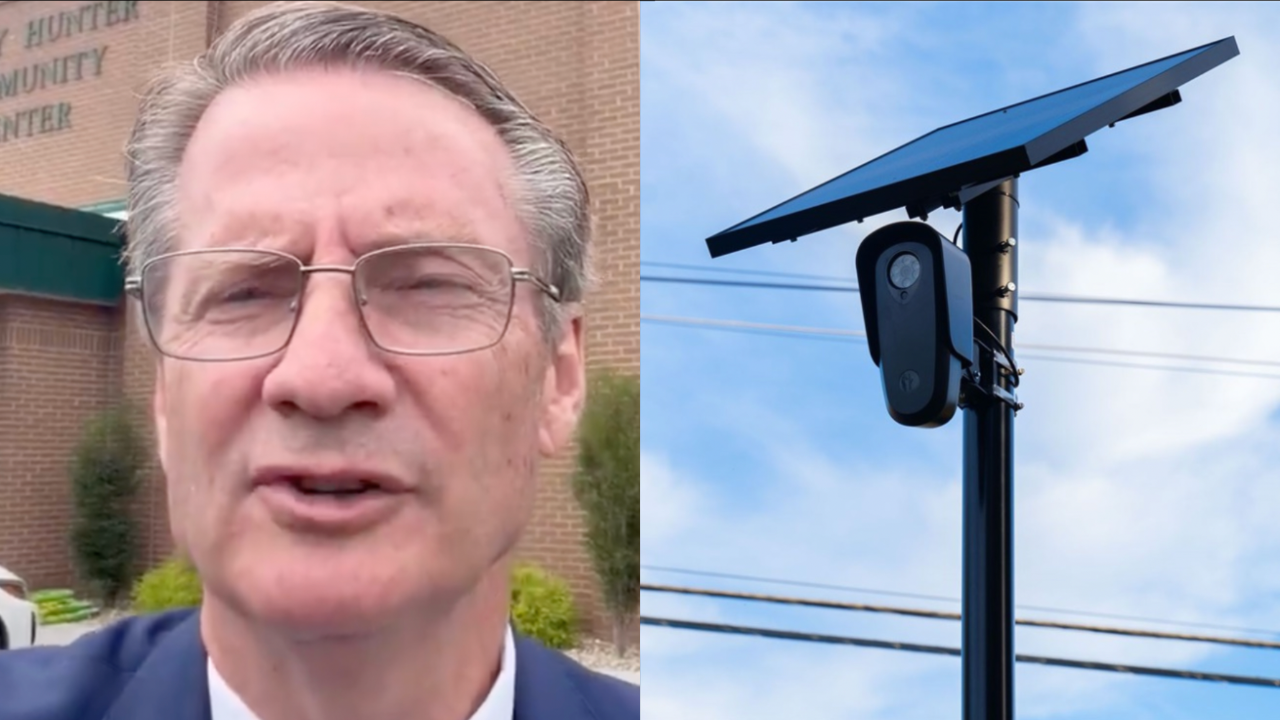
Rep. Tim Burchett, R-Tenn., said the answer to public safety concerns is more police officers, not more surveillance cameras, backing conservative commentator Roger Stone’s call to remove Flock Safety license plate readers. Burchett’s post on X responded to a post from Stone and reflects a position Burchett has already turned into federal legislation.
Burchett: “We Don’t Need More Cameras, We Need More Cops”
“We don’t need more cameras we need more COPS,” Burchett wrote, responding directly to Stone’s post, which read: “Get these cameras the flock out of here.”
Burchett Introduced Federal Bill Banning Flock Purchases Weeks Earlier
Burchett introduced the Protection Against Mass Surveillance Act, H.R. 9800, on July 21, roughly a month before his exchange with Stone. The bill would prohibit federal agencies from purchasing, operating, accessing or contracting for automated surveillance technologies — explicitly including Flock Safety’s license plate readers — and would bar state and local governments from using federal funds to buy similar systems. The measure was referred to the House Committee on Oversight and Government Reform and had not advanced as of mid-August.
Bill Also Covers Facial Recognition and Biometric Tracking
Beyond license plate readers, the bill’s text shows it would prohibit federal agencies from acquiring or using automated systems that identify, track or record individuals through facial recognition, biometric identification — including fingerprint, iris, retina, voice or gait recognition — or similar mass-surveillance methods.
Burchett Says Cameras Violate Fourth Amendment
“We gotta keep our country safe. What we can’t sacrifice is the freedoms, of course, that define us,” Burchett said in a video posted to X when he introduced the bill in July. “It violates the fourth amendment.” Speaking to a local Tennessee news outlet, Burchett said, “It’s a great tool for law enforcement, but there’s room for abuse.”
Bill Would Still Allow Counties to Buy Cameras With Local Funds
Under Burchett’s proposal, individual counties could still contract with Flock and install its cameras, but would have to cover all associated costs themselves rather than relying on federal funding, according to reporting on the bill’s provisions.
Flock Says It Supports Guardrails, Not a Ban
Flock Safety responded to Burchett’s bill in a statement, saying it supports legislation establishing “clear guardrails” for license plate reader technology but opposes an outright funding ban. “We believe public safety, privacy, and Fourth Amendment rights can and must coexist,” the company said, urging Congress to focus on oversight measures rather than “banning a critical public safety tool.”
Local Police Departments Have Pushed Back
Some Tennessee law enforcement officials have defended the technology against Burchett’s proposal. Mt. Juliet Police Chief Tyler Chandler said the system had led to hundreds of arrests for his department in 2026 alone, telling a local outlet, “I welcome strong legislation that ensures law enforcement across our State and Nation use license plate readers responsibly with clear policies, limited access, auditing, and a continued commitment to protecting the privacy, civil rights, and civil liberties of the public.”
Atlanta’s FBI Data Shows Homicide Clearance Rate Falling as Cameras Expanded
Burchett’s broader argument is bolstered by an Atlanta Community Press Collective analysis of the FBI’s own Crime Data Explorer statistics, which found Atlanta’s homicide clearance rate fell from 53.4% in 2021 to 48% in 2025 even as the city’s camera network expanded roughly eightfold, from about 3,300 to more than 28,000 cameras by July 2026. The same FBI data showed rape clearance held flat at 37.7% over the period, while robbery and motor vehicle theft clearance rates were essentially unchanged, near 25% and 10% respectively. Atlanta Police Chief Darin Schierbaum had separately told a press conference the department reached a 77.55% homicide clearance rate for 2025 — nearly 30 percentage points higher than the FBI’s own figure — and the department did not respond to the Atlanta Community Press Collective’s request for comment on the discrepancy.
Knox County Mayor Backed Burchett’s Push
Knox County Mayor Glenn Jacobs, whose county includes part of Burchett’s district, voiced support for the congressman’s effort. “I appreciate Congressman Burchett’s efforts to bring this attention at the national level,” Jacobs said in a statement. “As technology advances, we need to make sure the rules and regulations surrounding these devices keeps up and continues to protect the rights and liberties of our citizens.”
Burchett Joins Massie in Broader Republican Push Against Flock
Burchett’s effort runs alongside a similar push from Rep. Thomas Massie, R-Ky., who has proposed conditioning federal DHS, DOJ and highway safety grants on jurisdictions not deploying mass ALPR surveillance — a funding-leverage approach Massie has compared to the mechanism Congress used to set the national drinking age at 21. A separate bipartisan amendment from Reps. Scott Perry, R-Pa., and Jesús García, D-Ill., targeting ALPR highway funding was voted down in committee.
Opposition to Flock Has Become a Rare Bipartisan Issue
Criticism of Flock’s camera network has drawn support from across the political spectrum. The Washington Post has reported that at least 50 police officers nationwide have been accused of misusing Flock’s cameras or similar systems, including cases of officers using the technology to track women. More than 120,000 Flock cameras and license plate readers now operate across the United States and Puerto Rico, according to DeFlock, a group that tracks the systems’ deployment, and at least 50 local government contracts with the company have been canceled or rejected over the past year.