
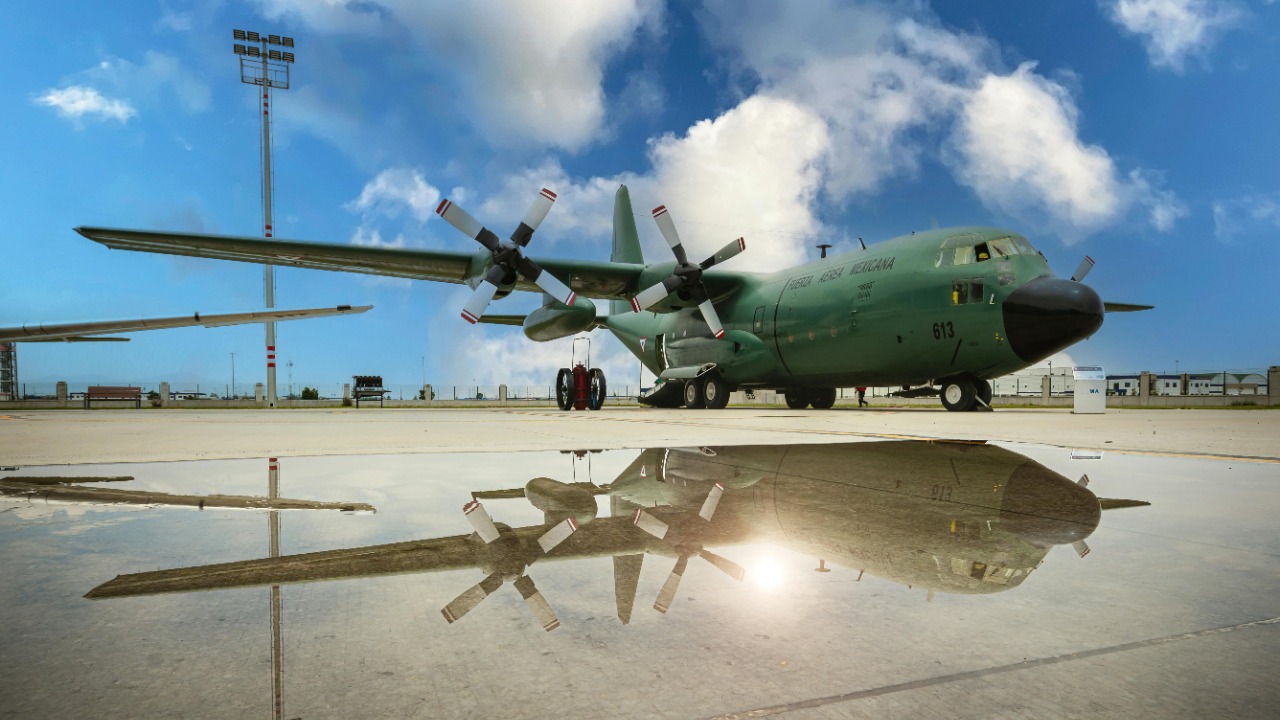
If you’ve ever watched a big military transport plane lumber in, kick up dust, and then casually back out like it’s done it a thousand times, there’s a decent chance you were looking at a C-130 Hercules. It’s not the flashiest airplane in the sky, and that’s kind of the point. The Hercules was built to show up, haul the load, and keep going when conditions are messy, remote, or just plain inconvenient.
First flown in the 1950s, the C-130 has stayed in service through generations of jets, avionics revolutions, and shifting military needs. That kind of staying power doesn’t happen by accident. It happens when a design nails the fundamentals so well that people keep finding new reasons to use it.
A plane born from a practical problem
After World War II and into the Korean War era, militaries needed a transport aircraft that could do more than move cargo between big, paved runways. They needed something that could get into short, rough airstrips closer to the action, drop supplies accurately, and evacuate wounded quickly. Lockheed’s answer was a medium-sized, four-engine turboprop with a roomy cargo bay and a rear loading ramp—simple ideas that turned out to be game-changing.
The first C-130s arrived at a time when jet aircraft were grabbing headlines, but the Hercules wasn’t chasing glamour. It was chasing reliability and flexibility. And it did it with a straightforward philosophy: build it strong, keep it maintainable, and make it useful in as many scenarios as possible.
Why “reliability” isn’t just a slogan here
The C-130’s reputation is rooted in boring, wonderful things: durability, redundancy, and systems that can take abuse. Four turboprop engines mean it can handle setbacks that would ruin the day for smaller twins. Its landing gear and airframe were designed for rough-field operations, which is aviation’s version of driving a truck on washboard roads for hours.
It’s also a mechanic-friendly airplane by military standards. Crews have kept C-130s flying from forward bases with limited tools and tight schedules, and that matters more than any glossy brochure. When your mission is to deliver food, fuel, or medical supplies, “mostly works” isn’t good enough.
The cargo bay that made it a legend
At the heart of the Hercules is its cargo compartment: big, boxy, and genuinely useful. The rear ramp makes loading vehicles, pallets, and awkward equipment much easier than trying to squeeze things through side doors. It can airdrop supplies, paratroopers, and specialized loads, and then turn around and haul people out.
That flexibility is why the C-130 shows up in so many roles. It’s a cargo hauler, a troop carrier, a flying ambulance, and a disaster-response lifeline. If you can strap it down, palletize it, or fit it through the ramp, the Hercules will probably carry it.
Not just military: the C-130’s second life in civil service
The Hercules didn’t stay confined to military flight lines. Variants and civilian-operated versions have been used for firefighting, especially with modular airborne firefighting systems or tanker conversions that drop retardant on wildfires. It’s hard to beat a platform that can fly low, carry heavy loads, and operate from smaller airports close to the fire zone.
You’ll also find C-130s supporting polar research, humanitarian relief, and remote logistics. In places where infrastructure is thin and weather doesn’t cooperate, a rugged transport plane becomes less of a vehicle and more of a survival tool. The aircraft’s ability to operate from short runways and unimproved surfaces keeps it relevant in corners of the world where newer jets simply can’t comfortably go.
The many faces of the Hercules family
Calling it “the C-130” is a little like calling every pickup truck “a truck” and leaving it at that. Over the decades, the Hercules has spawned a whole family of specialized versions: gunship variants that circle overhead providing close air support, electronic warfare and signals intelligence platforms, search-and-rescue configurations, and refueling tankers. Same basic airframe idea, wildly different jobs.
The more modern C-130J Super Hercules brought updated engines, avionics, and performance improvements, keeping the type competitive well into the 21st century. Yet the DNA stayed familiar: a practical airplane built around lifting capacity, reliability, and the ability to operate in challenging conditions. Newer tech, same work ethic.
What it’s like to fly and operate
Pilots often describe the C-130 as honest and predictable, which might be the highest compliment you can give an aircraft that spends its life near the edge of tough environments. It’s not a speedster, but it doesn’t need to be. Its job is to get there with a meaningful payload and do it repeatedly.
On the ground, it’s equally pragmatic. The high wing keeps engines and propellers farther from debris, and it offers better clearance on rough surfaces. And that rear ramp? It’s basically a built-in invitation for logisticians to get creative.
Moments that cemented its reputation
The C-130’s long service record means it’s been present at countless major operations, often quietly doing the unglamorous work that makes everything else possible. Airlifts, evacuations, humanitarian drops, and battlefield resupply runs don’t always make dramatic footage, but they win wars and save lives. Over time, those steady contributions add up to legend status.
Disaster relief is where the Hercules tends to shine in a way anyone can appreciate. When roads are damaged and ports are clogged, a transport aircraft that can bring in generators, water, food, and medical teams becomes priceless. The C-130 has repeatedly filled that role, delivering help in the first days when it matters most.
Why it’s still hard to replace
Modern militaries have faster aircraft and bigger aircraft, but the C-130 sits in a sweet spot that’s surprisingly hard to duplicate. Too small and you can’t carry enough. Too big and you can’t use the runways that are actually available where you need to go.
It’s also a known quantity. Operators understand its costs, its quirks, and how to keep it flying, and that kind of institutional knowledge is valuable. When budgets are tight and missions are diverse, keeping a proven platform in the mix makes practical sense.
A workhorse by design, not hype
The Hercules didn’t become famous because it broke speed records or looked futuristic on posters. It became famous because it kept doing the job—day after day, decade after decade—often in places where the job is hardest. In aviation, that kind of dependable usefulness is rare.
So if you see a C-130 on approach, props turning, ramp ready, it’s worth a second look. You’re watching one of the most successful “get it done” machines ever built. And honestly, there’s something comforting about an aircraft whose superpower is simply showing up and delivering.