
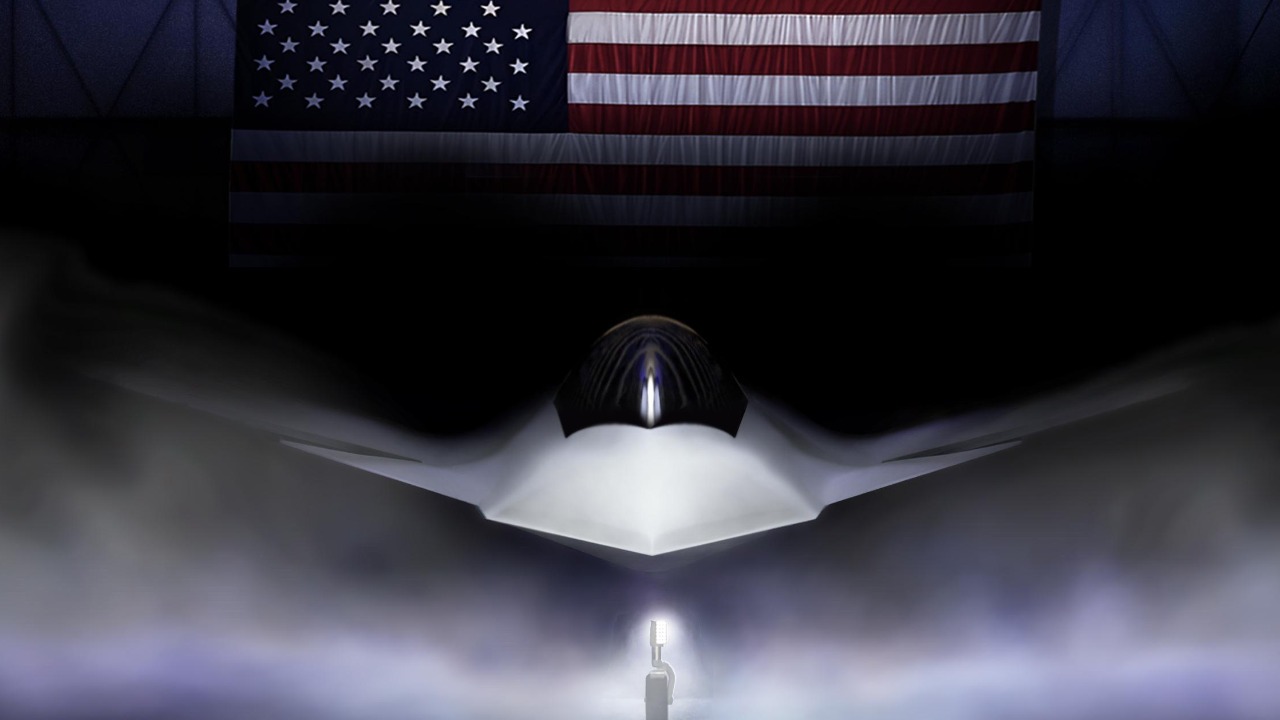
The Boeing F-47 has become a political and military lightning rod, tying President Donald Trump’s second-term defense agenda to a contractor still digging out from years of high-profile stumbles. Fighter pilots, budget analysts, and foreign rivals are all testing the logic of a $20 billion wager on a jet that has yet to fly. The question hanging over Washington is whether this sixth-generation gamble will deliver a leap in airpower or lock the United States Air Force into a troubled partnership at the very moment air dominance is being redefined.
At stake is far more than a single aircraft designation. The F-47 sits at the center of the United States Air Force’s plan to replace the F-22 Raptor and anchor the Next Generation Air Dominance family of systems, a networked mix of crewed fighters and autonomous drones. If the program falters, it will not only undercut Trump’s promise of unmatched air superiority, but it will also test how much risk the Pentagon is willing to accept from a company critics now describe as an “Unreliable Contractor.”
Trump’s $20 billion decision and Boeing’s troubled backdrop
President Donald Trump moved quickly after returning to the White House, directing that the crewed centerpiece of the Next Generation Air Dominance effort go to Boeing the moment the competition closed. In March, only weeks into his new term, he approved a package that effectively locked in a $20 billion commitment to the F-47, a figure later detailed when Boeing awarded the billion-dollar contract for the USAF, which was confirmed for the NGAD Fighter Program. That decision aligned the Air Force, the White House, and Boeing behind a single narrative: that a fresh design and a clean-sheet production line could reset the company’s reputation and deliver a leap in capability in the 2030s.
The political theater around the award was immediate. Trump highlighted the win in public remarks that framed the F-47 as proof that his administration would rebuild American manufacturing and military strength at the same time, a message echoed in coverage that described how the F-47 fighter contract became a centerpiece of his early defense agenda. Yet the backdrop was far from reassuring. Reporting on the award stressed that Boeing had been struggling with tanker and trainer programs, and that the company was still absorbing financial losses even as it secured the Air Force’s most sensitive combat aircraft work, a tension that now shapes every discussion of the new jet.
What the F-47 is supposed to be in the NGAD era
On paper, the F-47 is the manned spear tip of the United States Air Force’s Next Generation Air Dominance vision, a role that carries both prestige and risk. The Development history laid out in official descriptions notes that the program is intended to replace the F-22 Raptor as the service’s top air-to-air platform, with the F-47 operating as a command node for autonomous escorts and advanced sensors inside heavily contested airspace, a concept summarized in public material on the USAF Next Generation Air Dominance effort. The jet is expected to integrate deeply with offboard weapons and data links, turning the pilot into a battle manager as much as a traditional stick-and-rudder operator.
Early reporting on the design suggests that Boeing has been working from demonstrators that first flew as part of a classified sixth-generation technology push, with the first 47 prototypes expected to inform the final configuration. Analysts tracking the program note that the first sixth-generation demonstrators are projected to be flying in larger numbers by 2028, a timeline referenced in open-source assessments of Boeing’s work for the United States Air Force. Within that framework, the F-47 is less a single aircraft and more a hub in a wider NGAD architecture, which is why the Air Force and the Air Force’s industry partners describe it as a “family of systems” rather than a simple fighter replacement.
Pilot skepticism, financial strain, and the “flop” narrative
Despite the ambitious concept, many of the people who would have to fly the F-47 are unconvinced that Boeing can deliver on time and on budget. Accounts from operational communities describe U.S. Fighter Pilots Unimpressed By Trump, with some officers pointing to the Company Struggling With Tankers as evidence that the same engineering and management culture will carry over into the new fighter. One detailed assessment of the award noted that in March, just weeks after Trump’s inauguration, the Air Force selected Boeing for the NGAD contract even as the firm was still wrestling with Trainers and other delayed programs, a juxtaposition highlighted in coverage of Fighter Pilots Unimpressed and his Bet On a Company Struggling With Tankers and Trainers.
The financial picture only sharpens that skepticism. Analysts have reported that Boeing has been absorbing a billion in monthly financial losses tied to its commercial and defense portfolios, a strain that raises questions about how aggressively it can self-fund risk reduction for the F-47 while still meeting shareholder expectations, a concern underscored in follow-up reporting on Boeing and its ongoing losses. For pilots who watched the KC-46 tanker and T-7 trainer slip to the right, the idea that the same contractor will now manage the most complex fighter in Air Force history feels less like a bold bet and more like a gamble that could leave squadrons flying aging jets longer than planned.
Branding battles, foreign mockery, and the politics of airpower
The F-47 has also become a stage for Trump’s instinct to personalize defense programs, down to their names and public image. During a high-profile appearance in Europe, he joked that he might tell aides to take that 47 off the jet if he decided he did not like the program’s performance, a remark captured in coverage of Trump’s comments on the fighter. That instinct resurfaced in Jan, when President Donald Trump again mused about renaming the aircraft, even as the Air Force quietly reminded observers that the designation is tied to internal tracking and that any change would ripple through logistics and training pipelines, a tension described in an analysis of the possible change and the Air Force plan for first flight targeted for 2028.