
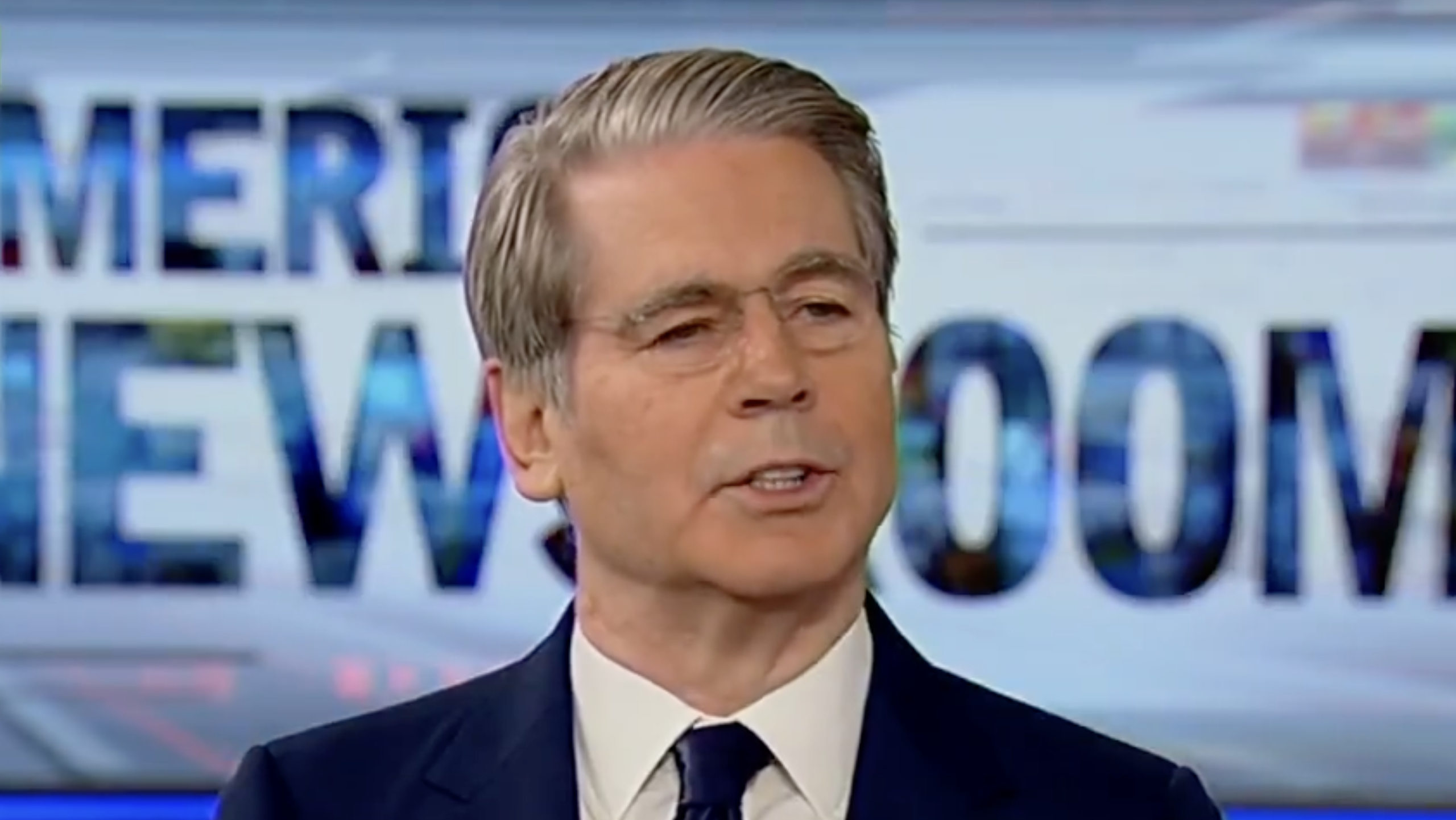
Treasury Secretary Scott Bessent said Sunday that the upcoming summit between President Trump and Chinese President Xi Jinping in Beijing will primarily be an opportunity for the world’s two most powerful leaders to engage directly and advance the framework established at their last face-to-face meeting. “I think the expectation is it will be a chance for President Trump and Xi Jinping to exchange views in person,” Bessent told Fox News’ America’s Newsroom with Bill Hemmer and Dana Perino on May 4, 2026. “The strength of the relationship is the relationship between the two leaders.”
The summit, confirmed by White House Press Secretary Karoline Leavitt on March 25 for May 14-15 in Beijing, will be Trump’s first trip to China in eight years — and his first face-to-face with Xi since their October 2025 meeting at the APEC summit in Busan, South Korea. It was originally scheduled for late March but was postponed after the U.S. and Israel launched military strikes against Iran on February 28, 2026, killing Supreme Leader Ayatollah Ali Khamenei and triggering a global energy crisis. The Iran war has since reshaped virtually every dimension of what the summit must address.
What Was Set in Busan — and What Bessent Is Charged With Implementing
Bessent described the October 2025 Busan summit as having established a “consensus” between the two sides that now serves as the foundation for the Beijing meeting. Under that framework, Chinese Vice Premier He Lifeng and Bessent are jointly responsible for implementing the consensus on the economic side, while Secretary of State Marco Rubio and China’s foreign secretary handle the political dimensions. “I think we would push forward the consensus from Korea and also keep the relationship stable,” Bessent said. “We’ve had great stability in the relationship, and again, that comes from the two leaders having great respect for each other.”
That groundwork has been actively reinforced in the days before the summit. According to UPI, He Lifeng held a video call with Bessent and U.S. Trade Representative Jamieson Greer on May 1, 2026, described by Reuters as “candid and comprehensive,” with both sides raising concerns over trade restrictions and regulatory measures. On the same day, Chinese Foreign Minister Wang Yi spoke by phone with Secretary Rubio — with Wang stating, according to China’s Foreign Ministry, that “leader-level diplomacy has long served as a guide for U.S.-China relations” and that bilateral ties had remained generally stable under the strategic direction of Xi and Trump. Both calls signaled that the summit is on track for May 14-15.
A Relationship Defined by Its Leaders — and Its Tensions
Bessent’s emphasis on the personal relationship between Trump and Xi as the anchor of U.S.-China stability reflects a consistent feature of how both governments have described the bilateral relationship since Trump’s second term began. On February 4, 2026, Xi told Trump in a phone call that he hoped to make 2026 a year of “mutual respect, peaceful coexistence, and win-win cooperation,” as documented by The Diplomat. Trump, for his part, wrote on Truth Social after the summit dates were confirmed: “I look very much forward to spending time with President Xi in what will be, I am sure, a Monumental Event.”
But beneath that personal warmth lies a relationship under severe structural strain. As documented by Brookings Institution, the two countries have been locked in a tit-for-tat tariff escalation that drove levies beyond 100% on each other’s goods in 2025, triggering fears of a global economic downturn. A February 2026 Supreme Court ruling struck down Trump’s country-by-country tariffs, removing a key negotiating lever. The White House publicly accused China in April 2026 of conducting large-scale AI-related intellectual property extraction. China tightened restrictions on rare earth exports — a sector where Beijing holds significant global leverage. And both sides launched new trade investigations and probes even as they continued to negotiate.
The trade agenda for the summit includes discussions of a possible joint enforcement mechanism that Greer has called “a U.S.-China Board of Trade,” as well as a parallel “Board of Investment.” According to Foreign Policy’s analysis drawing on five decades of U.S.-China summitry, U.S. Trade Representative Greer has signaled that Trump will seek “stability” rather than a comprehensive reset — a modest but potentially meaningful outcome if it produces a more regularized process for managing disputes. Rare earth supply arrangements are also under active discussion. A stopgap 10% tariff is currently in effect on Chinese goods, with Section 301 investigations underway that could reset levies when the stopgap expires in July.
How the Iran War Changed Everything
The summit that Bessent is preparing for is fundamentally different from the one originally scheduled for late March. That meeting was primarily envisioned as a trade summit — the culmination of more than a year of tariff battles and six rounds of trade talks. The Iran war has added an entirely new and urgent layer. As The Diplomat noted in its analysis of the summit’s strategic significance, the Strait of Hormuz disruption trapped roughly 13 million barrels per day of crude supply at its peak, pushing oil prices sharply upward and triggering what the World Bank projected as a 24% rise in energy prices in 2026 alongside a 31% increase in fertilizer costs — generating cascading economic shocks well beyond the Middle East.
China is directly exposed to those shocks. China imported roughly 12 million barrels of oil per day in the first two months of 2026 — the most in the world — making the Strait of Hormuz closure a direct economic threat to Beijing. Trump has specifically asked China to help pressure Tehran into reopening the waterway. Beijing has not responded directly, and that request — which Bessent made publicly on May 4, urging China to “join us” in supporting the international operation to reopen the strait and stop blocking UN resolutions — is expected to hang over the summit. China’s own UN Ambassador vetoed the Security Council resolution on reopening the strait on April 7, a move the U.S. characterized at the UN General Assembly as Beijing choosing to “turn a blind eye” to Iran’s stranglehold on the global economy.
Taiwan, Technology, and the Issues That Won’t Be Resolved
Beyond Iran and trade, the summit agenda includes a range of issues where substantive agreement is unlikely but where signaling and boundary-setting matter enormously. Taiwan is Beijing’s stated top priority. As analyzed by Brookings, Beijing will press Washington to commit to restraint on future arms sales to Taiwan and to make public statements opposing Taiwan independence — expectations China views as the price of a stable bilateral relationship. The U.S. position on Taiwan has not formally changed, but how Trump handles it in Beijing will be closely watched by allies in the Indo-Pacific.
Technology and export controls are also on the agenda. Freedom House has urged Trump to use the summit to reinstate export controls on advanced semiconductors and fabrication equipment, arguing that Chinese and Hong Kong-based firms have supplied roughly 76% of battlefield goods reaching Russia and that Chinese actors serve as the “primary economic lifeline” for the Iranian regime. The administration lifted some sanctions on Russian and Iranian oil to manage energy market fallout from the Iran strikes — a decision Freedom House argued cedes leverage that should be restored at the summit table. Whether Trump raises those issues with Xi directly, or prioritizes trade stability and the personal relationship Bessent described, will shape how the summit is ultimately assessed.
What History Says About These Meetings
Bessent’s framing — that the summit’s primary value is giving the two leaders a chance to “exchange views in person” — is consistent with what five decades of U.S.-China presidential summitry actually show, according to Foreign Policy’s analysis. These meetings rarely transform the relationship. What they can do, when handled well, is make a potentially dangerous rivalry less volatile — signaling limits, shaping expectations, and preserving a degree of predictability. The Biden-Xi summit at Woodside, California, in November 2023, for example, reopened military-to-military communication that Beijing had frozen after Speaker Nancy Pelosi’s 2022 Taiwan visit, and launched a new phase of counternarcotics cooperation on fentanyl. It did not resolve the underlying structural competition between the two countries.
The Beijing summit faces a higher degree of ambient instability than any prior U.S.-China meeting in recent memory — an active war in the Middle East, a global energy shock, a fragile trade truce, and a UN Security Council veto by China that Washington has characterized in unusually blunt terms. Bessent’s measured expectation — “exchange views in person,” “push forward the consensus from Korea,” “keep the relationship stable” — reflects a realistic read of what a two-day summit between two leaders, however powerful, can actually accomplish. Xi’s return visit to the United States, planned for later in 2026, will build on whatever foundation May 14-15 establishes. This summit is “the first half of the game” — and the full impact of 2026’s summit diplomacy will not be felt until the second half is played.