
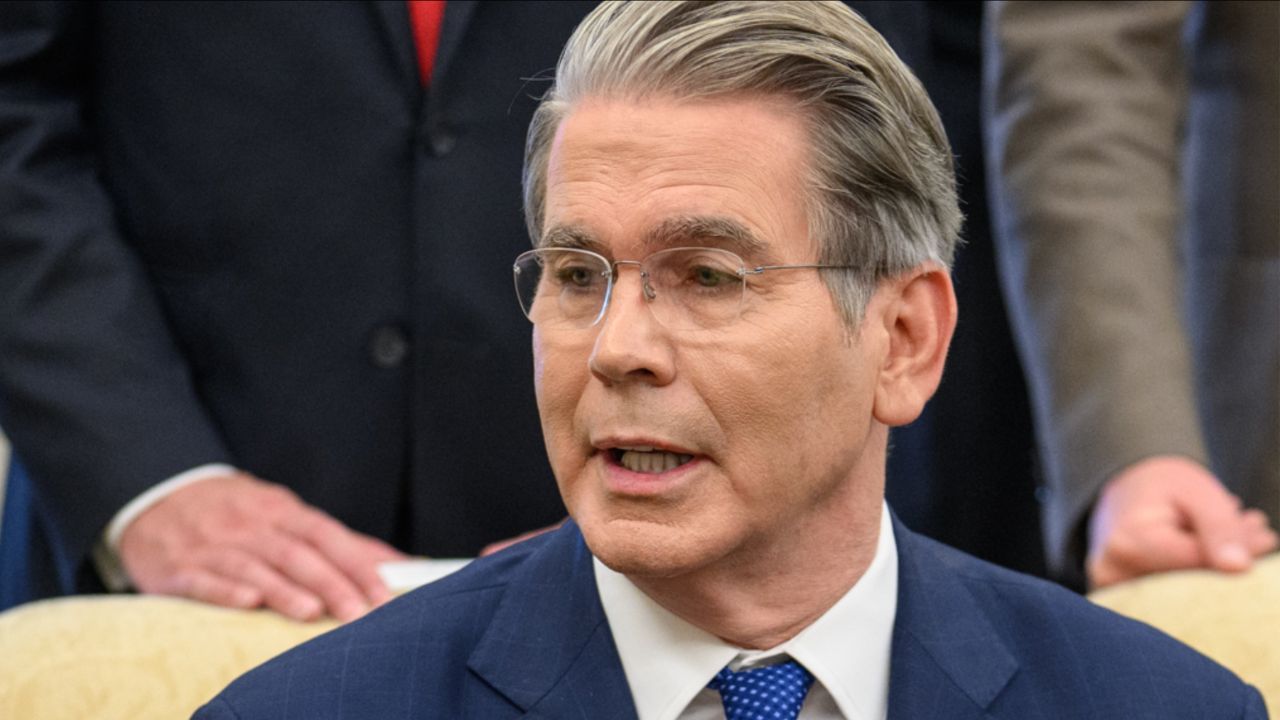
Treasury Secretary Scott Bessent announced a sweeping new sanctions campaign against Iran on Aug. 24, telling reporters at the Treasury Department that countries around the world must now choose sides.
Bessent: “The Decision Between America and Iran”
“It is now a time for world leaders to make a decision between prosperity and isolation, peace and terror, America and Iran,” Bessent said. “The campaign we begin today will gather force with every day that follows, and it will not end until this regime stands alone.”
Treasury Launched “Operation Economic Outcast”
Bessent announced the campaign, branded Operation Economic Outcast in an official Treasury Department press release, invoking World War II imagery. “In the Second World War, D-Day marked the historic beginning of a campaign with our allies to target and drive the enemy from its positions, including those in third countries,” Bessent said. “Today, in that same spirit, we are launching an economic onslaught against Iran’s financial connections around the globe.”
OFAC Sanctioned Nearly 60 Entities Across Five Economic Sectors
The Treasury’s Office of Foreign Assets Control designated nearly 60 entities, individuals and vessels it said were linked to Iran’s nuclear and missile procurement, cyber operations and oil revenue generation. The department issued new sectoral sanctions determinations covering five areas Bessent called Iran’s “most vital lifelines”: digital assets, technology, gold, aviation and shipping. The determinations were issued under Executive Order 13902, a sanctions authority originally signed by Trump in January 2020 during his first term that has previously been used to designate Iran’s financial, petroleum and petrochemical sectors; Monday’s action extended it to the five new sectors. Treasury’s press release specifically named two oil tankers, including one flagged in Gambia and operated by a China-based shipping company, that it said had transported millions of barrels of Iranian crude oil.
Bessent Demanded Bank Melli Be “Shuttered and Dark”
Bessent singled out Iran’s state-owned Bank Melli for closure. “Every branch of Bank Melli must be shuttered and dark,” he said, warning that “any entity that facilitates money laundering on behalf of Iran will be removed from the U.S. dollar system.”
Bessent Declined to Name Countries Facing Pressure
Asked by reporters which countries Trump was personally pressuring to cut ties with Iran, Bessent repeatedly declined to specify. “We’re not going to name names,” he said, adding that Treasury, State Department and military officials were following up Trump’s calls with their own outreach to foreign governments, each given “a defined timeline” to halt Iran-related activity. Pressed on whether Chinese banks would be targeted, given Beijing’s role as a major buyer of Iranian oil and supplier of drone and missile technology to Tehran, Bessent said “no one is above the reach of U.S. sanctions” without confirming any specific action against Chinese institutions. Bessent had separately urged China days earlier to “get with the program” and support the planned economic campaign.
Bessent Suggested UAE’s Break With Iran Was Linked to U.S. Pressure
Asked whether the United Arab Emirates’ recent decision to cut off trade with Iran was connected to the new campaign, Bessent said he believed the timing was “not coincident, but likely causal,” and predicted other countries would take similar steps. He said the UAE had “taken the brunt of Iranian attacks in the Gulf” despite years of accommodating the regime, using it as evidence that “appeasement does not work.”
Iranian Officials Dismissed the Threat, Warned of Hormuz Retaliation
Iranian parliamentary speaker Mohammad Bagher Ghalibaf said Iran’s trading partners had made clear “they don’t take these statements into account.” Separately, Iran’s top security official, Mohsen Rezaei, said Iran would “neutralize the economic war” and warned it could halt all oil flows through the Strait of Hormuz in response to any country supporting the U.S. campaign — a statement CNN’s Jeremy Diamond described as an implicit threat of military action.
Economist Compared Rhetoric to 1960s Cuba Sanctions
University of Michigan economist Justin Wolfers, appearing on CNN after Bessent’s remarks, noted that the language closely echoed a 1962 statement by President Kennedy’s secretary of state vowing to “tighten the noose around the Cuban economy until that regime becomes a complete pariah.” Wolfers observed that the Cuban regime remained in power more than 60 years later despite sustained U.S. sanctions, and warned that if other countries do not join the campaign voluntarily, the U.S. would effectively be declaring “a trade war” against them as well, with associated costs likely borne by American consumers.
Some Reporting Questioned Whether the Measures Represent a Genuine Escalation
Iran has been among the most heavily sanctioned countries in the world for years, and some news coverage following the announcement noted that Bessent’s Monday remarks amounted to threats of future action against unnamed targets rather than immediate, concrete new sanctions on major economies such as China, which continues to purchase the bulk of Iran’s oil exports. Treasury said it expected to announce sanctions against a major financial institution by the end of the week.
Military Analyst Says U.S. Remains Constrained by Iranian Geography
CNN military analyst Col. Cedric Leighton said Iran retains significant tools to blunt the sanctions, including rail links through Turkmenistan connecting to Russian and Chinese rail networks and Caspian Sea shipping routes, both outside the reach of a naval blockade. Leighton also said the U.S. remains “stuck militarily” enforcing the Persian Gulf presence needed to back the sanctions, noting regional American bases have been degraded by Iranian drone and missile attacks throughout the six-month war.
Bessent Defended Gradual Approach Despite “D-Day” Framing
A reporter pressed Bessent on the disconnect between his “economic D-Day” framing and the fact that the sanctions gave targeted countries time to comply rather than taking immediate effect. “Why would I want to blow up the global financial system?” Bessent responded, saying Treasury believed in giving countries “a cure period” before imposing the toughest secondary sanctions, while warning that “we do not have infinite patience here.”
Campaign Comes as USS George Washington Replaces USS Abraham Lincoln
Bessent’s announcement came as the carrier USS George Washington arrived in the Arabian Sea to relieve the USS Abraham Lincoln, which had been deployed in the region for more than nine months. Leighton said the new carrier group would need to be prepared for renewed Iranian harassment tactics, including fast boats and drone and missile threats, given Iran’s stated intent to escalate if economic pressure continues.