
WASHINGTON — The U.S. Treasury Department imposed new sanctions Wednesday on a Lebanese charity and a network of businessmen and companies accused of transferring Iranian funds to Hezbollah, expanding the Trump administration’s Operation Economic Outcast campaign against Iran’s financial networks.
The November 18 announcement identified six targets, including a humanitarian organization that Treasury alleges serves as cover for Hezbollah’s activities in southern Lebanon and a network accused of moving gold and cash through Lebanon, Türkiye and other countries on behalf of Hezbollah and Iran’s Islamic Revolutionary Guard Corps-Qods Force (IRGC-QF).
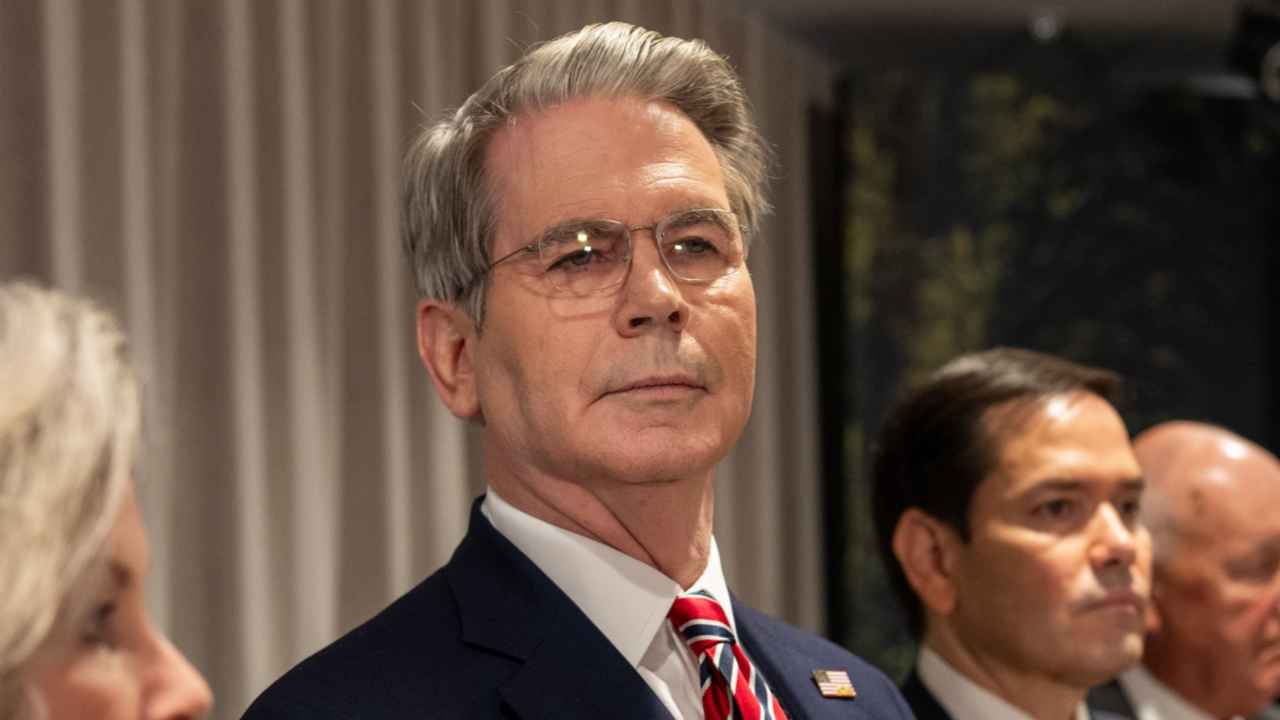
Treasury Secretary Scott Bessent said the administration intended to prevent Iran from using allied armed groups to expand its influence over Lebanon.
“The Iranian regime’s attempts to infringe on Lebanon’s sovereignty through terror proxies like Hizballah will not be tolerated,” Bessent said.
“The U.S. government will continue to disrupt Iran’s attempts to exert influence in the region and fund its proxies,” he added.
The designations were issued by the Treasury Department’s Office of Foreign Assets Control, or OFAC, under Executive Order 13224, a counterterrorism authority that allows the United States to block property and restrict transactions involving designated individuals and organizations.
The action comes as Washington seeks to increase economic pressure on Tehran and Hezbollah, which the United States has designated as a foreign terrorist organization since 1997.
Treasury Accuses Lebanese Charity of Supporting Hezbollah
One target is the Wa Ta’awanu Association, a Lebanon-based charity that Treasury says provides emergency relief services to communities in southern Lebanon while directing outside donor funds toward Hezbollah’s activities.
According to Treasury, the organization uses its humanitarian work to conceal activities supporting Hezbollah and to preserve the group’s influence in areas where Lebanese authorities are seeking to establish government control.
The department also sanctioned Afif Abdel Rida Chouman, the charity’s founder, accusing him of directing the organization and coordinating its activities on Hezbollah’s behalf.
Treasury said the charity’s operations have complicated efforts to remove Hezbollah fighters and weapons from areas of southern Lebanon addressed by a June 26, 2026, trilateral framework involving the United States, Lebanon and Israel.
Under that framework, according to the department, the Lebanese Armed Forces began moving into areas previously occupied by Israeli forces in July, with the objective of securing those areas and ensuring that Hezbollah personnel and weapons were absent.
Treasury alleged that Wa Ta’awanu’s activities provide a justification for Hezbollah to maintain a presence in the designated pilot zones, interfering with Lebanese disarmament efforts and the government’s ability to secure those areas.
The sanctions announcement does not establish that all of the charity’s humanitarian activities are illegitimate or that individual recipients of emergency assistance knowingly participated in Hezbollah financing.
OFAC designated Wa Ta’awanu and Chouman for allegedly providing material assistance or other support to Hezbollah.
Gold and Cash Network Allegedly Moved Iranian Funds to Lebanon
The second part of the sanctions package targets a financial network that Treasury says transferred substantial funds from Iran’s IRGC-Qods Force to Hezbollah through cash couriers, money-changing operations and gold transactions.
The department identified Lebanese businessman and money changer Hassan Khechen as a central figure in the operation.
According to Treasury, Khechen owns Lebanon-based Gold Global Company and uses the business to transfer funds from several transit countries into Lebanon on Hezbollah’s behalf.
The department alleged that the network also relies on couriers to move physical cash across international borders, providing an alternative to conventional banking channels that are subject to financial monitoring and sanctions restrictions.
Treasury also sanctioned Hassan Khechen’s brother, Ibrahim Khechen, accusing him of participating in the same money-smuggling operation.
The department said Ibrahim Khechen had connections to a related courier who was arrested at Beirut’s airport in February 2025 while carrying $2.5 million in hand luggage.
The announcement did not identify that courier by name or establish that the entire $2.5 million was ultimately transferred to Hezbollah. Treasury cited the incident as part of its description of the network’s cash-moving operations.
Another designated business, Türkiye-based Sankari Gold Kuyumculuk Ticaret Limited Sirketi, is accused of assisting Gold Global Company in transferring gold bullion and cash from Africa.
Treasury said Sankari Gold is affiliated with Hezbollah and controlled by Hassan Khechen.
Hassan and Ibrahim Khechen were sanctioned for allegedly providing material assistance to Hezbollah, while Gold Global Company and Sankari Gold were designated on the basis of their alleged ownership, control or activities on Hassan Khechen’s behalf.
The announcement did not provide a total dollar value for the network’s alleged transfers, a complete list of transit countries or a detailed accounting of the funds believed to have reached Hezbollah.
Sanctions Extend Operation Economic Outcast
The new designations form part of Operation Economic Outcast, a Treasury-led campaign launched on August 24, 2026, to restrict Iran’s access to international financial markets and target companies and intermediaries accused of supporting the Iranian government.
In its announcement launching the operation, Treasury said the campaign would target financial channels used to move Iranian oil revenues, evade sanctions and fund organizations linked to the Islamic Revolutionary Guard Corps.
Bessent described the campaign at its launch as an effort to sever Iran’s international financial connections and force Tehran to choose between continued economic isolation and changes in its behavior.
The November 18 action extends that approach to alleged financing networks operating outside Iran, particularly in Lebanon, where Hezbollah has long maintained an armed organization and significant political influence.
It also follows other Treasury actions under the same campaign targeting cryptocurrency transactions, money services businesses and networks accused of facilitating Iranian sanctions evasion.
On November 6, Treasury’s Financial Crimes Enforcement Network announced an order intended to cut cryptocurrency exchange MEXC Global off from the U.S. financial system.
According to the November 6 Treasury announcement, MEXC Global had facilitated at least $16 billion in transactions connected to sanctions evasion, cybercrime and other illicit activity between May 2021 and May 2026.
Treasury also alleged that the platform had processed approximately $1 billion in direct transactions involving more than 40 Iranian cryptocurrency exchanges and approximately $22 million in transactions involving sanctioned Iranian institutions, including the Central Bank of Iran and the Islamic Revolutionary Guard Corps.
Those figures were presented by Treasury as findings supporting the separate MEXC action. They do not represent the value of transactions attributed to the Hezbollah network sanctioned on November 18.
What the New Sanctions Mean
Under OFAC rules, the new designations generally block property and interests in property belonging to the targeted individuals and organizations that are located in the United States or held by U.S. persons.
U.S. persons are generally prohibited from conducting transactions involving the designated parties unless an applicable exemption or OFAC authorization permits the activity.
The restrictions also extend to companies owned 50% or more, directly or indirectly and individually or collectively, by one or more blocked persons, even when those companies are not separately named on OFAC’s sanctions list.
Financial institutions outside the United States may also face sanctions exposure if they knowingly facilitate significant transactions involving designated parties under applicable authorities.
Treasury warned that foreign banks could face restrictions on their access to U.S. correspondent or payable-through accounts if they engage in qualifying transactions with sanctioned individuals or organizations.
Those restrictions are designed to make it more difficult for sanctioned networks to use international banking relationships, conduct dollar transactions and access assets subject to U.S. jurisdiction.
The designations do not, by themselves, establish that the targeted parties have been convicted of criminal offenses. They are administrative sanctions imposed under U.S. counterterrorism authorities.
OFAC maintains procedures through which sanctioned parties may seek removal from its lists if they can demonstrate circumstances warranting reconsideration.
Iran, Hezbollah and Lebanon’s Sovereignty
The latest sanctions also reflect a broader U.S. effort to strengthen the Lebanese government’s authority over armed groups operating within its territory.
Hezbollah is both a political organization and an armed group in Lebanon. The United States designated it as a foreign terrorist organization in October 1997 and subsequently imposed additional counterterrorism sanctions.
Treasury said the group was designated again under amended counterterrorism authorities in August 2026 because of its relationship with the IRGC-Qods Force, which Washington accuses of directing and financing armed groups across the Middle East.
In its November 18 statement, Treasury connected the new sanctions to efforts by the Lebanese Armed Forces to secure areas of southern Lebanon and remove Hezbollah fighters and weapons under the trilateral framework reached earlier in the year.
By targeting an organization accused of operating under humanitarian cover and businesses allegedly moving funds across international borders, the department is seeking to restrict two different sources of support for Hezbollah: its local organizational infrastructure and its access to outside financing.
Whether the sanctions substantially reduce Hezbollah’s financial resources will depend in part on their enforcement, the extent of the targeted network’s activities and the availability of alternative channels for moving funds.
The Treasury announcement did not quantify the assets blocked by the latest designations or provide an estimate of the financial losses Hezbollah would incur.
For the Trump administration, the action represents another attempt to apply financial pressure on Iran beyond its borders while supporting efforts to strengthen Lebanese state control over areas where Hezbollah has operated.
Bessent said the United States would continue targeting Iranian financial support for allied armed groups, emphasizing that Washington considers Tehran’s influence in Lebanon a continuing threat to the country’s sovereignty.